Anxiety vs ADHD in Children: How to Tell the Difference
By Tim Khuja · 8 min read
Last reviewed June 9, 2026
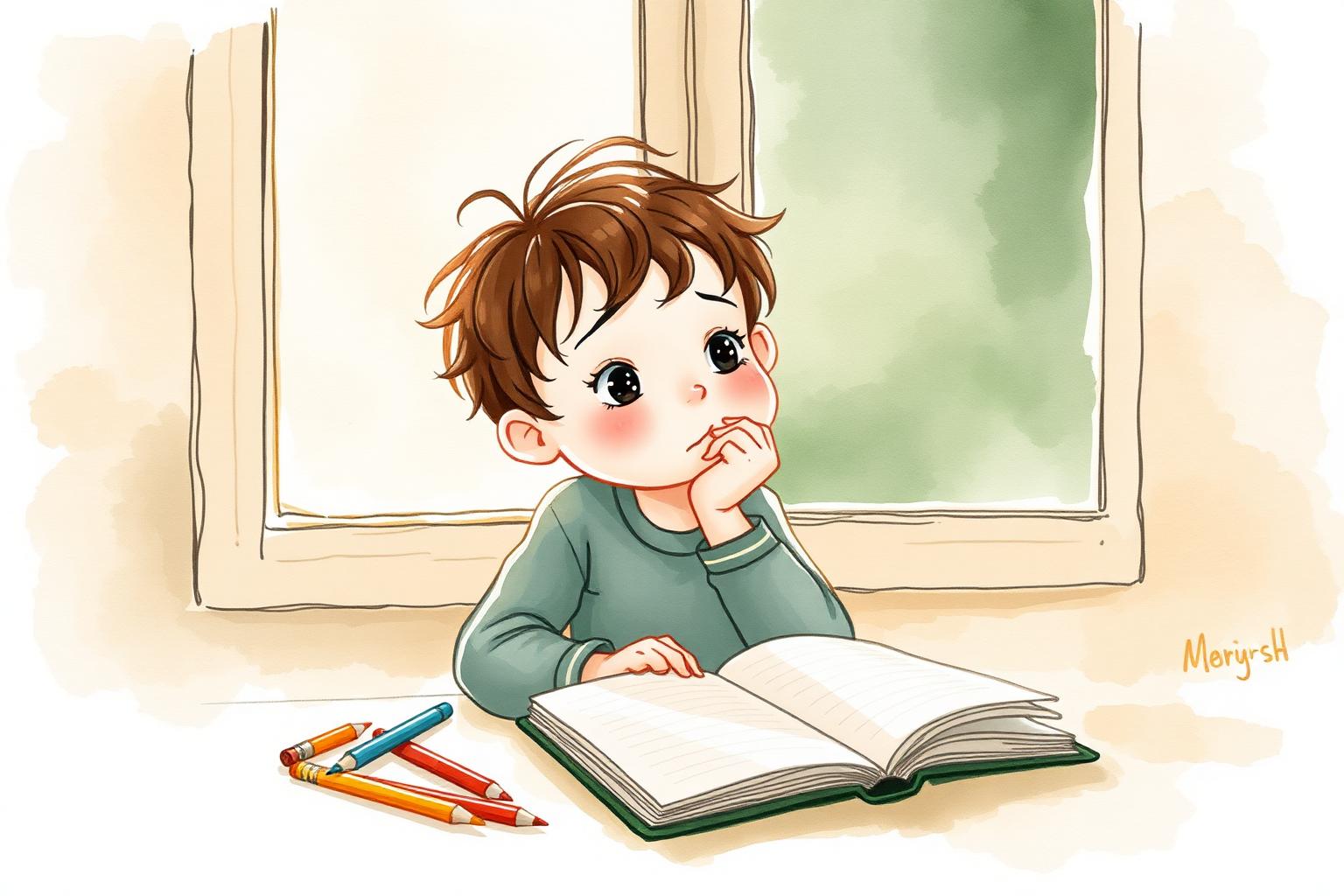
A child who fidgets, talks over people, can't finish homework, can't fall asleep, melts down at small frustrations. To a tired parent at 9pm, that could be either thing. To a teacher writing a report, it often gets written as attention difficulties. To the child themselves, it's just what life feels like.
Anxiety and ADHD in children overlap in their behaviour far more than they overlap in their cause. Getting the cause right is the difference between a child who slowly thrives and a child who is treated for the wrong thing for years.
Why the surface looks the same
Both conditions produce:
- Restlessness, fidgeting, an inability to settle.
- Difficulty concentrating.
- Trouble falling and staying asleep.
- Emotional reactivity — small frustrations producing big reactions.
- Avoidance of demanding tasks (homework, chores, group activities).
- Forgetfulness in the moment.
- Trouble with transitions.
You can see why it gets confusing. A child with severe anxiety can look like a child with classic ADHD. A child with ADHD often develops anxiety as a consequence — from years of being told they're lazy, careless, or too much. And about a third of children with ADHD genuinely have both.
The key question: what is the engine?
The most useful clinical question is not what does the behaviour look like? but what is driving it?
Anxiety's engine is threat. The child's nervous system has decided something is unsafe, and the body is responding accordingly. Behaviour tends to be worse in unfamiliar, performance-pressured, or socially exposed situations — and noticeably better in safe, predictable environments where no one is watching.
ADHD's engine is dopamine and executive function. The child's brain underweights long-term consequences and overweights immediate stimulation. Behaviour tends to be consistent across settings — restless at home, restless at school, restless at grandma's — though it spikes during boring or repetitive tasks and quietens during novel, high-interest ones.
A small set of distinguishing questions usually helps:
- Is the problem worse when nothing interesting is happening, or when something stressful is coming? Worse in dull moments points to ADHD. Worse before social or evaluative events points to anxiety.
- Can the child focus intensely on things they love? Both groups can. ADHD children often hyperfocus on a video game or a passion topic for hours. Highly anxious children can also, when the activity is calming and predictable.
- What happens at bedtime? ADHD bedtime trouble is usually I'm not tired, I'm bored, my brain is going. Anxiety bedtime trouble is I keep thinking about [thing]. What if [thing] happens?
- What does the child say about themselves? I'm bad at sitting still / I always forget points to ADHD experience. I'm scared / I worry about everything / something bad is going to happen points to anxiety.
- What happens with novelty? Children with ADHD often light up in novel situations. Anxious children often shut down.
None of these are definitive. They are clues a clinician triangulates.
The third option: both
For roughly 30% of children with ADHD, anxiety is also present. The combination is its own thing — not the sum of the two — and matters because treating one without seeing the other usually fails:
- A stimulant medication given to a child whose presentation is actually anxiety often makes the anxiety much worse.
- Behavioural therapy aimed at anxiety in a child who also has ADHD often stalls, because the executive-function gap stops the strategies from being applied.
The order of treatment matters. Most clinicians stabilise the anxiety first — especially if it is severe — before adjusting ADHD support, because anxious children often can't make use of ADHD strategies until their nervous system feels safer.
What this looks like at home
A child who is primarily anxious tends to:
- Hold it together at school and unravel at home.
- Ask the same reassurance question repeatedly.
- Resist anything that involves being evaluated.
- Cling to routine and resist change.
- Have stomach aches and physical signs before stressors.
A child who is primarily ADHD tends to:
- Be similarly impulsive across settings.
- Get into the same kind of trouble at school they get into at home.
- Lose things constantly — water bottles, jumpers, homework.
- Interrupt, blurt, start things and not finish.
- Be deeply affected by criticism but bounce back quickly.
A child with both tends to look like the ADHD picture plus a quieter undercurrent of worry, perfectionism, and physical signs.
Why getting it right matters
Misreading anxiety as ADHD leads to: medication that doesn't help, increasing self-criticism in the child (I'm broken even with the meds), and an unaddressed nervous-system pattern that often surfaces later as depression in adolescence.
Misreading ADHD as anxiety leads to: years of being told you just need to try harder, plummeting self-esteem, and the secondary anxiety that develops from feeling chronically incompetent.
The kindest thing a parent can do is hold the question open rather than reach for the label that fits the loudest behaviour. A good paediatric assessment looks at history, school report, parent observations, and ideally watches the child across more than one setting.
What helps either way
While you're working it out:
- Reduce demand temporarily. A child whose system is overwhelmed cannot learn coping strategies. Settle first, teach second.
- Build predictability. Both groups benefit enormously from visible routine.
- Catch what is going well. ADHD children get an extraordinary amount of negative feedback. Anxious children get an extraordinary amount of reassurance that subtly confirms the threat. Both benefit from specific, low-key noticing of what worked.
- Use stories. A character who can't sit still and finds their own way. A character who learns to take their worry by the hand. Children take in identity-shaping ideas through narrative far more readily than through advice.
- Get specialist input. A paediatrician, educational psychologist, or CAMHS clinician will see patterns you can't, and they will see which pattern is loudest.
Anxiety vs ADHD in children is rarely a clean binary. It is a question of what your child's nervous system is doing, and what kind of support actually helps. The work is patient, slightly forensic, and worth doing properly — because the right answer changes the next ten years.
Frequently asked questions
Can a child have both anxiety and ADHD?
Yes — about 30% of children diagnosed with ADHD also meet criteria for an anxiety disorder. The combination is common enough that good assessments routinely screen for both.
How do doctors tell anxiety and ADHD apart in kids?
They look at when the behaviour started, where it shows up, what makes it better or worse, the child's own description of their inner experience, and reports from multiple settings (home, school). It is rarely settled in one appointment.
Will ADHD medication help if the real problem is anxiety?
Usually not, and stimulant medication can make anxiety noticeably worse in some children. This is one of the main reasons a careful assessment matters before medicating.
My child is calm and focused on weekends but a mess at school. Is that ADHD or anxiety?
That pattern leans toward anxiety rather than ADHD, because ADHD tends to be present across settings. But context matters — a calm weekend might also reflect a low-demand environment that suits an ADHD brain.