Bedtime Routine for an Anxious Child (Step-by-Step)
By Soothly Editorial · 7 min read
Last reviewed June 12, 2026
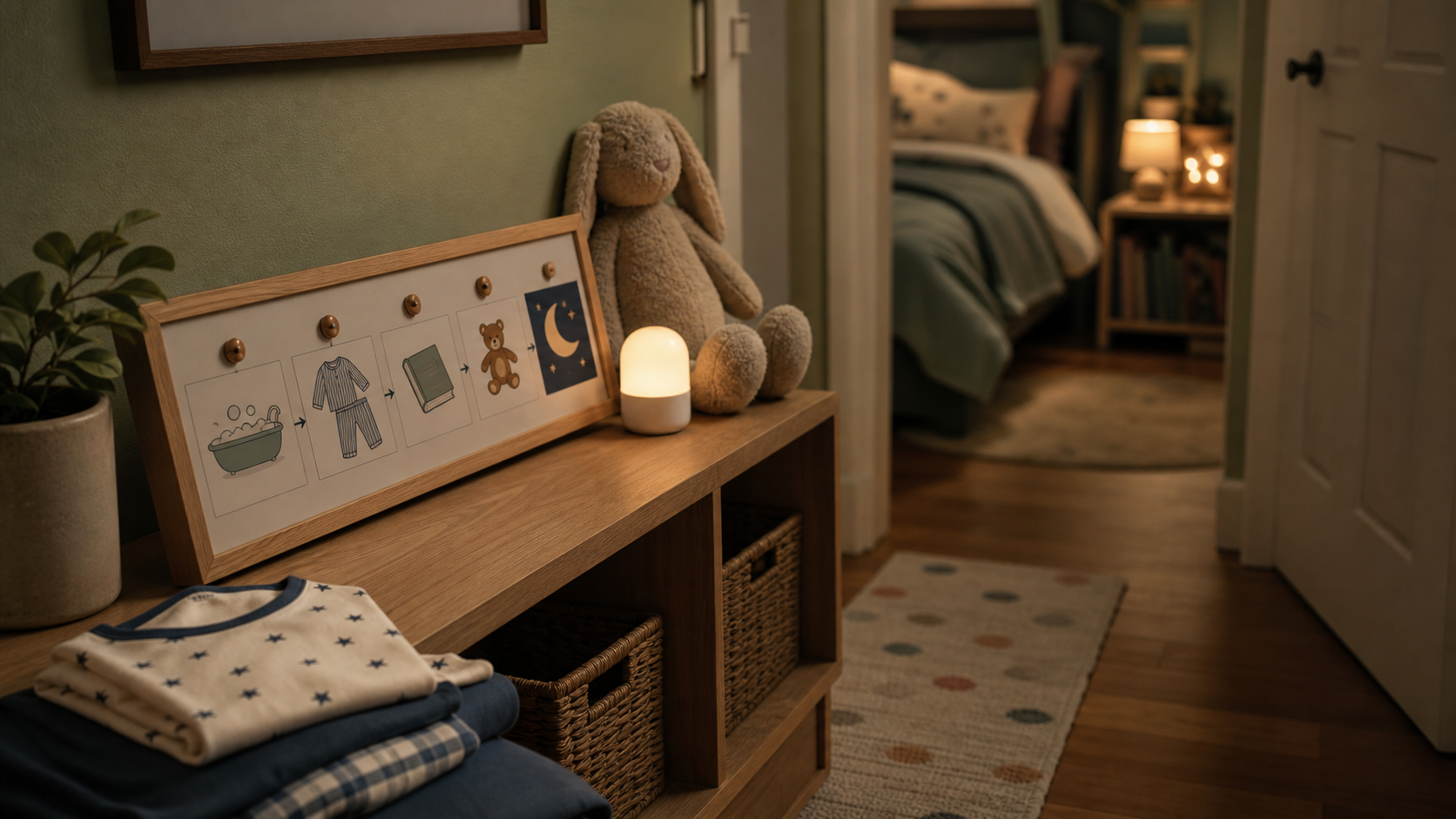
An anxious child does not need a more elaborate bedtime. They usually need a more predictable one.
When evenings go sideways, parents often add more: more explaining, more reminders, more bargaining, more questions.
But bedtime usually calms down when the routine gets smaller, clearer, and easier to repeat.
The goal is not perfect sleep
The goal is a child who knows what comes next.
That matters because bedtime asks children to do several hard things at once: separate from the day, separate from parents, tolerate quiet, tolerate darkness, and trust that morning will come.
For anxious or sensitive children, those are not small tasks.
The simple structure
Use the same four-part shape most nights:
- Body care: bathroom, teeth, water, pajamas
- Connection: one book, one story, one quiet cuddle
- Closing phrase: the same short words every night
- Return plan: what happens if your child calls out
The power is not in any single step. The power is in the repeated pattern.
What to keep steady
- preview tomorrow earlier
- make the routine visible
- use the same words
- separate worry time from sleep time
Children read tiny changes as information. A new negotiation, a longer story, a brighter lamp, or a different final sentence may feel small to you but big to a tired child.
Steady does not mean rigid. It means the routine has a familiar spine.
A 20-minute version
Try this:
- 5 minutes: bathroom, teeth, pajamas
- 3 minutes: tomorrow preview or worry drop-off
- 7 minutes: book or calming story
- 3 minutes: cuddle and closing phrase
- 2 minutes: lights-down transition
If your child is very young, reduce the talking. If your child is older and anxious, move worry talk earlier in the evening so bedtime does not become the meeting where every fear gets invited.
What to say
Use fewer words than your instinct wants.
Try:
"The routine is helping your body know it is sleep time."
"We already answered that worry. Now we are doing our sleep steps."
"I will check on you in a little while. You do not need to solve bedtime."
The tone matters more than the script. Slow, boring, kind, and repeatable beats persuasive.
Where stories fit
A bedtime story is not just entertainment. It is a transition object made of language.
Choose stories with:
- low danger
- gentle repetition
- one feeling named clearly
- a helper or safe place
- a quiet ending
Avoid cliffhangers, frantic plots, or stories that accidentally rehearse the exact worry in too much detail.
If your child keeps coming out
Do not restart the whole routine.
Return them calmly, repeat the closing phrase, and keep the interaction brief. If the routine restarts every time, leaving the room becomes the beginning of more connection, not the end of the day.
You can be warm and still be done.
When to ask for help
If bedtime takes hours most nights, your child is panicky, sleep loss is affecting school or family life, or worries are spreading into the day, bring it up with your pediatrician or a child mental-health professional.
Routine is a support, not a replacement for care when a child is truly struggling.
A Soothly bedtime reset
If your child needs a story that matches tonight's feeling, keep it short and safe.
Example:
"The little lantern did not have to light the whole forest. It only had to glow beside the next step."
Create a calming bedtime story for tonight
Sources
- American Academy of Pediatrics / HealthyChildren: Healthy sleep habits
- CDC: Child Development
- NHS: Anxiety disorders in children
Frequently asked questions
What helps an anxious child at bedtime?
Predictable steps, earlier worry time, fewer negotiations, and the same closing phrase help many anxious children.
Should I answer every worry at bedtime?
Usually no. Answer important worries earlier, then gently return to the routine at bedtime.
How long should the routine be?
Many families do well with 20 to 30 minutes, but consistency matters more than length.
Are bedtime stories good for anxiety?
They can help when they are calm, low-drama, and emotionally matched.
When should I seek help?
Seek help if bedtime anxiety is frequent, intense, or affecting sleep, school, or family life.