Calming Bedtime Stories for 8-Year-Olds
By Soothly Editorial · 7 min read
Last reviewed June 12, 2026
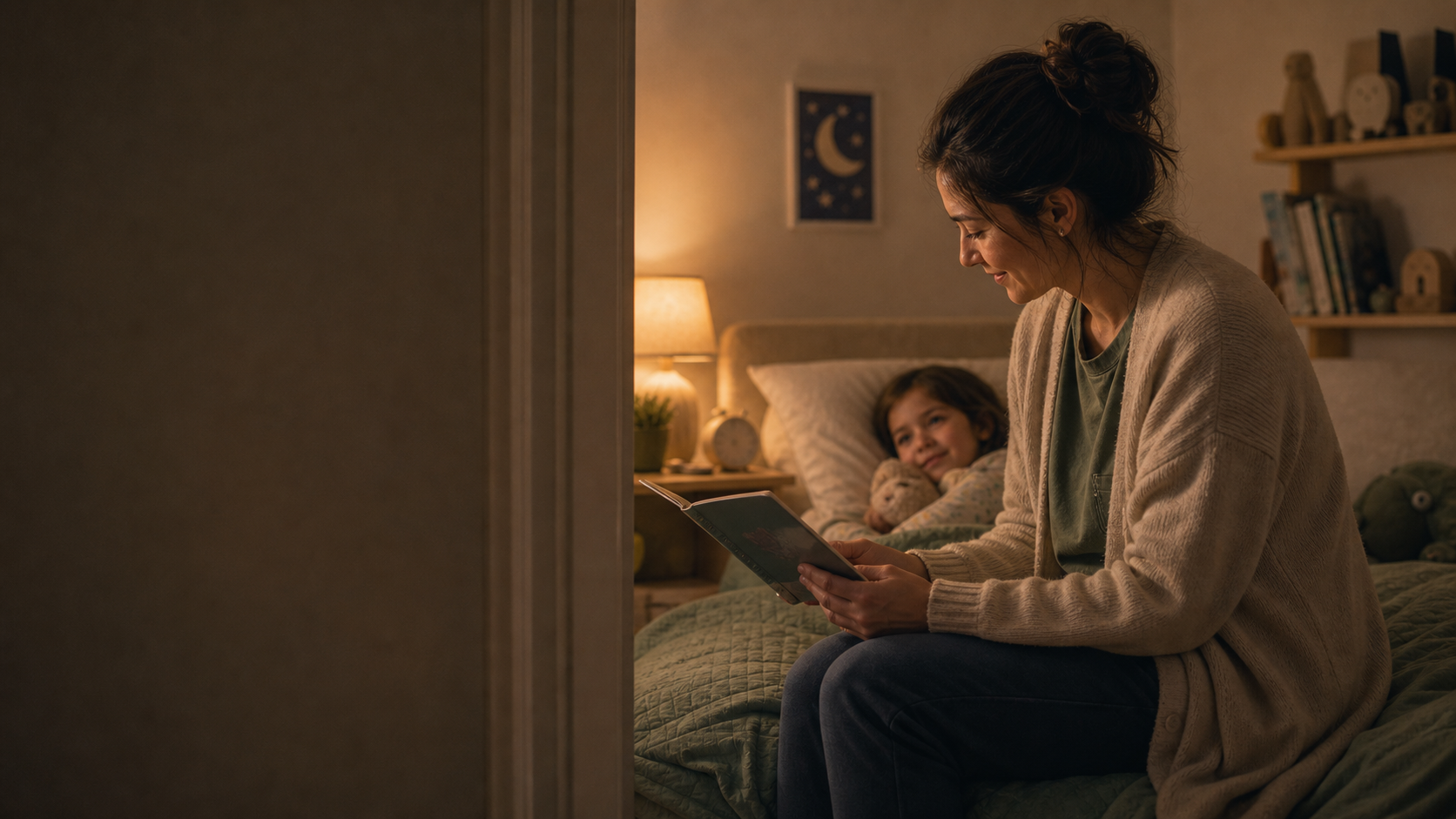
A calming bedtime story for a 8-year-old has to meet the child where they are developmentally.
At 8, bedtime is not only about sleep. It is also where imagination, separation, school-day feelings, body tiredness, and the need for connection all arrive at once.
The best bedtime stories for 8 year olds are not longer or more impressive. They are better matched: right length, right emotional intensity, right ending.
What 8-year-olds need from bedtime stories
A 8-year-old often needs emotionally richer stories that still land gently and do not overexcite the mind. That means the story should feel safe enough to relax into, but interesting enough that the child does not start negotiating for something else.
Good signs:
- your child gets quieter while listening
- the plot is easy to follow
- the ending feels complete
- the story gives one soft phrase to repeat
- the story does not open a new worry after lights out
If the story makes your child more activated, it may be a great daytime story and a poor bedtime story.
Story type 1: A thoughtful friendship story
Use this when your child is tired but still mentally busy.
Keep the character close to your child's world: a small room, a familiar object, a gentle problem, and a safe grown-up nearby.
Example opening:
"The little lantern knew the room was already safe. Its job was not to chase danger. Its job was to help the day become soft."
The ending should not be clever. It should be settling.
Story type 2: A mystery-with-a-soft-ending story
This story works when your child had a big-feeling day.
The character can feel worried, mad, jealous, shy, or disappointed. The story should not shame the feeling. It should show the feeling moving through the body and becoming manageable.
Try this rhythm:
- The feeling arrives.
- A helper names it.
- The character does one small thing.
- The room stays safe.
- Sleep becomes possible.
Story type 3: A feelings-in-the-body story
Some nights need almost no plot.
A sensory story follows soft details: blanket, breath, lamp, window, pillow, quiet house. These stories work because they slow the nervous system instead of asking the child to process another adventure.
Use repeated language:
"One soft breath. One quiet page. One safe room."
What to avoid at this age
Avoid high-stakes danger, cliffhangers, and stories that feel too young for them.
Also avoid cliffhangers. A child who asks "what happens next?" may be delighted, but delight is not always sleep.
A 5-minute template
Use this structure:
- 30 seconds: name the cozy setting
- 1 minute: introduce a small feeling or question
- 2 minutes: one gentle attempt or discovery
- 1 minute: a helper or ritual brings calm
- 30 seconds: repeat the sleep phrase
For this age, the best story often feels smaller than you expect.
When stories are not enough
If bedtime is consistently full of panic, long battles, frequent waking, or fear that affects daytime life, talk with your pediatrician or a child mental-health professional.
Stories can support regulation. They should not be the only support when anxiety or sleep problems are taking over family life.
A Soothly bedtime reset
For tonight, try this closing phrase:
"My thoughts can slow down. My room can hold me."
Create a bedtime story matched to your child’s exact age and feeling.
Create a calming bedtime story for tonight
Frequently asked questions
How long should a bedtime story be at this age?
Most children do well with 3-8 minutes. A shorter story repeated calmly often works better than a long story that creates new questions.
Should bedtime stories be educational?
They can include learning, but bedtime stories should mainly help connection, safety, and settling.
What if my child wants the same story every night?
Repetition is normal and often calming. Familiar stories reduce uncertainty.
Are scary stories okay before bed?
For many children, scary stories are better in daylight. At bedtime, choose contained, safe endings.
Can personalized stories help?
Yes. Personalized details can help a child feel seen, as long as the story stays gentle and does not replay conflict too intensely.