Bedtime stories vs screen time: what research says
By Tim Khuja · 8 min read
Last reviewed June 9, 2026
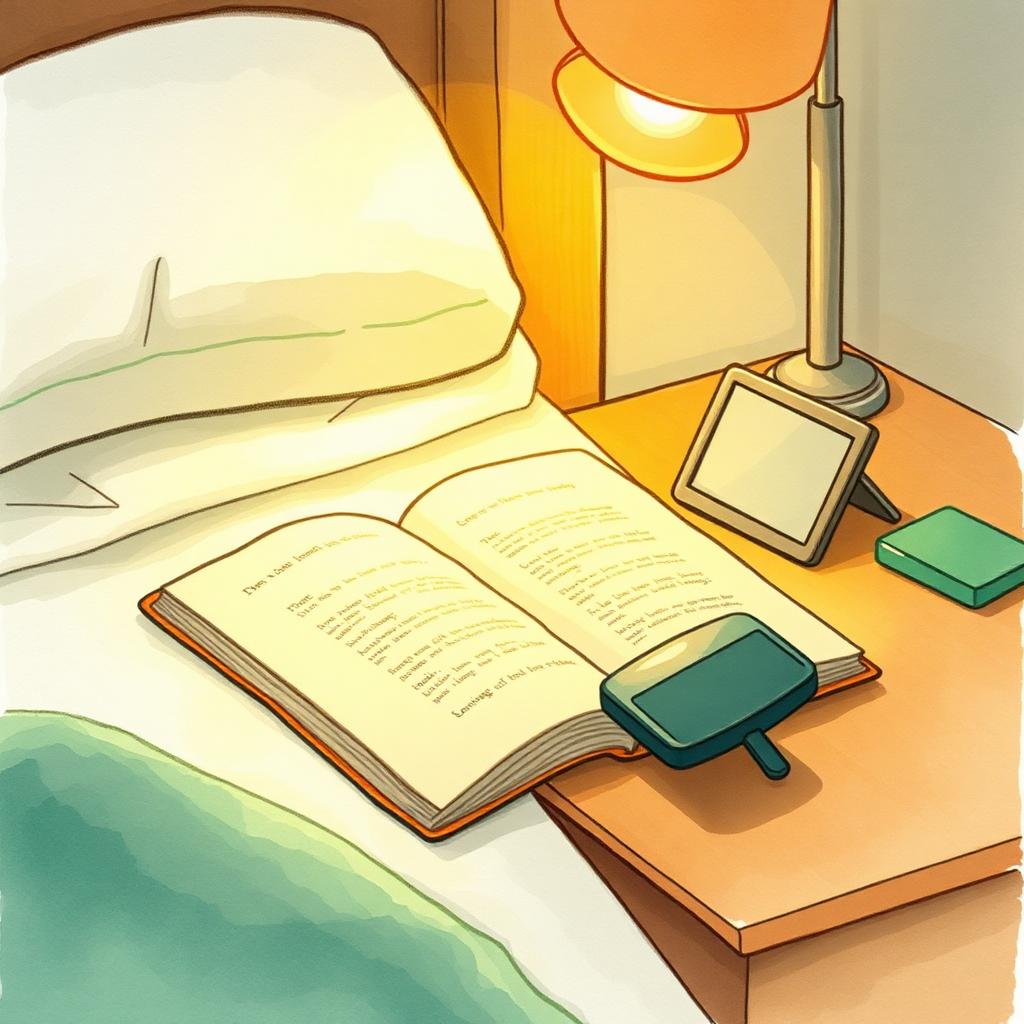
By the time most parents reach the end of the day, the bar for "a good bedtime" is mercifully low: the child is in pyjamas, the teeth are mostly clean, no one is crying. Whether the last twenty minutes are spent with a picture book or a tablet can feel like a coin toss — both are quiet, both keep the peace.
The research suggests it is not a coin toss. The two activities do almost opposite things to a child's brain, body, and sleep. That does not mean screens before bed are catastrophic, or that storytime is a sacred duty. It means it is worth knowing what is actually happening on each side of the room.
What happens during a bedtime story
When you read a story to your child — particularly in the soft, slow, slightly-mumbled voice most parents fall into around 8pm — several quiet things happen at once:
- Their breathing slows to match yours. This is called physiological co-regulation, and it is one of the most studied calming mechanisms in early childhood research. The child's heart rate and breathing literally synchronise with the calmer adult body next to them.
- Their imagination does the visual work. When a story is read aloud, the child constructs the pictures themselves. This is mildly effortful in the brain's language and imagery regions, which is good — it is the kind of effort that settles a system rather than activating it.
- Melatonin keeps rising. The room is dim. The light is warm. The brain reads this as "night is coming" and continues releasing the hormone that brings sleep.
- They feel chosen. Twenty minutes of one adult, one child, one story is one of the few moments in a modern day that is fully undivided. Children remember this in their bodies long after they have forgotten the plot.
What happens during a bedtime screen
Screens at bedtime are not a moral failure — most children watch them, and most children turn out fine. But the physiological picture is different, and worth seeing clearly.
- Blue light suppresses melatonin. Studies on children consistently show that screen exposure in the hour before bed delays melatonin release, which delays sleep onset, which compresses the deep-sleep portion of the night.
- The pace activates. Even calm children's content tends to have cuts every few seconds. The brain's orienting response fires with each cut — new thing, look, new thing, look — which is the opposite of the downward slope a settling brain wants.
- The content does the imagining for them. The pictures arrive pre-made. The work that a story asks a child to do — building a forest in their mind, deciding what the dragon looks like — does not happen.
- Co-regulation drops. Even when a parent is in the room, both bodies are usually oriented toward the screen, not toward each other. The breath does not synchronise the same way.
The combined effect, in the research, is fairly consistent: children who use screens in the hour before bed take longer to fall asleep, sleep less, and wake more often. The effect is small for any one night and meaningful over months and years.
What the research does not say
A few things worth flagging, because they get oversimplified:
- One screen at bedtime will not damage your child. Sleep research is about averages over time, not single nights. The occasional bedtime cartoon is fine. The pattern matters more than the moment.
- Audio stories sit in the middle. A calm audio story, with eyes closed and lights low, captures most of the benefit of being read to — the language, the imagination, the slowing pace — without the visual stimulation. It is an excellent substitute when an adult cannot be there.
- "Reading time" on a backlit tablet is not the same as reading a book. The light is the issue, not the format. E-readers with warm, paper-like screens come closer to a book; tablets do not.
The minimum effective bedtime story
If you are tired — and you are — here is what the research suggests actually matters, in order of importance:
- Dim, warm light. A single lamp, not the overhead. This alone moves the needle on sleep.
- A calm adult voice. Yours. It does not have to be performative. The monotone you slide into at the end of a long day is, neurologically, perfect.
- A predictable arc. A short story with a beginning, a small worry, and a soft ending lets the nervous system practise the same shape: tension, resolution, rest.
- One physical book or one calm audio story. Pick one. Both work. The screen is the thing to leave in the kitchen.
Twelve minutes of this, on most nights, is more powerful than any sleep gadget on the market.
The deeper finding
The story-versus-screen research is interesting on its own, but the more important finding underneath it is this: the end of a child's day is a small, repeating ritual that teaches the nervous system how to come down. Whatever you do at bedtime, you are teaching them what settling feels like. You are showing them, twenty minutes at a time, that the day can end gently, that someone stays with them while it does, and that tomorrow is allowed to come slowly.
A book happens to be one of the most beautiful, low-tech ways humans have ever invented to do that. But the magic is not really in the book. It is in the dim light, the slow voice, and the body of someone safe sitting beside them.
Whatever helps you give them that, most nights, is the right answer.
Frequently asked questions
Is it really that bad if my child watches something on a tablet before bed?
Not catastrophic, no. The research is about patterns over months, not single nights. If most nights end with a book or audio story, the occasional bedtime show will not undo that. What you want to avoid is the daily pattern of screen-then-sleep, which compresses deep sleep over time.
Do audio stories count as the same thing as being read to?
Almost. A calm audio story with eyes closed gives most of the benefit — language exposure, imagination, slowing pace — without the visual stimulation of a screen. The one thing it cannot replicate is the co-regulation of a parent's body in the room, which is why audio is wonderful for some nights and live reading for others.
What about reading on an e-reader or tablet?
The format is fine; the light is the issue. A warm, paper-like e-ink reader is essentially a book. A backlit tablet, even running a reading app, still suppresses melatonin. If you are reading from a tablet, switch to the warmest night-mode setting and keep the brightness very low.
My child wants to watch one short show as part of the wind-down. Is there a better way to structure it?
Yes — front-load the screen, end with the story. So bath, short show, then teeth, then dim lamp and a book or audio story. The order matters because whatever happens in the last fifteen minutes is what your child's nervous system carries into sleep.