A Gentle Bedtime Story About Death for Children
By Soothly Editorial · 7 min read
Last reviewed June 11, 2026
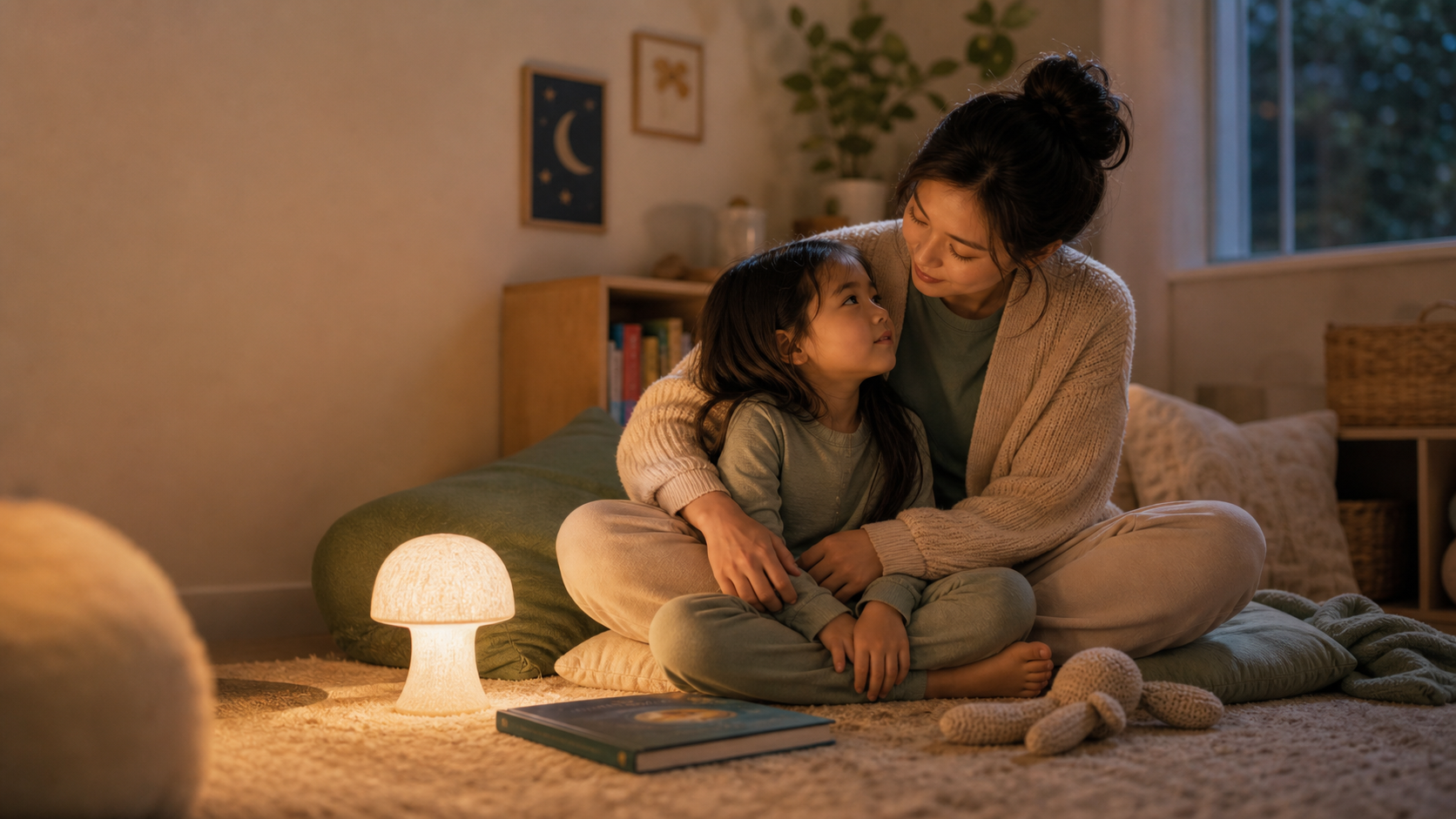
A bedtime story about death needs unusual care.
Children deserve honesty. They also deserve softness.
At bedtime, avoid confusing explanations like “went to sleep” or “went away.” Those phrases can make ordinary sleep or separation feel frightening. Use clear words, then offer comfort.
The story: The Memory Lantern
When Grandma died, Sami’s house became quiet in a new way.
Some quiet was peaceful. Some quiet felt like a missing chair.
At bedtime, Sami asked, “Is Grandma asleep?”
Mama sat beside him and said, “No, love. Grandma died. Her body stopped working. She does not feel pain now, and she does not wake up. We miss her because we love her.”
Sami held the blanket edge.
“Where does the love go?” he asked.
Mama brought a small wooden box to the bed. Inside were a button from Grandma’s coat, a photo turned safely in its frame, and a pressed yellow flower.
“Love can become memory,” Mama said. “Memory is how love visits without needing a body.”
Sami touched the button.
“I feel sad,” he said.
“That makes sense,” Mama said. “Sad is what hearts feel when someone important is gone.”
Together, they placed the yellow flower beside the lamp. The lamp made the petals glow like a tiny lantern.
Sami whispered, “Goodnight, Grandma memory.”
Mama kissed his forehead.
“Goodnight, Sami. You are here. I am here. We will keep loving and remembering.”
The missing chair still felt missing.
But the room also had the memory lantern.
And for tonight, that was enough light.
How to read this story
Read slowly. Let sadness exist. Do not rush to cheer your child up.
You can say:
“It is okay to feel sad and safe at the same time.”
If your child asks direct questions, answer simply. You do not need a perfect speech.
What to avoid
Avoid saying:
- “They went to sleep”
- “They went away”
- “We lost them” without explaining death
- “Don’t be sad”
- “Be brave for everyone”
Bravery is not the absence of sadness.
When to seek support
Seek extra support if your child has persistent nightmares, intense separation fears, regression, guilt, avoidance, repeated traumatic play, or distress that interferes with school, sleep, eating, or relationships.
Grief is normal. Children should not have to carry it alone.
A Soothly bedtime reset
Create a grief story that uses your family’s language, memory, and comfort ritual.
Create a calming bedtime story for tonight
Frequently asked questions
Should I use the word death with children?
Yes, use simple honest words. Phrases like “went to sleep” can confuse children and create bedtime fears.
Is bedtime a good time to talk about death?
Keep bedtime gentle. Big grief conversations are often better in daylight, but a soft story can offer comfort at night.
What should a grief story include?
Include clear truth, permission to feel sad, a caring grown-up, a memory ritual, and reassurance that the child is cared for.
Can stories fix grief?
No. Stories can support connection, but grief takes time and may need professional support if distress is intense or persistent.
What if my child asks hard questions?
Answer briefly and honestly. It is okay to say, “I don’t know, but I am here with you.”