Calm-Down Corner Ideas (and What to Skip)
By Soothly Editorial · 7 min read
Last reviewed June 13, 2026
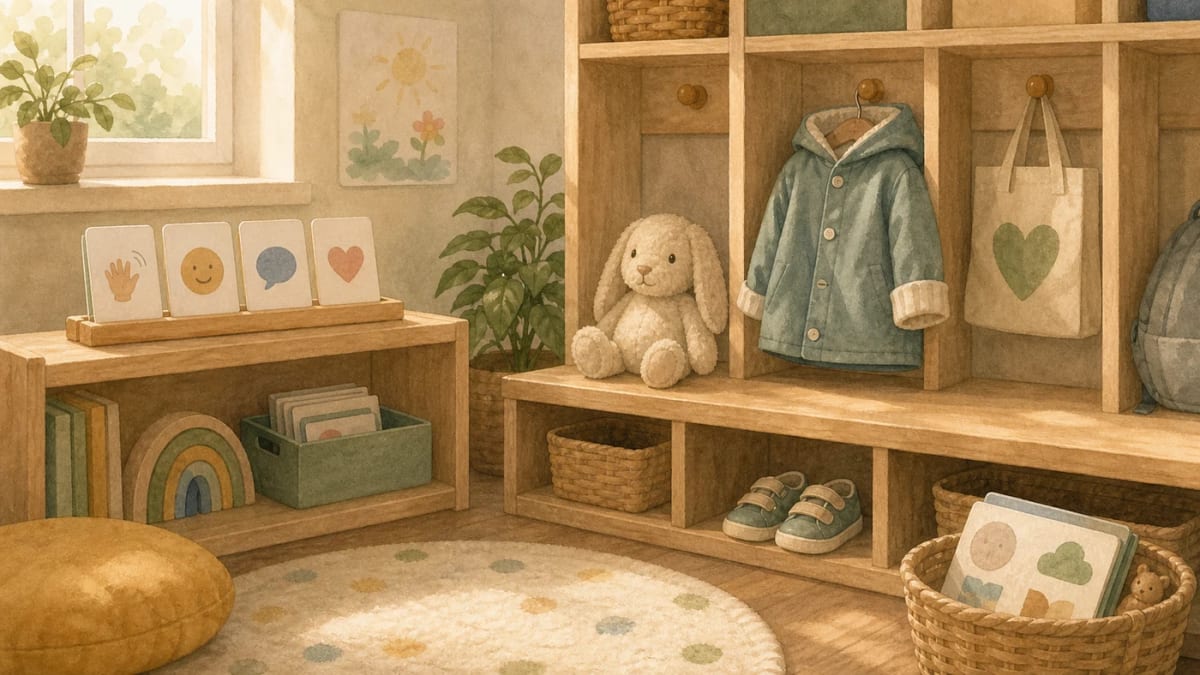
Calming activities work best when they meet the body before they ask for words.
For kids, the goal is not instant perfect calm. The goal is one notch softer: a safer body, a little more connection, and one next step that feels possible.
This guide gives practical calm down corner ideas you can use at home, at bedtime, before school, or after a hard moment.
The quick answer
A calm-down corner should not be a punishment zone. Keep it simple: soft seating, one sensory tool, one breathing cue, one feelings choice, and a clear message that the child can return when ready.
Why this works
A calm-down corner works only when it feels safe, not exiling.
When a child is overwhelmed, the thinking brain is not always ready for a long explanation. Short, concrete activities help because they give the nervous system a job it can actually do.
Try saying:
"Let's help your body first. We can talk after it feels safer."
That sentence lowers pressure. It also tells your child they are not in trouble for having a nervous system.
1. Soft place
Use a cushion, small rug, or chair that feels physically comfortable.
2. One sensory tool
Choose one: putty, textured cloth, weighted plush, or smooth stone.
3. Breathing cue
Add a star, hand, or simple object to trace with breath.
4. Feeling choices
Use colors or faces, not a complicated emotion chart.
5. Return signal
Create a way to show readiness: thumbs sideways, card, or quiet nod.
6. No lectures rule
Do not use the corner as the place where consequences are explained.
7. Repair nearby
Keep paper for repair drawings or notes.
8. Timer optional
Use a timer only if it lowers pressure, not as a sentence.
9. Portable version
Make a small pouch for car, school, or travel.
10. Parent script
Say: this is a helping place, not a trouble place.
How to choose the right activity
Start with the body signal you can see.
- If your child is restless, try movement or heavy work.
- If your child is frozen or quiet, try warmth, soft voice, or a tiny choice.
- If your child is angry, start with safety and strong safe pressure.
- If your child is anxious, use grounding before reassurance.
- If your child is ashamed, keep your voice low and protect dignity.
Do not offer the whole list. Pick one.
What to say while you do it
Use short language:
"I am here."
"Your body is having a hard time."
"We can make this smaller."
"One step first."
Avoid:
"Calm down."
"This is not a big deal."
"Use your words right now."
Those phrases often ask for regulation before the child has enough regulation to begin.
Turn it into a story
If your child responds to imagination, turn the activity into a tiny story.
For example:
"The little fox had too many sparks in his paws, so he pushed the mountain wall until the sparks had somewhere safe to go."
Stories make regulation feel less like a command and more like a path.
Create a calming bedtime story for tonight
Sources
Frequently asked questions
What is the fastest way to help a child calm down?
Start with the body: water, movement, pressure, grounding, or a tiny choice. Save big conversations for later.
What should I say instead of calm down?
Try: your body is having a hard time; I am here; let's make this smaller.
Should calming activities be used as consequences?
No. They work best as support, not punishment.
What if my child refuses the activity?
Make it smaller, offer two choices, or simply stay nearby with a calm presence.
When should I seek more support?
Seek support if dysregulation is frequent, unsafe, persistent, or disrupting sleep, school, or family life.