DIY Calming Jar for Kids: When to Use It
By Soothly Editorial · 6 min read
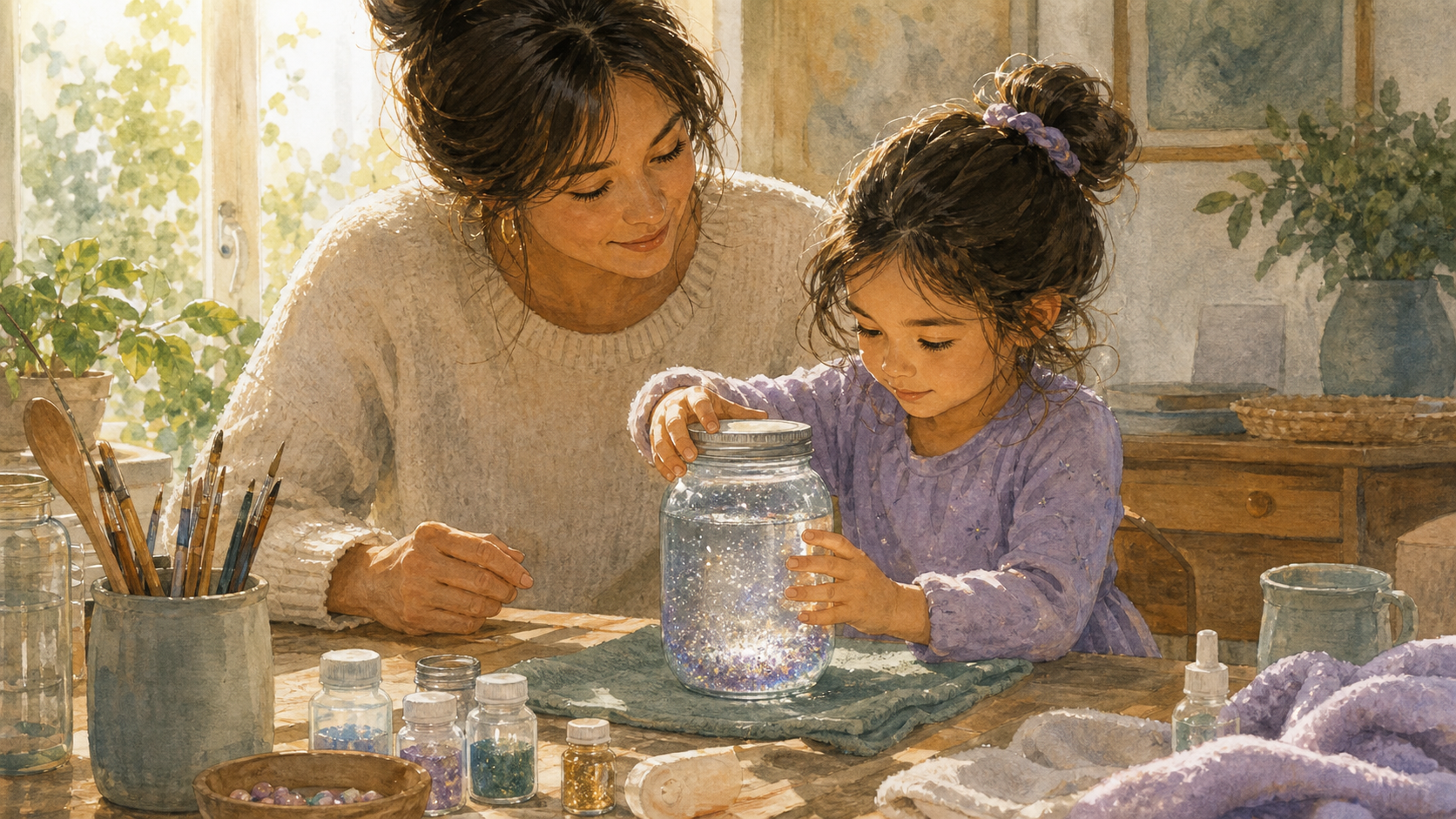
A calming jar is simple: water, glitter, glue, and a lid.
But the real tool is not the jar. The real tool is the pause.
When a child shakes a calming jar and watches the glitter settle, they get a visual metaphor for their body: things can feel stormy, and then slowly become clearer.
A calming jar will not fix every meltdown. It can help when it is introduced gently and used with connection.
What a calming jar teaches
Children often feel emotions before they can explain them. A calming jar gives them something concrete to watch.
You can say:
"Your feelings are swirling like this glitter. We can wait together while they settle."
That sentence matters because it does not shame the feeling. It also does not demand instant calm.
How to make one
Use a clear plastic jar for younger children, or glass only with close supervision.
You need:
- warm water
- clear glue or glitter glue
- fine glitter
- optional sequins
- food coloring if you like
- strong tape or glue for the lid
Fill the jar mostly with warm water. Add glue, glitter, and color. Close tightly. Shake and adjust until the glitter settles at a pace your child likes. Seal the lid securely.
Keep it beautiful but not overstimulating. Too much glitter can become exciting rather than calming.
Practice before big feelings
Do not introduce the calming jar for the first time during a meltdown.
Practice when your child is calm:
"Let's shake it and watch. The glitter does not settle because we yell at it. It settles because we give it time."
Then try one slow breath while watching.
The jar becomes useful because the body remembers practicing.
When to use it
A calming jar can help:
- after school decompression
- bedtime wind-down
- waiting for a turn
- after crying
- during mild worry
- before talking about a hard feeling
It is less useful when a child is already in a full fight-or-flight state. In that moment, they may need your calm presence, fewer words, and safety first.
What to say while using it
Keep your language soft and short.
Try:
"Let's watch it settle together."
"Your body does not have to hurry."
"I am here while the storm slows down."
Avoid:
"Calm down."
"Use your jar or else."
"See? There is no reason to cry."
The calming jar is not a command. It is an invitation.
Pair it with co-regulation
Children borrow calm from adults.
Sit beside your child. Lower your voice. Relax your shoulders. Let the jar be a shared focus, not a test they have to pass.
If your child throws the jar or refuses it, put it away calmly and return to connection. Tools work best when they do not become power struggles.
Bedtime use
At bedtime, the jar can be part of a short wind-down routine:
- Shake the jar once.
- Watch quietly.
- Name one feeling.
- Say the same goodnight phrase.
For example:
"The glitter is settling, and your body can settle too."
Keep it brief. Bedtime tools should not stretch bedtime into a long negotiation.
When to seek support
If big feelings are frequent, intense, aggressive, or interfering with family life, school, or sleep, talk with your pediatrician or a child mental-health professional. Sensory tools can support regulation, but some children need a fuller plan.
A Soothly bedtime reset
A story can turn the calming jar into an inner image your child can carry.
For example:
"Inside the little lake, silver sparks spun and spun. Luma did not chase them. She sat beside the shore until each spark found the bottom and the moon came back."
Create a story that helps big feelings settle slowly.
Create a calming bedtime story for tonight
Sources
- CDC: Anxiety and depression in children
- American Academy of Pediatrics / HealthyChildren: Anxiety disorders
- NHS: Anxiety disorders in children
- Child Mind Institute: What are the signs of anxiety in children?
Frequently asked questions
Do calming jars really work for kids?
They can help some children pause and focus visually while emotions settle. They work best when practiced during calm moments and paired with adult support.
What age is a calming jar for?
Many preschool and early elementary children enjoy calming jars, but younger children need supervision and a securely sealed, child-safe container.
Should I give a calming jar during a meltdown?
Only if your child already knows and likes the tool. During intense distress, connection, safety, and fewer words may matter more.
Can a calming jar be part of bedtime?
Yes, if it stays brief and quiet. Use it as one small wind-down step, not a long activity that delays sleep.
What if my child throws the calming jar?
Put it away calmly and try another regulation support. The tool should not become a power struggle or safety risk.