Calming scripts for anxious children (with real examples)
By Tim Khuja · 7 min read
Last reviewed June 9, 2026
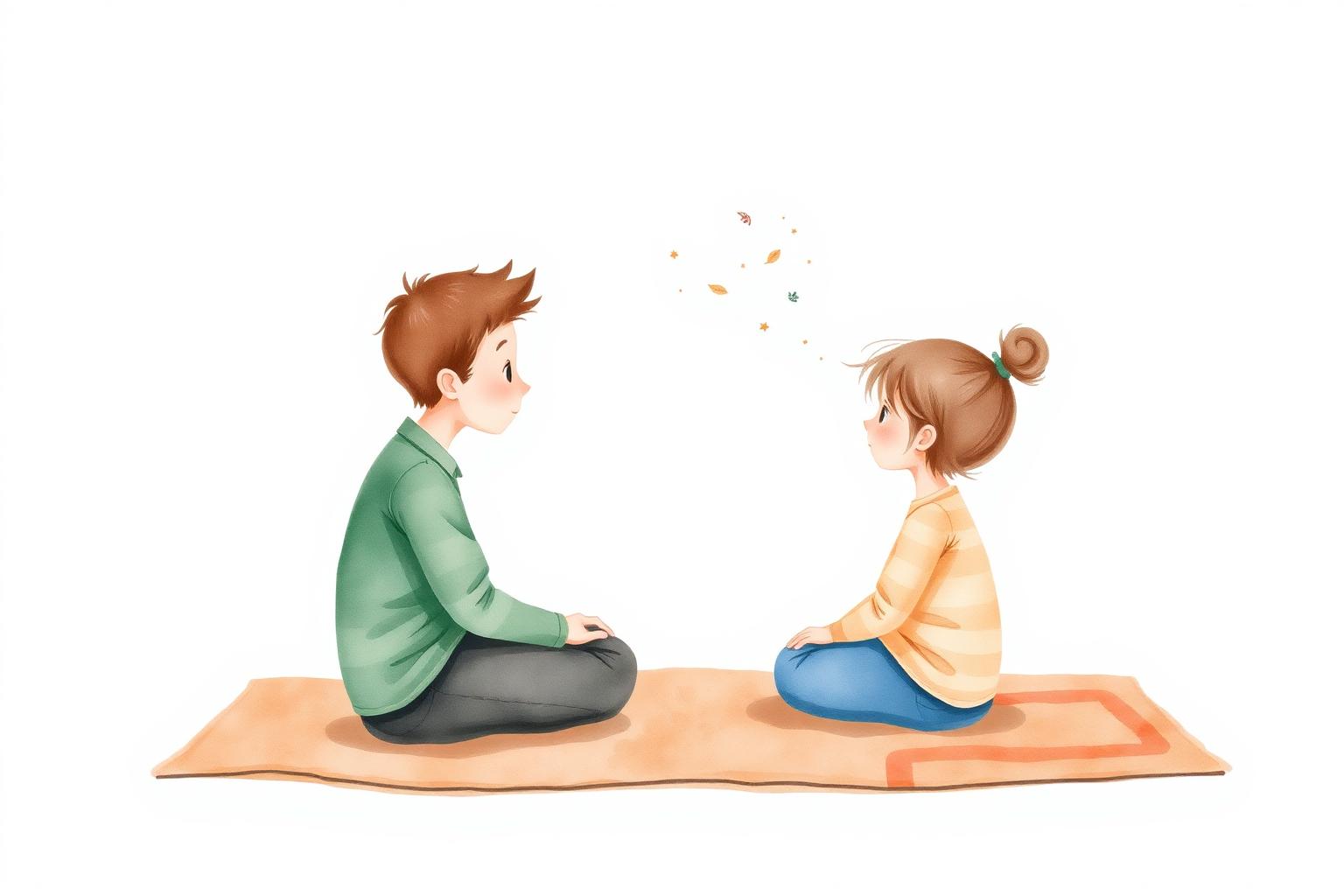
When a child is anxious, parents often default to two scripts: "You're fine, don't worry" (dismissing) or "Oh no, this is awful, let me fix it" (catastrophising along with them). Neither lands well. The first leaves the child alone with the feeling. The second confirms it's scary.
What works is something in the middle: warm, steady, and short. A voice that says I see you. This is hard. We can be in this together.
Here are scripts for different anxious moments, drawn from emotion coaching and co-regulation research.
At the start of a worry
"Something feels big right now. Want to tell me where you feel it in your body?"
"I can see your face is worried. I'm right here. Take your time."
"Your worry brain is talking loudly right now. Let's slow it down together."
When they're spiralling
Lower your voice. Slow your words. Get to their eye level.
"I'm here. You're safe. We don't have to figure anything out right now."
"Let's just breathe together. In through your nose, out like you're blowing a candle."
"You don't need to use words. I'll just sit with you."
When they ask the same worry question on repeat
Reassurance loops feed anxiety. After answering once or twice, gently shift:
"I've already answered that one — and your brain still wants to ask. That's how worry works. Let's do something with our hands while we wait for it to settle."
"What would the brave part of you say back to the worry?"
At separation (drop-off, bedtime, leaving the room)
Brief, warm, confident — not long, not anxious.
"I love you. You can do this. I'll see you at pickup."
"I know it feels hard. I know you can do hard things. See you soon."
"Your worry will get smaller after I leave — that's what bodies do. I'll see you in [specific time]."
During a panic-like wave
"Your body is trying to keep you safe. It's a false alarm. Let's ride it out together."
"Look around — name five things you can see. … Now four you can touch. … Three you can hear."
"Push your feet hard into the floor. Feel the ground. I'm right here."
Before something scary (a test, a doctor, a party)
"It's okay to feel nervous. Nervous and excited live in the same place in your body."
"You don't have to feel ready. You just have to take the next small step."
"I'll be thinking of you. When it's over, we'll tell each other how it went."
After it's passed
This is where learning sticks.
"You did it. That was a hard thing, and you got through it. What helped?"
"I noticed your worry got quieter. Where do you think it went?"
"I'm proud of how you stayed in the room with the feeling."
What NOT to say (and why)
- "You're fine, stop crying." → tells them the feeling is wrong.
- "There's nothing to be scared of." → there is, to them. This breaks trust.
- "You're being silly." → adds shame on top of fear.
- "If you don't stop, we're going home." → makes the feeling a punishable offence.
- "I told you this would happen." → not now. Maybe never.
The structure underneath all of it
Every good script follows the same four-beat shape:
- Acknowledge the feeling. ("I see you're worried.")
- Stay close. ("I'm right here.")
- Co-regulate the body. (slow voice, breath, ground.)
- Bridge forward when ready. ("When you're ready, we can…")
Learn the shape, and the words will come more easily — even on the hardest days.
Frequently asked questions
Why do scripted phrases work better than just winging it?
In a stressful moment, your brain is also flooded. Having a few phrases ready means you don't have to think — you can stay present. Over time the scripts stop feeling scripted and become your natural voice.
What if my child says 'stop talking'?
Stop talking. Stay close. Silent presence is one of the most powerful co-regulation tools. You don't need words to communicate safety.
My child laughs or pushes me away when I use these. What now?
That's often a sign the nervous system is dysregulated, not a sign the script failed. Drop the words, stay nearby, and try again later when their body is calmer. Connection is the goal, not script delivery.
Can I use these with a teenager?
Yes, with adjustments. Older kids need fewer words, more space, and less eye contact. 'I'm here if you want to talk' is often more effective than a full script.
Should I always validate, even if the worry seems irrational?
Yes. Validation isn't agreement — it's acknowledging that the feeling is real. 'That feels really scary to you' is true even when the thing itself isn't dangerous. You can validate the feeling and the reality at the same time.