Why Is My Child's Anxiety Getting Worse?
By Soothly Editorial · 6 min read
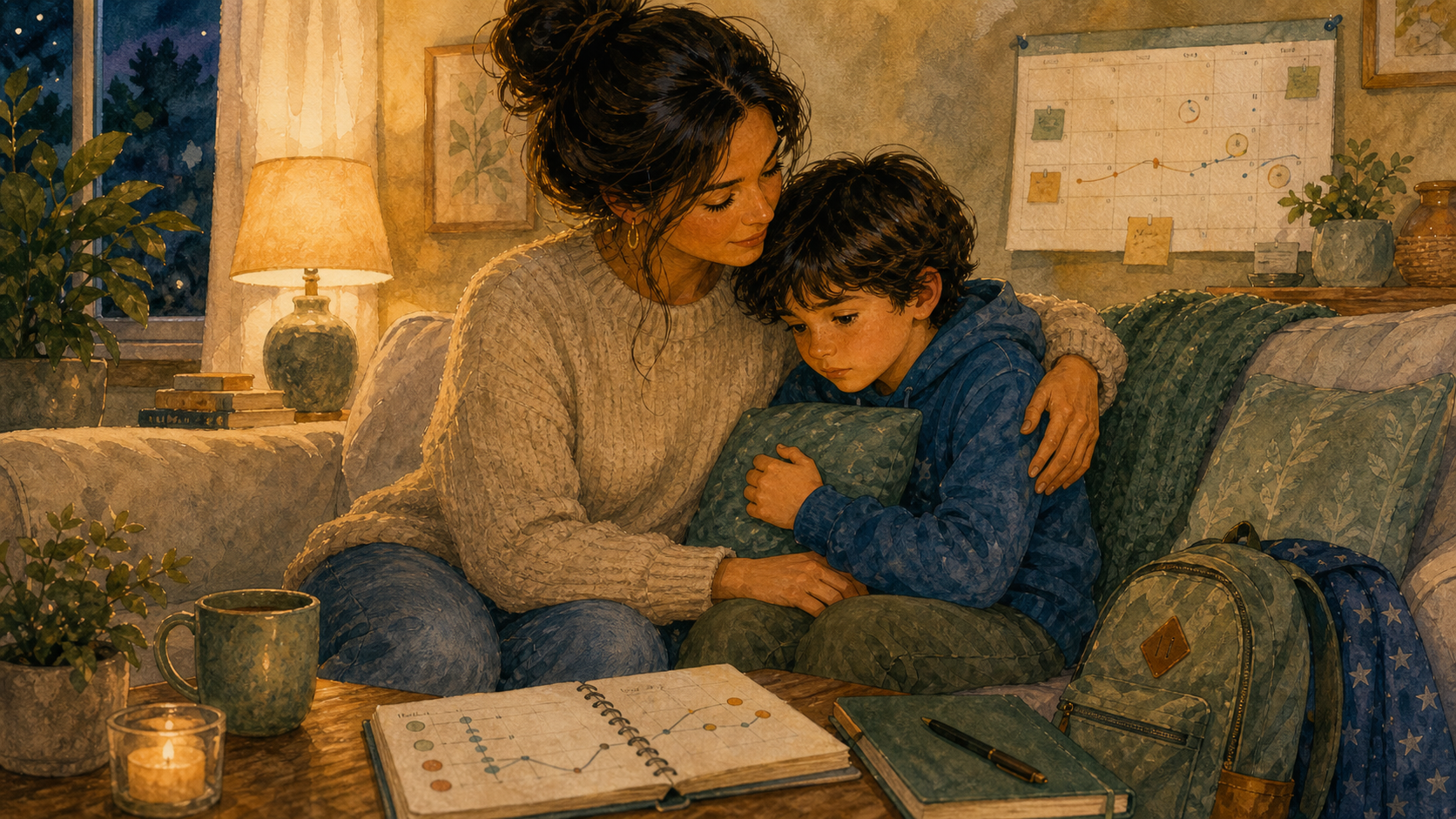
It can feel frightening when your child's anxiety seems to grow.
Maybe the worries used to appear only at bedtime. Now they show up before school, before activities, before meals, and during ordinary transitions. Maybe your child asks for reassurance constantly, avoids more things, or melts down over moments they used to handle.
If you are thinking, my child's anxiety is getting worse, you are not alone. Worsening anxiety is a signal to slow down, look for patterns, and add support. It is not a sign that you failed.
Why child anxiety can get worse
Anxiety can grow when a child's nervous system gets more sensitized and their world gets smaller.
Common contributors include:
- stress at school
- friendship changes
- bullying or exclusion
- family changes
- illness or poor sleep
- big transitions
- repeated avoidance
- too much reassurance seeking
- scary media or news exposure
- perfectionism
- separation stress
Sometimes there is one clear trigger. Sometimes it is a pile-up.
Avoidance can quietly feed anxiety
Avoidance brings short-term relief. That is why it is so tempting.
A child skips the party and feels better. Stays home from school and feels better. Sleeps in your room and feels better. The brain learns, "I survived because I avoided it."
That lesson can make the next brave step harder.
This does not mean you force your child into everything. It means you look for tiny, supported steps back toward life.
Reassurance can become a loop
When anxiety asks, "Are you sure?" a parent's loving instinct is to answer.
But repeated reassurance can become a loop:
- Child worries.
- Parent reassures.
- Child feels better briefly.
- Worry returns stronger.
- Child asks again.
Try answering once with warmth, then coaching tolerance:
"I have answered that. Now we are practicing letting the worried thought pass."
Make a small map
For one week, write down:
- when anxiety appears
- what happens right before it
- what your child avoids
- what reassurance they ask for
- sleep and food patterns
- school or social triggers
- what helps even a little
This turns a scary fog into information.
How to respond when anxiety is escalating
Start with the body, not the argument.
Try:
- lowering your voice
- making the next step smaller
- offering two acceptable choices
- using a coping phrase
- reducing repeated debate
- praising brave behavior
- keeping routines steady
- scheduling calm check-ins away from bedtime
A useful sentence is:
"We can be kind to the worry without letting it run the house."
When to seek professional support
Get help if anxiety is worsening, interfering with school, sleep, eating, friendships, or family life, or causing frequent physical symptoms. A pediatrician can check health factors, and a child therapist can help build a step-by-step anxiety plan.
Seek urgent support if your child talks about self-harm, hopelessness, or not wanting to live.
You do not need to wait until your family is exhausted.
A Soothly bedtime reset
When anxiety has taken too much space in the day, bedtime can become a place to shrink the world gently.
For example:
"The worry vine had climbed across the little garden gate. Each evening, the gardener did not fight the whole vine. She loosened one leaf, opened one inch of gate, and remembered the path was still there."
Turn tonight's worry into a calmer story.
Create a calming bedtime story for tonight
Sources
- CDC: Anxiety and depression in children
- American Academy of Pediatrics / HealthyChildren: Anxiety disorders
- NHS: Anxiety disorders in children
- Child Mind Institute: What are the signs of anxiety?
- Cleveland Clinic: Anxiety in children
Frequently asked questions
Why is my child's anxiety getting worse?
Anxiety can worsen with stress, sleep disruption, school or friendship problems, family changes, avoidance, repeated reassurance loops, or physical symptoms.
Can avoidance make anxiety worse?
Yes. Avoidance can bring short-term relief but teach the brain that the situation is unsafe, making the next step harder.
Does reassurance make child anxiety worse?
Warm reassurance is normal, but repeated reassurance loops can keep anxiety asking for certainty again and again.
What should I track?
Track when anxiety appears, what happens before it, what your child avoids, reassurance patterns, sleep, food, school stress, and what helps.
When should we get help?
Seek help if anxiety is worsening or interfering with school, sleep, eating, friendships, family life, or safety.