A Children's Story About a New Sibling
By Soothly Editorial · 7 min read
Last reviewed June 12, 2026
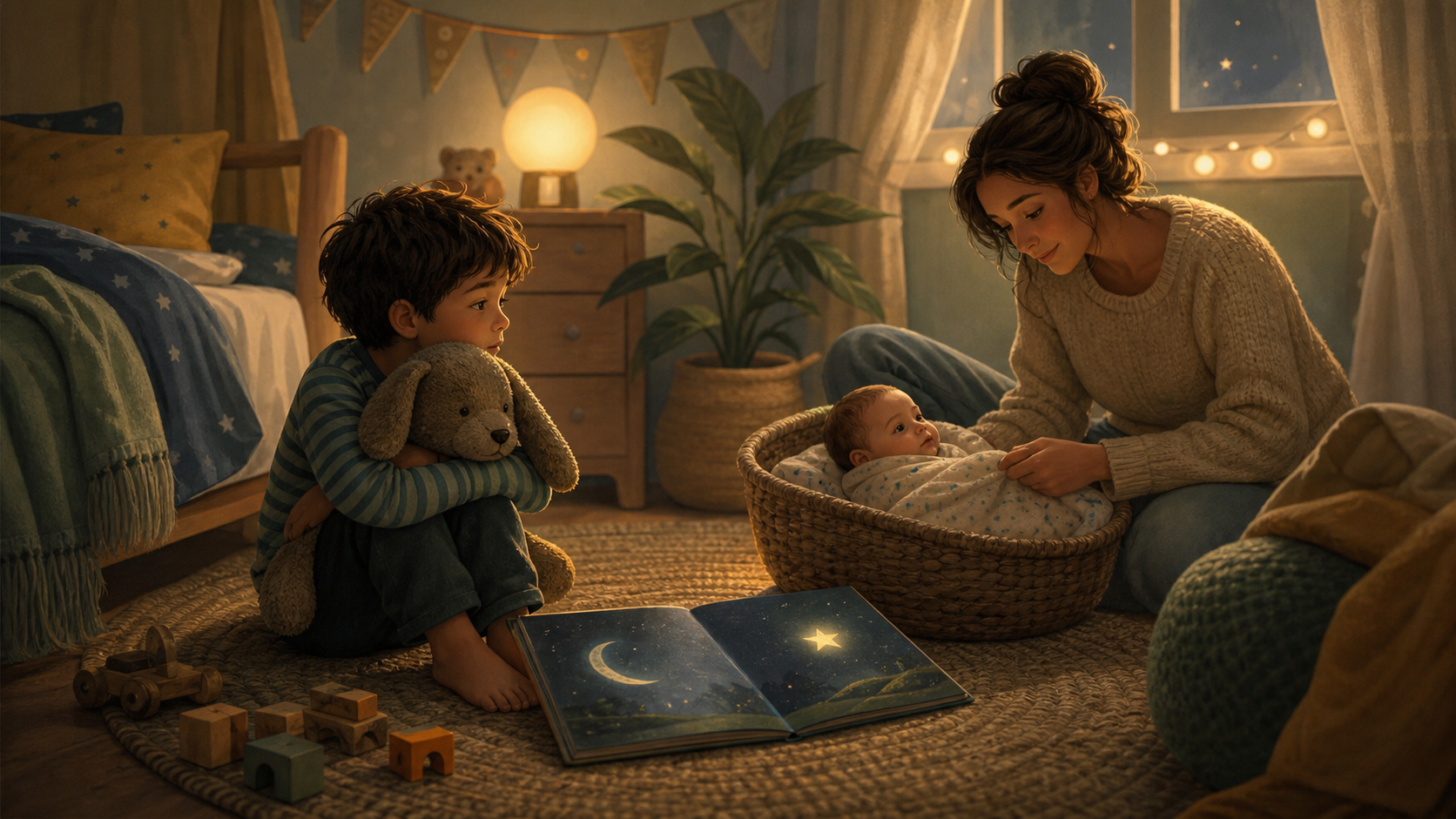
A new baby can bring more than one feeling into the room.
An older child may feel proud, curious, jealous, worried, silly, angry, helpful, and suddenly very small. That does not mean they are being unkind. It means their world has changed.
This children's story about a new sibling is written for that in-between place.
The story
Mila had always been the keeper of the bedtime moon.
Every night, she chose which curtain opened first. She chose whether the story voice should be whispery or brave. She chose which stuffed animal sat closest to the pillow.
Then one day, the house learned a new sound.
Waa.
It was not a bad sound. It was just everywhere.
The baby came home wrapped like a tiny parcel, and everyone spoke in soft voices.
"Look," said Grandma. "Your new brother is here."
Mila looked.
The baby had small fists and a serious forehead.
Everyone smiled at him.
Mila smiled too, because she knew smiling was what big sisters were supposed to do.
But that night, when the bedtime moon came up, Mila did not feel like the keeper anymore.
The baby needed milk.
The baby needed rocking.
The baby needed the grown-ups' eyes.
Mila sat beside her stuffed rabbit and whispered, "There is not enough room."
The rabbit did not answer, because rabbits are careful with important sentences.
Then Dad came in and sat on the rug.
He did not say, "You should be happy."
He did not say, "You are a big girl now."
He said, "It feels different in here."
Mila nodded.
Dad pointed to the moon outside the window.
"When a new star appears," he said, "the moon does not disappear."
Mila looked at the sky.
There was the moon, round and quiet.
There were the stars, old and new.
"But everyone looks at the new star," Mila said.
"Sometimes," Dad said. "And the moon still gets its own light."
So they made a plan.
Every night, before the baby's last song, Mila would have Moon Keeper Time.
It was not long.
It was not fancy.
But it was hers.
She chose the curtain. She chose the first page. She chose where rabbit sat.
And when the baby cried, Mila still felt the squeeze in her chest sometimes.
But now she had words for it.
"I need moon time," she could say.
And the grown-ups would remember.
The new star belonged.
And so did the moon.
Why this story helps
Children often hear that a new sibling is exciting. That may be true. It may also be incomplete.
An older child may be grieving the old family rhythm. They may miss being the smallest, the only, or the automatic center of attention. They may love the baby and resent the baby in the same day.
A good story makes mixed feelings normal.
What to say after the story
Try:
"Mila loved the baby and still missed her old bedtime. Both were true."
Or:
"You never have to pretend every feeling is happy here."
Avoid testing your child with, "Do you feel jealous of the baby?" Bedtime is rarely the best time for direct emotional cross-examination.
A simple family ritual
Create a small daily ritual that belongs only to the older child.
It can be:
- five minutes of reading
- choosing the first bedtime song
- a private hand squeeze
- drawing one picture together
- a short walk to the mailbox
The ritual should be easy enough to keep on messy days. Consistency matters more than size.
What the story teaches
This story teaches that:
- mixed feelings are normal
- love is not a limited supply
- older children still need special time
- jealousy can be named without shame
- belonging can be rebuilt through ritual
When to get more support
Ask for more support if your child becomes persistently withdrawn, aggressive, sleep-disrupted, highly anxious, or if sibling stress feels unsafe or overwhelming.
Create a new-sibling story for your child
Use your child's real role, favorite animal, and one ritual they can count on.
Create a calming bedtime story for tonight
Sources
Frequently asked questions
How do stories help with a new sibling?
They give the feeling a safe shape and model one small next step without putting the child on the spot.
Can I read this at bedtime?
Yes. Keep your voice slow, avoid turning it into a lecture, and end with reassurance.
Should I ask my child if the story is about them?
Usually no. Let the child connect indirectly if they want to.
Can I change the character?
Yes. Using your child's favorite animal or toy can make the story feel safer and more personal.
When should I seek more support?
Seek support if feelings are frequent, unsafe, persistent, or disrupting sleep, school, or family life.