Daycare Drop-Off Crying: The Calm 3-Minute Goodbye
By Soothly Editorial · 6 min read
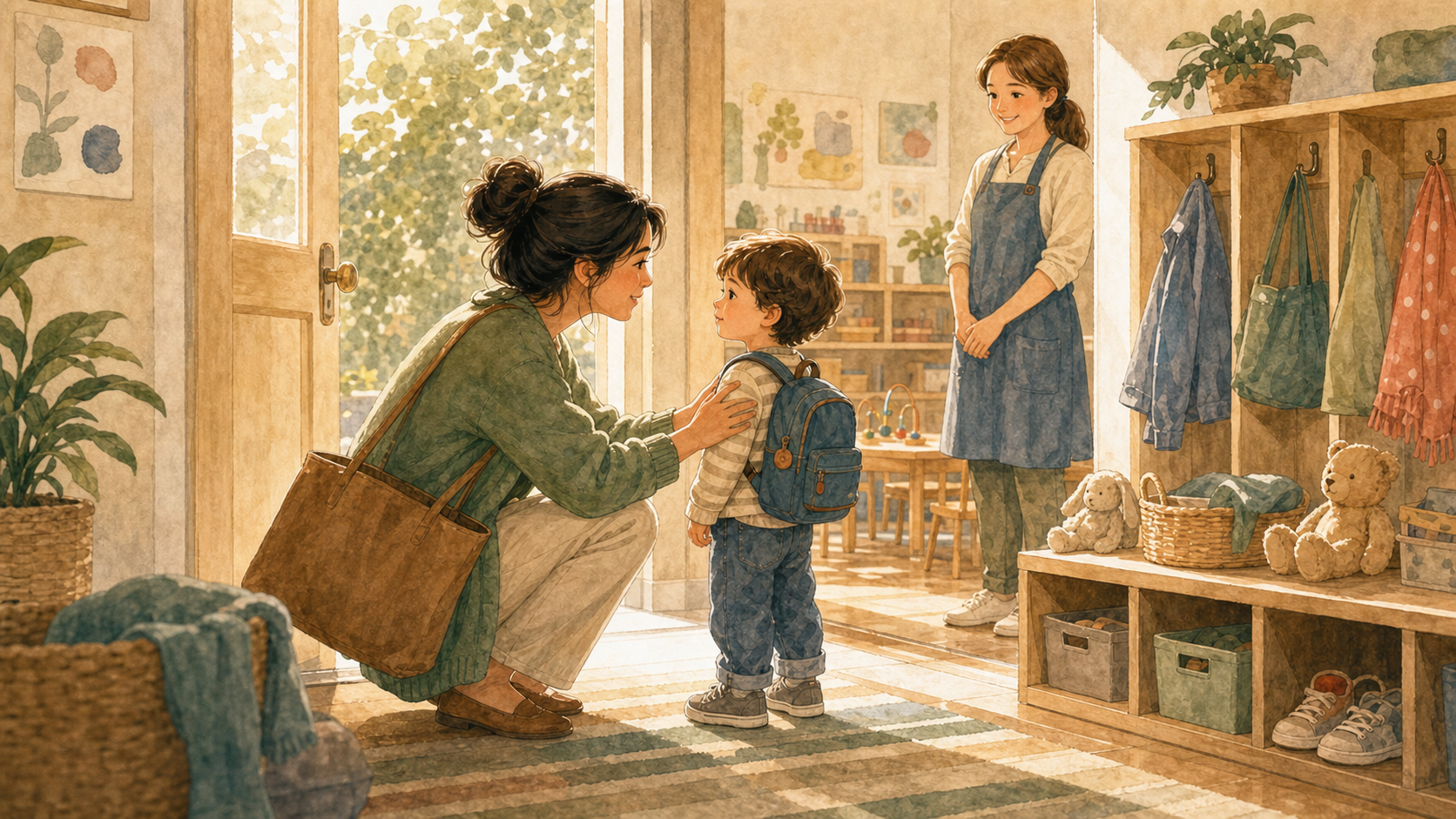
Daycare drop-off crying can shake your whole morning.
You know your child is safe. You may even know they often settle after you leave. But in the moment, with small arms around your neck and a face full of tears, it can feel wrong to walk away.
The aim is not to become cold. The aim is to make the goodbye warm, short, predictable, and trustworthy.
Why daycare drop-off gets so intense
Young children do not experience time the way adults do. When you leave, their body may feel the separation before their brain can remember the whole story: my parent leaves, I play, my parent comes back.
Crying can be louder when there is:
- a new daycare room
- a new caregiver
- illness or poor sleep
- a parent returning to work
- changes at home
- a recent vacation or long weekend
- a temperament that needs slow warm-up
None of this means daycare is wrong. It means the transition needs a pattern.
The calm 3-minute goodbye
A long goodbye often feels loving, but it can stretch the alarm.
Try this 3-minute shape:
- Connect: one hug, eye contact, warm voice.
- Name the plan: "I go to work. You play with Mira. I come back after snack."
- Do the ritual: kiss, wave, handoff.
- Leave: calmly, without restarting the goodbye.
If your child cries, the ritual still counts. The lesson is not "I only leave when you are happy." The lesson is "goodbyes are safe and grown-ups come back."
Work with the caregiver
Ask the caregiver what happens after you leave. Do they settle in five minutes? Do they need a favorite toy? Do they struggle for an hour?
That information changes the plan.
You can ask:
- "How long does crying usually last?"
- "What helps them settle?"
- "Who is the best handoff person?"
- "Can you send one quick update after they settle for a few days?"
A good daycare partner will help build the bridge.
What not to do
Try to avoid:
- sneaking away
- coming back for repeated extra hugs
- apologizing as if daycare is unsafe
- long explanations during crying
- asking, "Are you okay if I go?"
That last question is tender, but it asks the child to approve something they may not be able to approve yet.
Use confidence instead:
"You are safe. I love you. I will come back."
When crying is not settling
If your child cries intensely for a long time after you leave, stops eating, stops sleeping, vomits from distress, seems terrified of a specific person or place, or gets worse over several weeks, pause and investigate.
Talk with the caregiver and pediatrician. Sometimes the plan needs more gradual exposure. Sometimes the setting or fit needs review.
A Soothly bedtime reset
A bedtime story can rehearse the emotional pattern without another real goodbye.
"The little rabbit cried at the meadow gate until the teacher bird showed him the acorn table. Mama Rabbit always came back when the sun touched the fence. Every day, the path home became easier to remember."
Create a gentle goodbye-and-return story for tonight.
Create a calming bedtime story for tonight
Sources
- American Academy of Pediatrics / HealthyChildren: How to ease your child’s separation anxiety
- American Academy of Pediatrics / HealthyChildren: Making baby drop-off at child care easier
- NAEYC: Difficult goodbyes and separation anxiety
- CDC: Anxiety and depression in children
- NHS: Anxiety disorders in children
Frequently asked questions
Is daycare drop-off crying normal?
Some crying at daycare drop-off is common, especially during transitions. What matters is how long it lasts, whether your child settles, and whether distress improves over time.
Should I sneak away if my child cries?
No. Sneaking away can make separation feel unpredictable. Use a warm, brief goodbye and leave calmly.
How long should drop-off take?
Once you reach the handoff point, keep it short: connect, name the plan, do the ritual, and leave.
What if my child cries after I leave?
Ask caregivers how long crying lasts and what helps. A child who settles quickly needs a different plan than a child who remains distressed.
When should I worry?
Seek support if crying is intense, lasts a long time, worsens, affects eating or sleep, or your child seems afraid of the setting.