Fever and Night Terrors: Why Sick Kids Sleep Strangely
By Dr. Tim Khuja · 6 min read
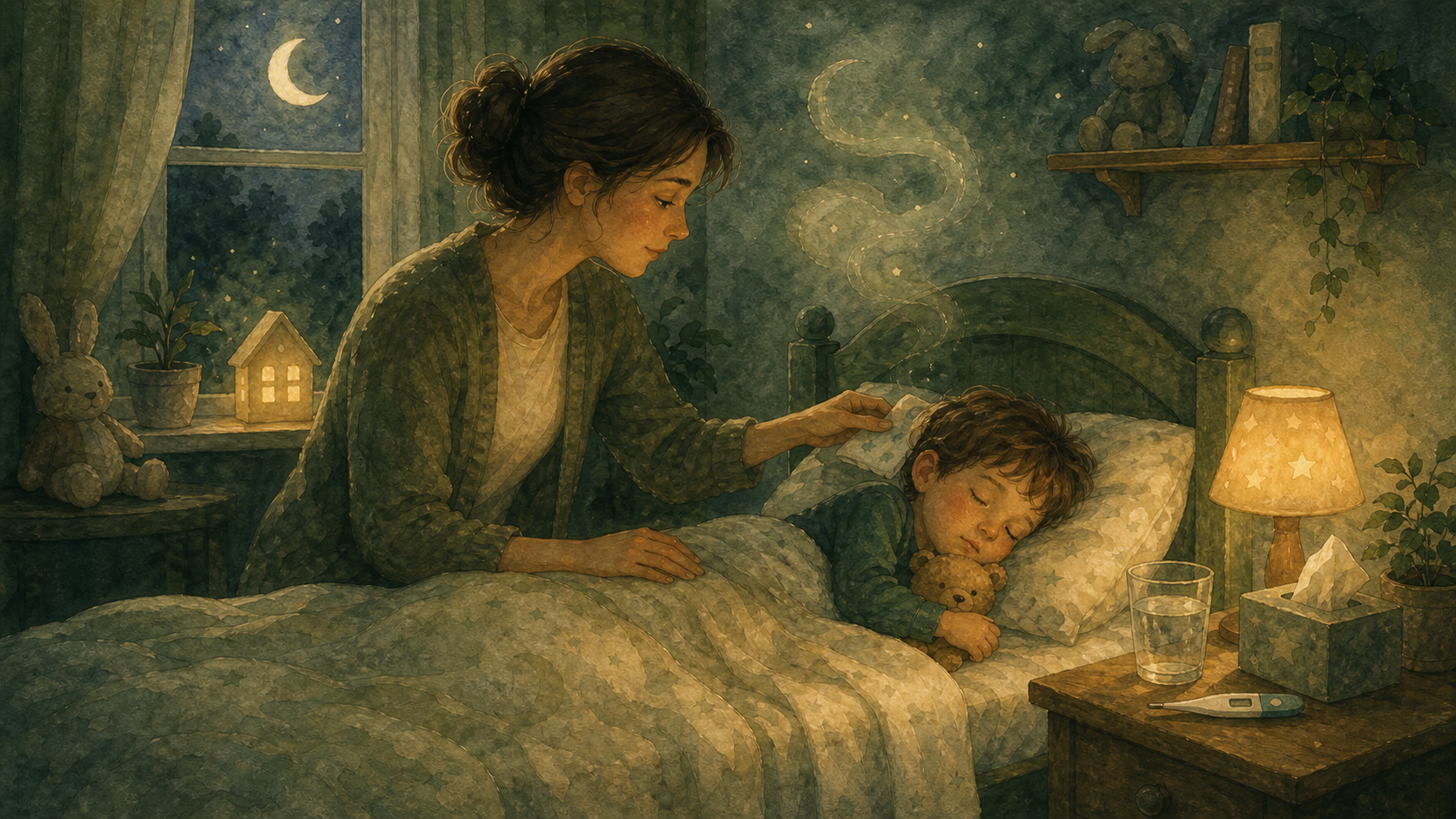
Sick nights can feel different.
Your child is hot, restless, and half-asleep. They may cry, shout, sit up, seem confused, or push you away when you are only trying to help.
Then the next morning, they may remember nothing.
If this happens during an illness, you may wonder about fever and night terrors. Can a fever cause them? Is this just strange sick sleep? Or should you worry?
The short answer: illness and fever can make sleep more disrupted, and disrupted sleep can make night-terror-like episodes more likely in some children. But fever also deserves practical care, especially in younger children or when symptoms look unusual.
Why fever can make sleep strange
Fever changes the body.
Your child may be hotter, more uncomfortable, more dehydrated, more restless, and more likely to wake between sleep stages.
Night terrors often happen during deep non-REM sleep, usually in the first part of the night. When a child is sick, sleep can become bumpier. The body is working hard, the nervous system is activated, and normal sleep transitions may not be as smooth.
That is why a sick child may:
- cry suddenly
- seem confused
- talk nonsense
- sit up
- sweat
- be hard to comfort
- fall back asleep afterward
- remember little or nothing
This can look scary even when it passes quickly.
Is it a night terror or fever confusion?
Sometimes the label matters less than the care.
A classic night terror usually includes:
- seeming awake but unreachable
- happening early in the night
- difficulty accepting comfort
- little or no memory afterward
Fever-related confusion or restlessness may look similar, but the illness itself is part of the picture.
Ask:
Is my child safe, breathing normally, and recovering between episodes?
If yes, keep caring calmly and monitor. If no, or if something feels wrong, seek medical advice.
What to do in the moment
Start with safety and comfort.
- Stay close.
- Keep the room dim.
- Speak softly.
- Do not shake your child awake.
- Check temperature if needed.
- Offer fluids if your child is awake enough and it is appropriate.
- Keep bedding comfortable and not overheated.
- Follow your doctor’s guidance for fever medicine.
If your child is having what looks like a night terror, do not force a conversation. They may not be awake enough to process your words.
You can simply say:
“You’re safe. I’m here.”
“Your body is working hard. I’ll stay close.”
When fever needs medical advice
Fever rules depend on your child’s age, symptoms, and medical history.
Call your doctor or seek urgent care if:
- your baby is very young and has a fever
- your child has trouble breathing
- your child is difficult to wake
- your child has a seizure
- your child has a stiff neck
- your child shows signs of dehydration
- your child has a rash that worries you
- fever is persistent or very high
- your child seems unusually ill
- your instinct says something is wrong
If you are unsure, calling is reasonable.
How to reduce fever-related night terrors
You cannot always prevent sick-night disruptions.
But you can reduce sleep stress:
- keep the bedtime routine simple
- avoid making bedtime late because the day was chaotic
- keep the room cool and comfortable
- offer fluids according to age and medical advice
- use fever medicine only as directed
- avoid intense shows or stimulation before bed
- check on your child calmly
The goal is not perfect sleep during illness. The goal is safety, comfort, and less overload.
What to say the next morning
If your child does not remember, keep it simple:
“You had a hard sick-sleep moment. Your body was fighting germs. I stayed close.”
Avoid making the night sound terrifying. Sick children often need reassurance that their body is working, not failing.
A Soothly bedtime reset
When a child is sick, bedtime can feel uncertain.
A short gentle story can help the room feel safe again.
For example:
“The little fox’s body was working like a warm lantern, glowing hard to help him heal. The Moon Nurse whispered, ‘You do not have to do the work alone. Rest is part of getting better.’”
Create a soft story for a hard sick night.
Create a calming bedtime story for tonight
Sources
- American Academy of Pediatrics / HealthyChildren: Nightmares, Night Terrors & Sleepwalking
- Mayo Clinic: Sleep terrors symptoms and causes
- Mayo Clinic: Fever in children
- Cleveland Clinic: Night Terrors
Frequently asked questions
Can fever cause night terrors?
Fever and illness can disrupt sleep and may make night-terror-like episodes more likely in some children. The illness itself should also be monitored.
Is confusion at night normal with fever?
Some children seem restless or confused when sick, but significant confusion, difficulty waking, breathing trouble, seizure, dehydration, or anything alarming needs medical advice.
Should I wake my child during a fever night terror?
Do not shake or force them awake. Keep them safe, monitor symptoms, and seek medical help if the fever or episode worries you.
Can fever dreams look like night terrors?
Sick sleep can include nightmares, restless waking, confusion, or night-terror-like episodes. Look at whether your child wakes fully and remembers a dream.
When should I call the doctor?
Call for fever in very young babies, trouble breathing, seizure, dehydration, stiff neck, unusual sleepiness, persistent high fever, or if your child seems very unwell.