Goodbye rituals that actually work (and why most don't)
By Tim Khuja · 6 min read
Last reviewed June 9, 2026
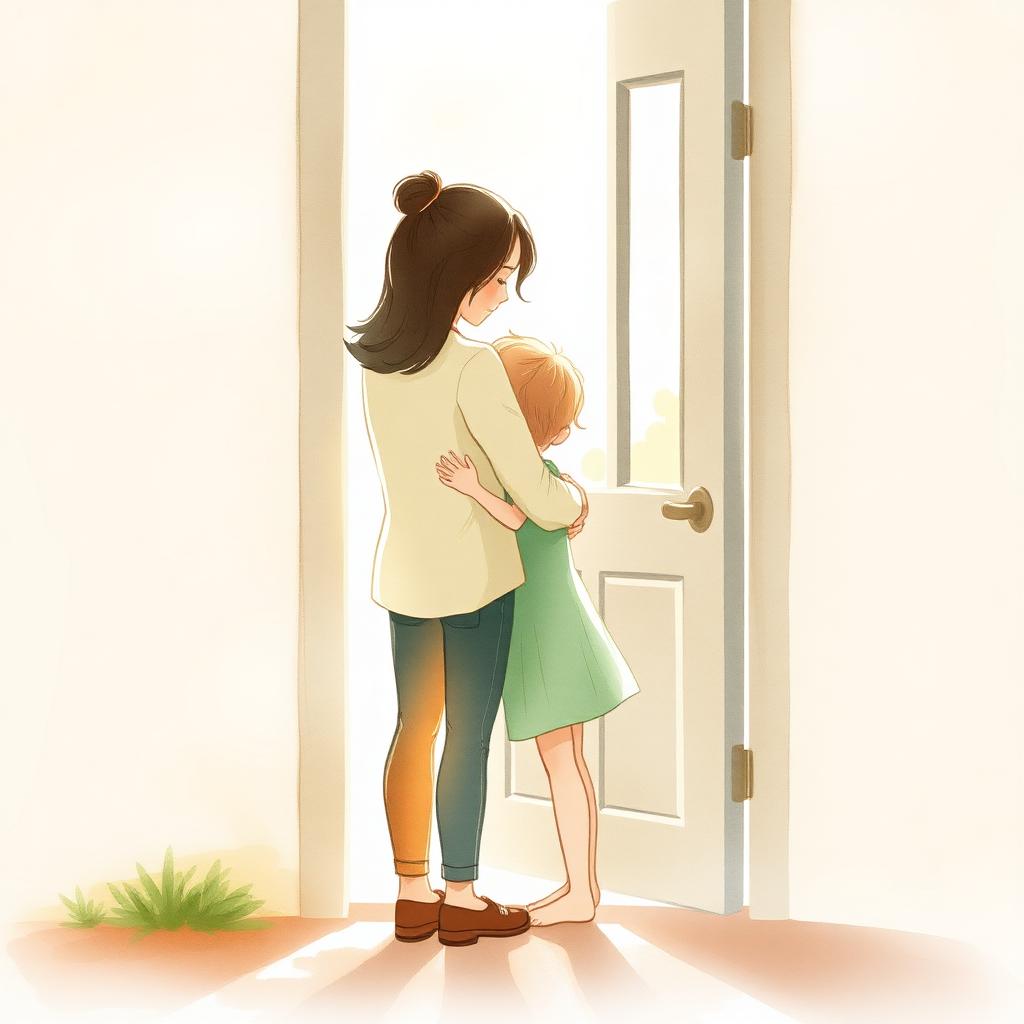
Every parent at every daycare drop-off has tried the same things. The long hug. The promise that you'll be back soon. The "look at the fun toys!" The slow extraction. The sneak-out.
And every parent has watched their child fall apart anyway.
Here's the part that changes everything: separation anxiety isn't soothed by more reassurance. It's soothed by predictable reassurance. A small ritual, repeated the same way every single time, does more for a child's nervous system than a five-minute pep talk ever will.
Why rituals work when words don't
When a child is anxious, the thinking part of their brain goes offline. They can't really hear you tell them you'll be back at 3pm. The words bounce off.
What they can track is pattern. The body learns rituals the way it learns the smell of home — without thinking, without language. A ritual creates a tiny moment of certainty inside a transition that otherwise feels terrifying.
Janet Lansbury calls this "the predictable goodbye." Tina Payne Bryson and Dan Siegel frame it as helping a child move from a flooded "downstairs brain" to a regulated "upstairs brain" through co-regulation. The mechanism is the same: predictability calms the nervous system in a way reassurance can't.
What makes a ritual work
Three things, every time:
- Short. Three to ten seconds, not three minutes. Long goodbyes signal that something is wrong.
- Identical. Same words. Same physical gesture. Same place. Every. Single. Time. The brain is looking for a pattern.
- Ends with the same line. A clean closing phrase that means this is the door. "See you after snack time" or "I'll be back at pickup."
That's it. No bargaining. No extending. No "one more hug."
Examples that actually stick
You're not trying to invent something clever. You're trying to invent something repeatable. Pick one shape and use it for months.
- The two-three-squeeze: A small kiss on the forehead, then squeeze their hand twice — "I love you." They squeeze back three times — "I love you too." Then you walk.
- The window wave: Walk them in, give the goodbye line, then go to a specific window outside and wave once before leaving. Same window every time.
- The pocket token: A small smooth stone or button in their pocket. "When you miss me, you can hold this. I'll be thinking about you too." (Especially good for ages 4–7.)
- The matching mark: Draw a tiny heart on their wrist with a marker, draw one on yours, "We match all day." Works wonders for kids who like a physical anchor.
- The story line: A single sentence that picks up where you left off yesterday — "I wonder what the squirrels are doing today. Tell me at pickup." Gives them a thread that connects the day.
The mistakes that make it worse
- The sneak-out. Tempting, but it teaches the child that you can disappear at any moment. Anxiety goes up over the next week, not down.
- The long, anxious goodbye. If you're stalling, they read it as "this place isn't safe enough to leave me in."
- Bargaining mid-ritual. "Just one more hug" doesn't comfort; it signals that the script can change. Hold the line.
- Different rituals on different days. One day you walk to the gate, one day you stop at the door. The brain can't lock onto a pattern.
- Performing okay-ness. Forcing a giant cheerful smile when you're sad to leave them confuses them. A calm, warm, slightly serious goodbye is the most regulating.
What to do if they're still crying
Trust the staff. Walk to the car. Cry in the car if you need to (most parents do, especially in the early weeks).
Then text the centre at 10am for an update. Most children settle within 5–10 minutes of the parent leaving. The screaming you witness is the peak; what comes after, you don't see.
If your child is still dysregulated 30+ minutes after drop-off, several days in a row, that's worth a conversation with their teacher and possibly your paediatrician. But the crying at goodbye itself isn't the metric — what happens after is.
Building the ritual in three days
Day 1: Tell them about it the night before. "Tomorrow we're going to do something new at drop-off. It's our special goodbye." Practice once at home, by the front door. Make it small. Make it warm.
Day 2: Do the ritual at drop-off exactly as practised. Don't add. Don't extend. If they fall apart, complete the ritual anyway and leave.
Day 3: Same ritual. Same words. Same place. By day 5 or 6 most children will start initiating it themselves — that's the moment you know it's working.
The deeper thing the ritual is teaching
A predictable goodbye is the small daily version of a much bigger lesson: I leave, and I come back. Repeated hundreds of times in early childhood, that's how a child learns the world is safe enough to explore.
The ritual isn't really about the drop-off. It's about giving them a tiny piece of you to carry, and a clear shape for the moment you reappear. Over years, that's what becomes a secure base — not the absence of separation, but the predictability of return.
Frequently asked questions
How long does it take for a goodbye ritual to start working?
Most children settle into a ritual within 1–2 weeks of consistent use. The first few days often feel like nothing's changing — that's normal. The brain needs repetition to encode the pattern.
What if my child refuses to do the ritual?
Do it anyway, gently and warmly, even if they don't participate. You're modelling the script. Most children begin joining in within a few days once they trust it's not going to be cut short or extended.
Should I do the ritual if I'm only leaving for 20 minutes?
Yes. The point isn't the length of the separation — it's the predictability. A consistent ritual for short separations builds the muscle for longer ones.
My partner and I do different goodbyes. Is that a problem?
Not at all, as long as each of you is consistent in your own ritual. Children can hold multiple patterns, one per parent. What confuses them is the same parent doing different goodbyes day to day.