How to help a child calm down at bedtime
By Tim Khuja · 7 min read
Last reviewed June 9, 2026
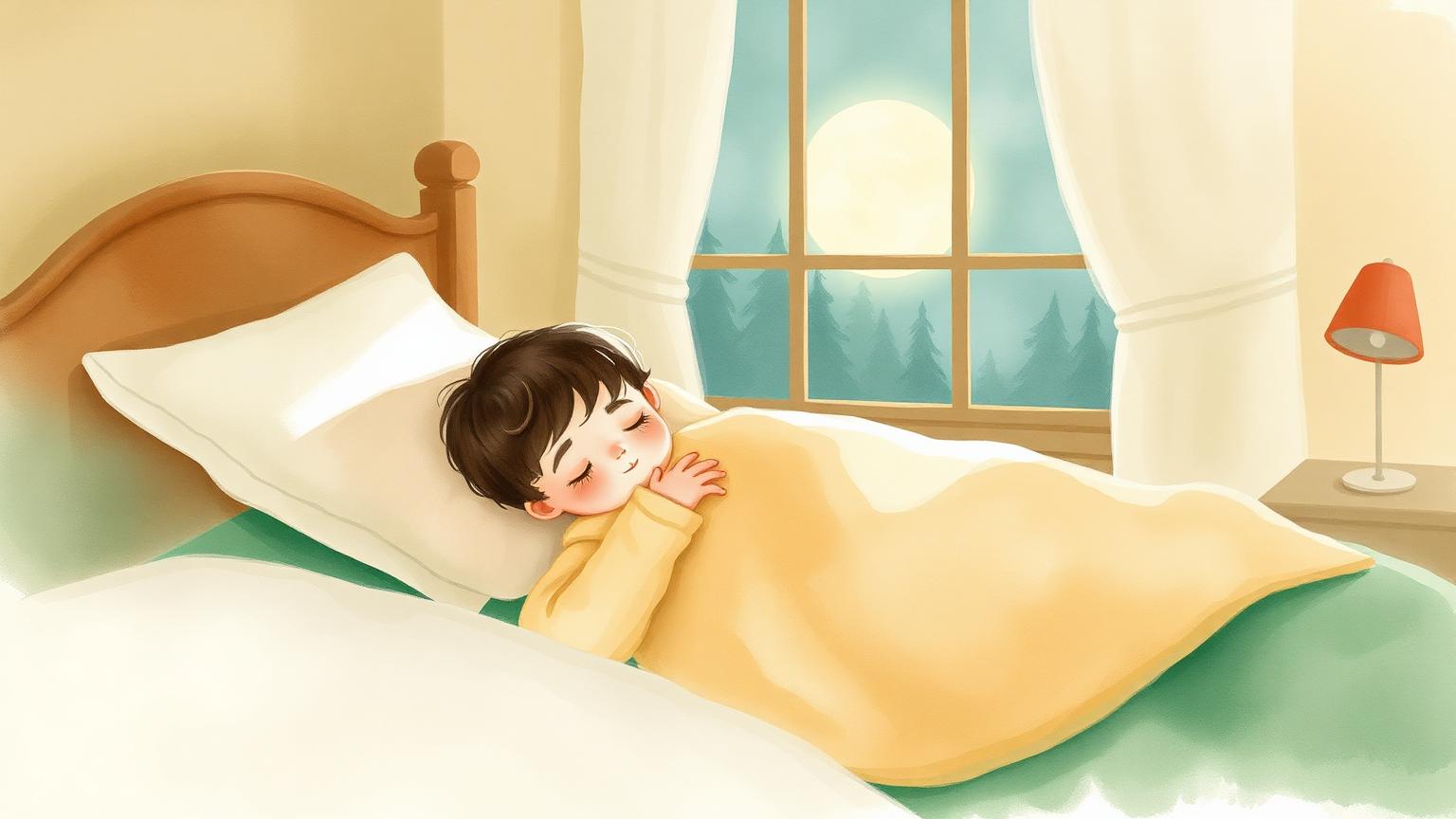
There is a particular kind of tired that arrives at 8:14pm — yours, not your child's. Their body is wired. Yours is empty. The room is dim, the toothbrush is somewhere, and a small person who loved you all afternoon is now negotiating like a small, exhausted lawyer.
Bedtime resistance is almost never about bedtime. It's about a nervous system that hasn't finished the day yet. Once you see it that way, the question changes from how do I get them to sleep to how do I help their body land.
Start with co-regulation, not instruction
Children under 8 cannot self-regulate a wound-up nervous system on demand. They borrow yours. If you arrive at bedtime carrying the day's tension in your jaw and shoulders, they will mirror it before they mirror anything you say.
Before the first instruction, take three slow exhales — longer than the inhale. Drop your shoulders. Soften your face. This sounds like a wellness platitude until you watch a toddler's body actually catch the shift.
Lower the room's tempo
The single biggest mistake at bedtime is keeping daytime tempo all the way to lights-out. Real wind-down means:
- Lights down 30 minutes early. Not off. Down. One lamp, warm bulb. The brain reads bright overhead light as midday.
- Voices half a volume lower. Not whispered — just quieter than normal. The room's tempo follows yours.
- No questions that need answers. "What do you want to wear?" wakes the prefrontal cortex up. Hand them the pyjamas.
Move from doing to being
Most bedtime routines are a sequence of tasks: bath, teeth, story, lights. The transitions between tasks are where children fall out of the wind-down.
Name the shift instead. "That was the doing part of the day. Now we're in the being-together part." It sounds small. It's not. You're giving them a frame for what their body is supposed to do next.
Use a story their body can ride
The right bedtime story is not entertainment. It's a regulation pattern delivered in language. The features that matter:
- Sentences that get shorter as the story unwinds. Their breath follows the punctuation.
- Sensory imagery, not action. Soft moss, warm milk, silver moonlight. The body relaxes around textures, not plot.
- A small, hopeful ending. Not a magical fix — just a moment of safety. That's the pattern the child rehearses while listening.
This is the whole logic behind Soothly's calming bedtime stories: the story isn't a distraction from anxiety, it's a vehicle for the nervous system to practise coming down.
When they're still wired
If the body hasn't landed by the end of the story, try one of these — not all of them:
- A 4-7-8 breath, parent-led. Inhale 4, hold 7, exhale 8. Three rounds. Do it with them; don't prescribe it.
- A weighted hand. Place your palm flat on their chest or belly. Pressure tells the nervous system: you are held.
- A boring topic. Describe how a kettle works. Out loud. In detail. Children fall asleep to under-stimulation faster than to soothing music.
What to skip
- Screens in the last 45 minutes. Even calm ones.
- Sugar past dinner. Even fruit, for some kids.
- Asking "are you sleepy yet?" — it activates them to answer.
- Threats about tomorrow. They land as low-grade anxiety that delays sleep further.
The longer view
Bedtime calm isn't a technique you find. It's a relationship between your nervous system and theirs, rehearsed nightly for years. Some nights you'll nail it. Some nights one of you will cry. Both are fine.
The nights you stay regulated are the ones their body remembers. That's the long compound interest of bedtime: not the perfect routine, but the parent who kept their voice low when the small person didn't.
Frequently asked questions
How long should bedtime wind-down take?
At least 30 minutes for kids 3-7, and 20 minutes for older children. Shorter than that and the nervous system hasn't had time to shift gears, which is when most resistance happens.
My child gets a second wind right at bedtime — why?
Overtired children often produce a cortisol surge that mimics energy. The fix is moving bedtime earlier, not later. Counterintuitive but consistent across sleep research.
Do calming stories actually work, or is it just distraction?
They work when the story uses slow tempo, sensory imagery, and a hopeful ending — those features cue the parasympathetic nervous system. A fast-paced or suspenseful story does the opposite.
What if my child insists on a long, exciting story?
Negotiate format, not length. Offer two short calming stories instead of one long adventure. Children mostly want continuity and choice, not adrenaline.