Was That a Night Terror or a Nightmare? Quick Quiz
By Tim Khuja · 5 min read
Last reviewed June 9, 2026
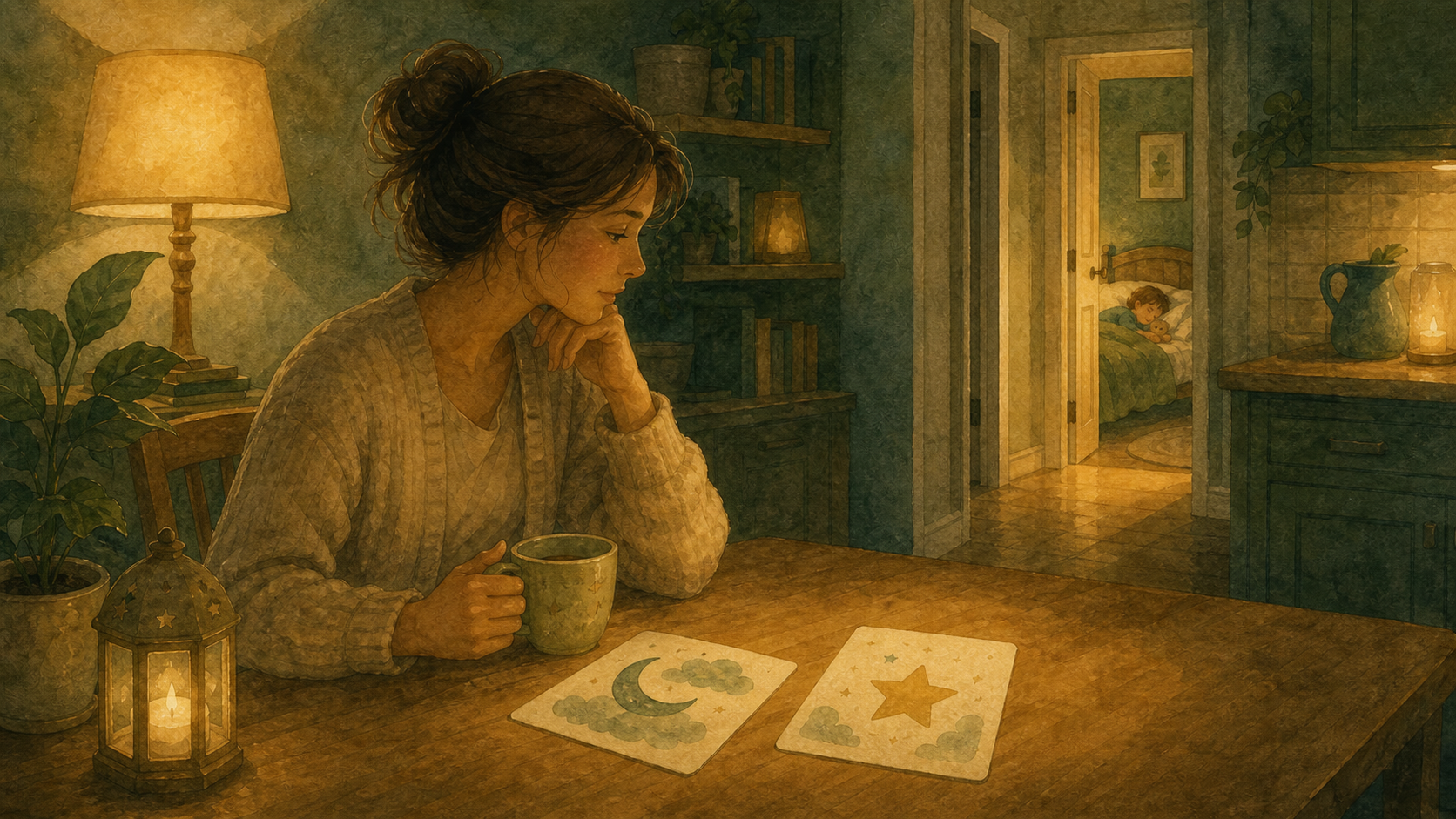
It is 2 AM, and your child is suddenly crying, shouting, or sitting upright in bed.
You rush in. You say their name. You try to comfort them.
But now you are not sure what you are looking at.
Was it a nightmare? Or was it a night terror?
This matters because the best response is different. A child waking from a nightmare usually needs comfort and reassurance. A child in a night terror is usually not fully awake and may need safety, calm, and time more than conversation.
Use this quick quiz to sort it out.
Quick answer
If your child woke up, recognized you, accepted comfort, and remembered a scary dream, it was probably a nightmare.
If your child looked awake but seemed unreachable, pushed you away, could not answer, and remembered nothing later, it was probably a night terror.
The key question is:
Could your child connect with you?
Question 1: When did it happen?
Night terrors often happen in the first part of the night, usually during deep non-REM sleep.
Nightmares are more common later in the night, when dream sleep is more active.
Choose the closest answer:
- It happened within the first few hours after bedtime: points toward night terror
- It happened later in the night or near morning: points toward nightmare
- I am not sure: keep going
Timing is only one clue. It is not the whole answer.
Question 2: Did your child seem fully awake?
After a nightmare, a child usually wakes up.
They may cry, call for you, ask for a cuddle, or tell you what happened.
During a night terror, a child may look awake but not really be awake. Their eyes may be open. They may sit up. But they may not recognize you or respond normally.
Choose:
- They woke and knew I was there: points toward nightmare
- They looked awake but seemed unreachable: points toward night terror
Question 3: Could they accept comfort?
This is one of the most useful clues.
A child waking from a nightmare often wants comfort. They may lean into you, hold your hand, or calm down when you reassure them.
A child having a night terror may not want to be touched. They may push you away, keep crying, or seem more confused when you try to wake them.
Choose:
- Comfort helped: points toward nightmare
- Comfort did not seem to reach them: points toward night terror
Question 4: Did they remember it later?
Nightmares are often remembered.
A child may say:
“There was a monster.”
“I couldn’t find you.”
“Something scary happened.”
Night terrors are usually not remembered. Your child may wake up in the morning cheerful and confused by your concern.
Choose:
- They remembered a scary dream: points toward nightmare
- They remembered nothing: points toward night terror
Question 5: What did their body look like?
Both nightmares and night terrors can involve crying.
Night terrors often look more physical:
- sweating
- fast breathing
- sitting upright
- kicking or thrashing
- glassy stare
- confusion
- hard to wake
Nightmares usually look more like a scared child who is awake and seeking comfort.
Choose:
- Scared but awake: points toward nightmare
- Panicked but unreachable: points toward night terror
Your likely answer
Mostly nightmare clues:
Your child probably had a nightmare. Comfort them, name safety, keep the room calm, and help them resettle.
You might say:
“That was a scary dream. It is over now. You are safe, and I am here.”
Mostly night terror clues:
Your child may have had a night terror. Stay close, keep them safe, speak softly, and do not force them awake.
You might say:
“You are safe. I am here. This will pass.”
Mixed clues:
That happens. Write down what you noticed, including time of night, what your child did, and whether they remembered it. Patterns are more useful than one perfect label.
When to ask for help
Talk to your child’s doctor if episodes are frequent, dangerous, unusual, involve leaving the room, disrupt sleep often, or come with daytime tiredness, snoring, breathing trouble, or movements that worry you.
You do not need to decide alone.
A Soothly bedtime reset
After a nightmare, a story can help your child return to safety.
After a night terror, a story the next evening can help bedtime feel calm again without making the episode dramatic.
Create a story for your child’s exact bedtime worry.
Create a calming bedtime story for tonight
Sources
- American Academy of Pediatrics / HealthyChildren: Nightmares, Night Terrors & Sleepwalking
- Mayo Clinic: Sleep terrors symptoms and causes
- Mayo Clinic: Sleep terrors diagnosis and treatment
- Cleveland Clinic: Night Terrors
Frequently asked questions
How can I tell if it was a night terror or nightmare?
Ask whether your child was truly awake and able to connect with you. If they woke, remembered a dream, and accepted comfort, it was probably a nightmare. If they seemed unreachable and remembered nothing, it may have been a night terror.
Do night terrors happen early or late at night?
Night terrors often happen in the first part of the night during deep sleep. Nightmares are more common later in the night during dream sleep.
Should I wake my child during a night terror?
Usually, no. Keep your child safe, speak calmly, and let the episode pass unless they are in danger.
Why does my child remember nightmares but not night terrors?
Nightmares happen during dream sleep and often wake the child. Night terrors happen during deep sleep, so the child may not form a normal memory.
When should I call the doctor?
Call your doctor if episodes are frequent, dangerous, unusual, disrupt sleep, include daytime tiredness, or involve snoring, breathing issues, or movements that worry you.