Night Terrors in 10-Year-Olds: When to See a Doctor
By Tim Khuja · 6 min read
Last reviewed June 9, 2026
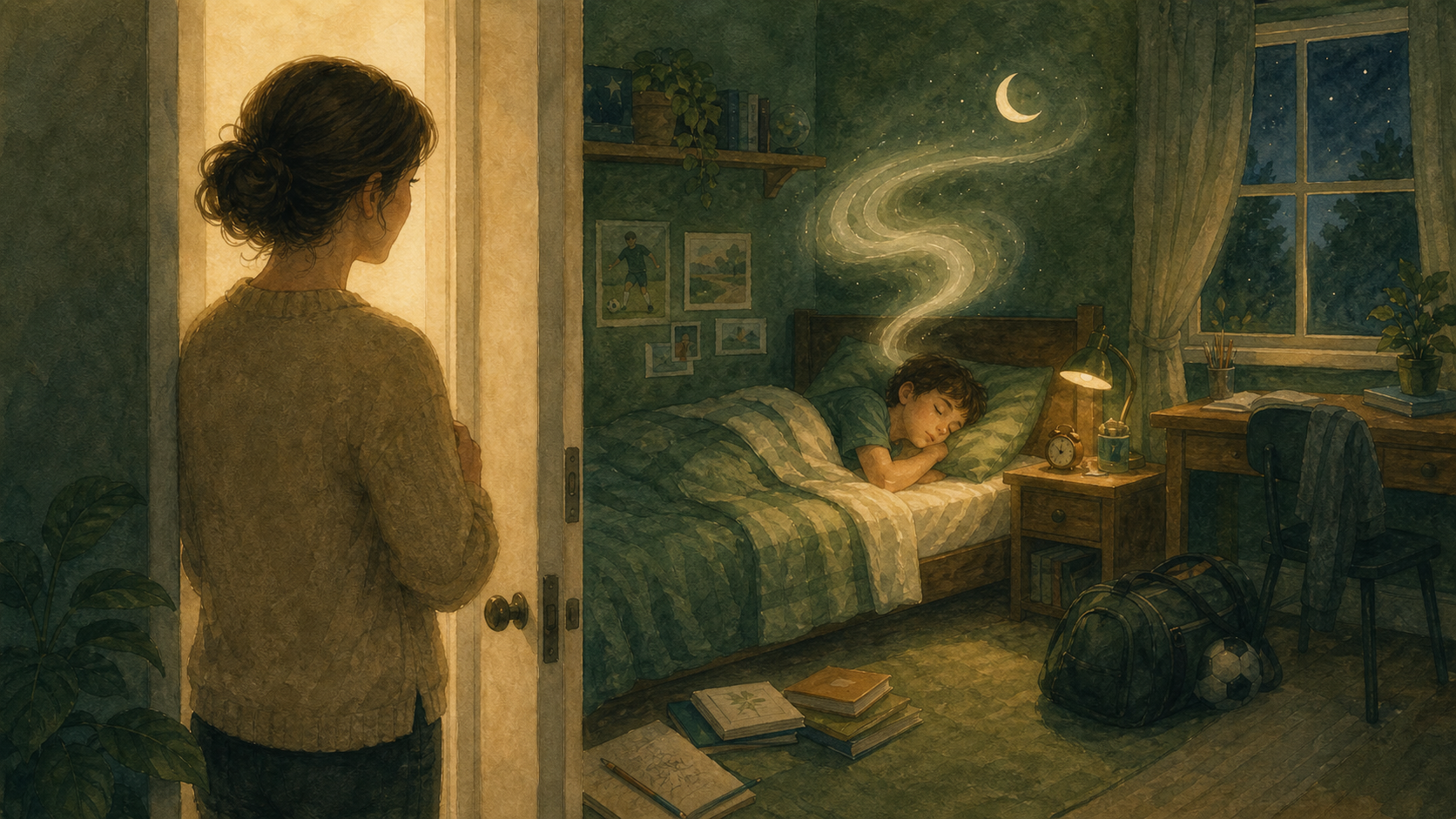
When a 10-year-old has a night terror, it can feel different from the younger-child version.
They are older. More aware. More private. More likely to feel embarrassed if they hear they screamed, sat up, or moved around at night.
And you may wonder:
Is this still normal? Or is it time to see a doctor?
The careful answer is: night terrors in 10-year-olds can happen, but repeated episodes are worth checking more closely. Night terrors are more common in younger children. By 10, occasional episodes may still be harmless, but frequency, safety, daytime tiredness, breathing symptoms, and unusual movements matter more.
What night terrors look like at 10
A night terror may include:
- sudden screaming
- sitting up or moving
- sweating
- fast breathing
- staring
- confusion
- pushing help away
- difficulty waking
- little or no memory afterward
Your child may look awake but not truly be awake.
That is the core difference from a nightmare. In a nightmare, your child usually wakes, talks, remembers, and accepts comfort. In a night terror, they may seem unreachable.
Why night terrors can still happen at 10
Night terrors happen during deep non-REM sleep, often in the first part of the night.
At 10, possible contributors include:
- sleep deprivation
- irregular sleep schedule
- stress
- illness or fever
- travel
- some medications
- snoring or sleep-disordered breathing
- family history of parasomnias
- other sleep disruptions
Older children can also carry more hidden pressure than they show.
School expectations, friendships, sports, screens, early puberty changes, and family stress can all affect sleep. That does not mean the night terror is “caused by anxiety,” but it does mean the nervous system deserves a closer look.
Night terror, nightmare, or something else?
At 10, it is especially important not to assume every frightening night episode is a night terror.
A nightmare usually involves:
- waking up
- remembering a dream
- wanting reassurance
- being able to talk
- settling with comfort
A night terror usually involves:
- seeming awake but unreachable
- confusion
- little response to comfort
- little or no memory
- happening earlier in the night
Something else may be possible if:
- movements are repetitive or unusual
- episodes happen many times a night
- your child is very confused afterward
- there is daytime sleepiness
- there is loud snoring or breathing trouble
- episodes start suddenly and escalate
You do not need to diagnose this yourself. You only need to notice enough to ask for help.
What to do during an episode
Keep your response calm and safety-focused.
Try:
- staying nearby
- keeping lights low
- speaking softly
- moving objects away
- guiding your child away from danger
- not shaking them awake
- not asking many questions
- not arguing with what they seem to experience
You can say:
“You’re safe.”
“I’m here.”
“This will pass.”
If your child does not respond, that fits a night terror. Your calm still matters.
Protect your child’s dignity
This matters more at 10.
Your child may feel ashamed, frightened, or “weird” if they hear what happened. Keep the next-day conversation respectful.
You can say:
“Your body had a sleep event last night. You did not do anything wrong.”
If they want details, give simple facts without drama:
“You seemed upset but not fully awake. I stayed nearby and kept you safe.”
Then invite collaboration:
“Let’s track it for a bit and see if we should ask the doctor.”
This helps your child feel like part of the plan instead of the problem.
What to track before calling the doctor
If this has happened more than once, start a simple log.
Track:
- bedtime
- wake time
- episode time
- episode length
- what happened
- whether your child left bed
- snoring or breathing pauses
- illness
- stress
- screens before bed
- caffeine
- medications
- daytime tiredness
This turns a scary blur into useful information.
Bring the log to your doctor if episodes continue.
When it is time to see a doctor
For a 10-year-old, talk to a doctor if night terrors are recurring, intense, or disruptive.
Make an appointment if:
- episodes happen often
- your child could get injured
- they leave the room
- sleep is disrupted
- your child is sleepy during the day
- there is loud snoring
- breathing pauses are possible
- movements look seizure-like
- episodes are new and sudden
- your child is afraid to sleep
- you are worried
Seek urgent help if there is injury, breathing difficulty, or anything that feels medically alarming.
Most of the time, this is not an emergency. But at 10, repeated night terrors deserve a thoughtful check.
How to support sleep at home
While you are tracking, protect the basics:
- consistent bedtime and wake time
- enough sleep for age
- calmer last hour before bed
- no scary or intense media near bedtime
- charging devices outside the bed if possible
- a short worry dump or journal
- predictable wind-down routine
- safe room setup if your child moves around
Do not turn bedtime into a medical investigation every night.
The goal is a steady rhythm, not a tense one.
A Soothly bedtime reset for older kids
A 10-year-old may not want something that feels babyish.
So make the story more symbolic, more respectful, and less “cute.”
For example:
“The young mapmaker had spent the day charting every road, every question, every possible tomorrow. At night, the Green Lantern folded the map and said, ‘You do not have to travel while you sleep. The path will still be here in the morning.’”
That kind of story gives an older child comfort without talking down to them.
Create a story for your child’s exact bedtime worry.
Create a calming bedtime story for tonight
Sources
- American Academy of Pediatrics / HealthyChildren: Nightmares, Night Terrors & Sleepwalking
- Mayo Clinic: Sleep terrors symptoms and causes
- Mayo Clinic: Sleep terrors diagnosis and treatment
- Cleveland Clinic: Night Terrors
Frequently asked questions
Can 10-year-olds have night terrors?
Yes, but night terrors are less common at 10 than in younger children. Recurring or intense episodes are worth discussing with a doctor.
Are night terrors at 10 a sign of something serious?
Not always. But at this age, it is smart to track patterns and ask a doctor if episodes are frequent, dangerous, disruptive, or unusual.
Should I wake my 10-year-old during a night terror?
Usually, no. Keep them safe, speak calmly, and let the episode pass unless they are in danger.
Could it be seizures instead of night terrors?
Sometimes nighttime events can be hard to tell apart. Talk to a doctor if movements are unusual, repetitive, frequent, or if your instinct says something is different.
What should I tell my child the next day?
Keep it respectful and calm. Say their body had a sleep event, they did nothing wrong, and you stayed nearby to keep them safe.