Night Terrors in 3-Year-Olds: A Calm Parent Guide
By Tim Khuja · 8 min read
Last reviewed June 9, 2026
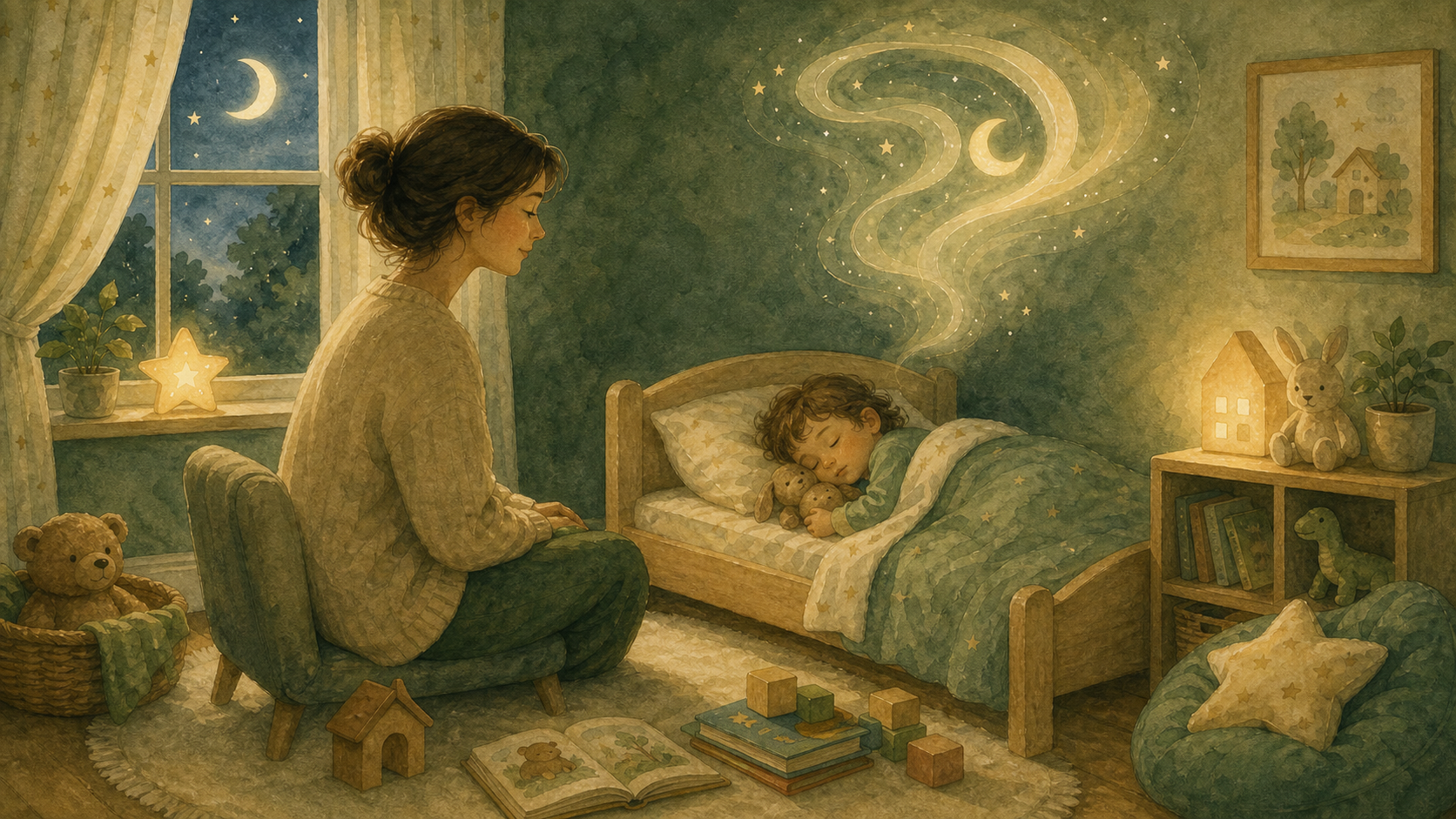
Your 3-year-old suddenly screams in the night.
You rush in. Their eyes may be open. Their body may be stiff, sweaty, or moving wildly. You say their name, but they do not really answer. You try to comfort them, but they seem far away from you.
Then, after a few minutes, they settle.
In the morning, they remember nothing.
If this is happening in your house, it can leave you shaken. Night terrors in 3-year-olds can look dramatic, especially because age 3 is already full of big feelings, big imagination, and big bedtime negotiations.
But a night terror is usually not a nightmare. It is usually a deep-sleep event. Your child may look awake, but they are not fully awake in the way they would be after a bad dream.
That difference changes what helps.
What are night terrors in 3-year-olds?
Night terrors are episodes of sudden fear-like behavior during deep sleep. A 3-year-old may scream, cry, sweat, breathe quickly, sit up, kick, or seem panicked.
But they are usually not fully conscious.
That is why they may not respond when you talk. They may not recognize you. They may push you away or seem upset by touch. To a parent, this can feel impossible: your child looks terrified, but the usual comfort does not land.
With a nightmare, your child wakes and needs reassurance.
With a night terror, your child mostly needs safety, calm, and time.
Why age 3 can be a peak moment
Three is a busy developmental age.
Your child may be talking more, imagining more, wanting more independence, and melting down harder when the world does not match the plan in their head.
At the same time, their sleep system is still young.
Night terrors often happen during deep non-REM sleep, especially in the first part of the night. Young children spend a lot of time in deep sleep, and their brains are still learning how to move smoothly between sleep stages.
At 3, several things can pile up:
- dropping or resisting naps
- starting preschool or daycare
- potty training
- separation worries
- bigger imagination
- more physical activity
- bedtime battles
- illness or fever
- irregular sleep
That does not mean your child is doing anything wrong.
It means their little nervous system may be carrying a very big day into sleep.
How to tell if it is a night terror or a nightmare
The easiest clue is whether your child can connect with you.
A nightmare usually looks like this:
- your child wakes up
- they recognize you
- they may ask for a cuddle
- they can often describe something scary
- they may remember it in the morning
A night terror usually looks like this:
- your child seems awake but unreachable
- they may scream, cry, sweat, or thrash
- they may not want to be touched
- they may not answer questions
- they settle without much explanation
- they usually remember nothing later
So instead of asking, “Was it loud?” ask:
Could my child actually wake up and receive comfort?
If yes, it may have been a nightmare. If no, it may have been a night terror.
Why night terrors often happen early in the night
Many night terrors happen in the first few hours after falling asleep, when deep sleep is strongest.
That is why you may notice a pattern. Your child goes to bed, sleeps hard for a while, and then suddenly screams or sits up before you have even gone to sleep.
This timing can help you stay calmer.
A 3-year-old who wakes later in the night or early morning and tells you about a scary dream may have had a nightmare. A 3-year-old who seems unreachable early in the night may be having a night terror.
What to do during a night terror
First, take one breath for yourself.
You are not doing nothing. You are doing the right kind of something.
During a night terror, try to:
- stay nearby
- speak softly
- keep the room dim
- move hard or sharp objects away
- prevent falls or climbing
- avoid shaking your child awake
- avoid asking lots of questions
- avoid trying to reason with them
You can say:
“You’re safe. I’m here.”
“Your body is having a hard sleep moment.”
“I’ll stay close while it passes.”
But if your words seem to make no difference, that does not mean you are failing.
They may simply not be awake enough to use your words yet.
Should you wake a 3-year-old from a night terror?
Usually, no.
Trying to force a child awake during a night terror can make them more confused or more upset. They are not having an ordinary awake fear. Their sleep system is misfiring between stages.
If your child is safe, let the episode pass.
If they are at risk of getting hurt, gently guide their body away from danger. Think of yourself as a quiet guardrail.
Your calm presence matters, even if your child does not seem to notice it in the moment.
What to say the next morning
If your child does not remember the night terror, you do not need to give a dramatic recap.
A simple version is enough:
“You had a hard sleep moment last night. Your body settled again. You were safe.”
If they ask whether they did something bad, reassure them:
“No. Your body was asleep. I stayed close.”
This matters because 3-year-olds are excellent meaning-makers. If they hear a frightening story about what happened, they may turn it into a new bedtime worry.
Keep it calm. Keep it ordinary. Then move on.
How to reduce night terrors
You cannot prevent every night terror. But you can reduce some common triggers.
Start with sleep pressure and rhythm:
- keep bedtime predictable
- protect naps if your child still needs them
- move bedtime earlier after skipped naps
- use the same wind-down routine each night
- avoid rough play right before bed
- keep the room cool, dim, and calm
- limit scary shows or intense stories near bedtime
- track what time episodes happen
Overtiredness is especially important at 3. Some children look wildly energetic when they are actually exhausted. If night terrors happen after big days or short naps, bedtime may need to move earlier for a while.
If episodes happen at almost the same time each night, write that down. A pediatrician may suggest scheduled awakenings, where you gently stir your child shortly before the usual episode time. Ask your doctor before trying this.
When to talk to a doctor
Occasional night terrors are usually not an emergency.
Still, talk to your child’s doctor if:
- episodes are frequent
- your child could get hurt
- they leave the bed or room
- sleep is disrupted most nights
- your child is very sleepy during the day
- there is loud snoring or breathing trouble
- episodes look unusual to you
- you are worried they could be seizures
- your instinct says something needs checking
You do not need to diagnose it yourself. If you are worried, that is enough reason to ask.
A Soothly bedtime reset for 3-year-olds
A 3-year-old does not need a technical explanation of sleep stages.
They need a felt sense of safety.
A gentle bedtime story can help with that. Not a story about “night terrors,” necessarily. A story where the child’s body learns to rest, the room stays safe, and a loving grown-up remains nearby.
For example:
“The little bear had run and jumped and wondered all day. When night came, his thoughts were still bouncing like tiny stars. So the Moon Chair sat beside his bed and whispered, ‘You do not have to hold the whole day anymore. I will hold the quiet while you sleep.’”
That kind of story gives your child something soft to return to.
And sometimes, soft is exactly what bedtime needs.
Create a story for your child’s exact bedtime worry.
Create a calming bedtime story for tonight
Sources
- American Academy of Pediatrics / HealthyChildren: Nightmares, Night Terrors & Sleepwalking
- Mayo Clinic: Sleep terrors symptoms and causes
- Mayo Clinic: Sleep terrors diagnosis and treatment
- Cleveland Clinic: Night Terrors
Frequently asked questions
Are night terrors normal in 3-year-olds?
Occasional night terrors can happen in young children, including 3-year-olds. They are often linked to deep sleep, overtiredness, irregular sleep, illness, or developmental changes.
Why does my 3-year-old scream at night but not wake up?
During a night terror, your child may look awake but still be in deep sleep. Their body can seem frightened even though they are not fully conscious or able to respond normally.
Should I wake my 3-year-old during a night terror?
Usually, no. Stay close, keep them safe, speak softly, and let the episode pass. Forcing them awake can make them more confused or upset.
Do 3-year-olds remember night terrors?
Most children do not remember night terrors afterward. If your child remembers a clear scary dream, it may have been a nightmare instead.
When should I call the doctor about night terrors in a 3-year-old?
Talk to a doctor if episodes are frequent, dangerous, unusual, disrupt sleep often, involve leaving the bed or room, or if you are worried they could be seizures or breathing-related sleep problems.