Night Terrors in 7-Year-Olds
By Tim Khuja · 6 min read
Last reviewed June 9, 2026
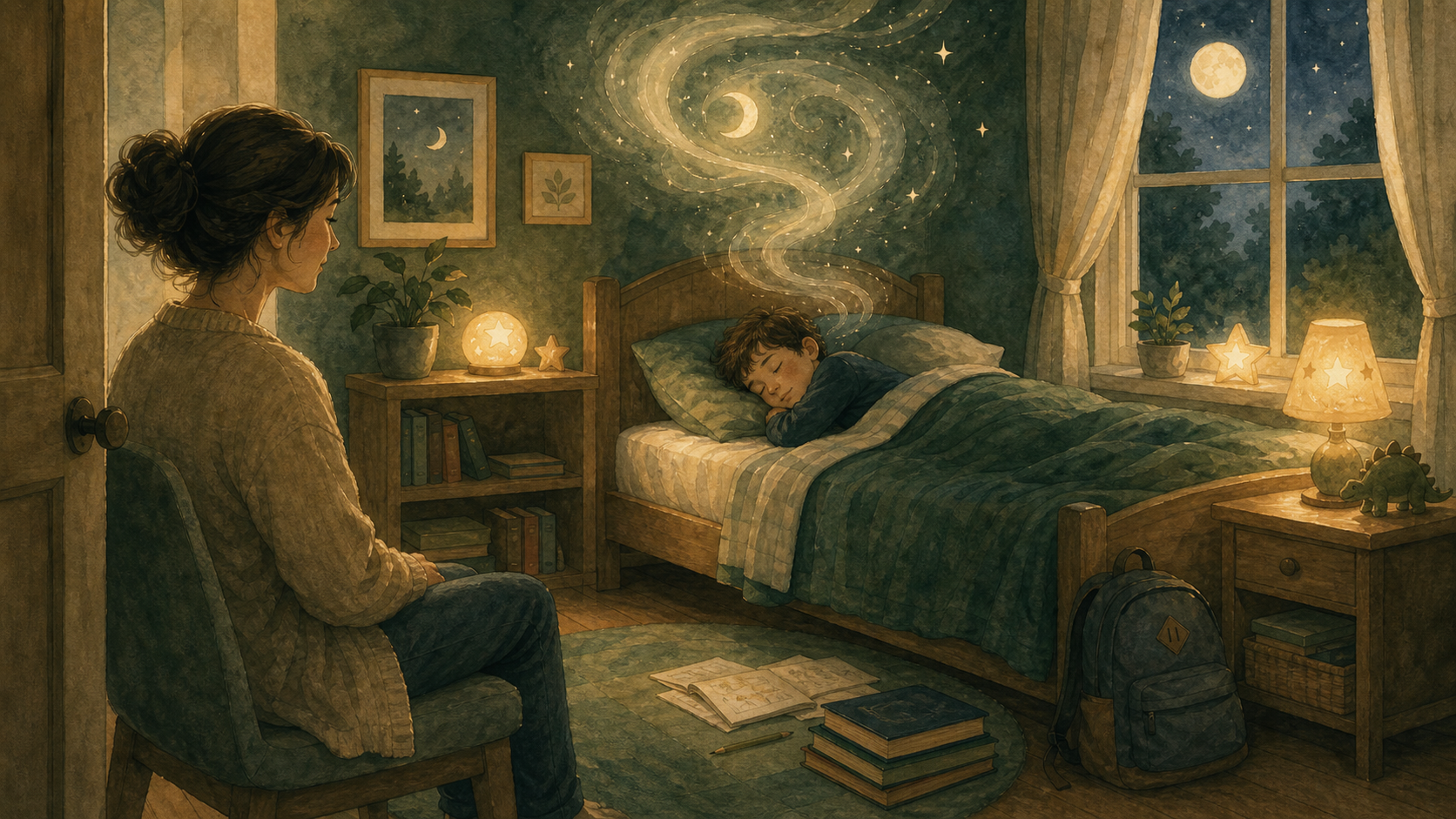
By 7, your child may seem far from the toddler years.
They can read, explain, negotiate, remember, worry, and tell you exactly why bedtime is unfair.
So if they suddenly scream in the night and seem unreachable, it can feel confusing.
You may think:
Are night terrors still normal at this age?
They can be. Night terrors in 7-year-olds are less “toddler obvious,” but they still happen. The difference is that at 7, it becomes more important to notice frequency, safety, sleep quality, and whether anything else might be disrupting your child’s nights.
What a night terror looks like at 7
During a night terror, your child may:
- sit up suddenly
- scream or cry
- breathe fast
- sweat
- seem panicked
- stare without really seeing you
- push you away
- be difficult to wake
- remember little or nothing afterward
The key clue is not the volume.
The key clue is connection.
If your child wakes, recognizes you, and talks about a scary dream, it is probably a nightmare. If they seem awake but cannot really connect with you, it may be a night terror.
Why night terrors happen in school-age kids
Night terrors usually happen during deep non-REM sleep, often in the first part of the night.
At 7, they may be connected to:
- overtiredness
- irregular sleep
- illness or fever
- stress
- school pressure
- travel
- sleep deprivation
- snoring or breathing disruptions
- family changes
- a naturally deeper sleep pattern
Seven-year-olds can also hold a lot in during the day.
They may manage classroom rules, friendship problems, homework, sports, transitions, and big feelings with more self-control than they had at 4 or 5. By bedtime, the body may finally unload.
That does not mean every night terror is “about stress.” But stress and sleep debt can make them more likely.
Night terror or nightmare?
A nightmare wakes your child up.
After a nightmare, a 7-year-old may tell you:
“I dreamed someone was chasing me.”
“I couldn’t find you.”
“I had a scary dream.”
They usually want comfort and can talk.
A night terror is different. Your child may look terrified but remain unreachable. They may not answer. They may not remember anything in the morning.
Use this question:
Can my child talk with me like they are awake?
If yes, think nightmare. If no, think night terror.
What to do during a night terror
Stay calm and keep the room safe.
Try:
- speaking softly
- keeping lights low
- moving objects away
- guiding them gently if they walk or climb
- not shaking them awake
- not asking many questions
- not trying to explain what is happening
You can say:
“You’re safe. I’m here.”
“This will pass.”
“I’ll stay close.”
If your child does not seem to hear you, that is part of the episode. Your calm presence still matters.
What to do the next day
At 7, your child may be old enough to notice that something happened, even if they do not remember it clearly.
Keep the explanation calm:
“Your body had a hard sleep moment. You were safe, and it passed.”
If they are curious, you can add:
“It is different from a nightmare. You were not doing anything wrong.”
Avoid making them feel embarrassed. Some school-age children feel ashamed when they hear they screamed or moved around at night.
Make the message simple:
Your body did something in sleep. We handled it. You are safe.
How to reduce night terrors
Look for patterns.
Track:
- bedtime
- wake time
- big school days
- illness
- travel
- screen use before bed
- snoring
- what time the episode happens
- how long it lasts
Then try a two-week sleep reset:
- consistent bedtime
- earlier bedtime after heavy days
- predictable wind-down
- quiet reading instead of intense media
- low light before sleep
- no scary content near bedtime
- enough physical movement earlier in the day
If episodes happen at the same time each night, ask your doctor whether scheduled awakenings are appropriate.
When to talk to a doctor
Because 7 is older than the toddler/preschool peak, it is worth checking in if night terrors are frequent or intense.
Talk to your doctor if:
- episodes happen often
- your child could get hurt
- they leave the room
- sleep is disrupted most nights
- your child is tired during the day
- there is loud snoring
- breathing pauses are possible
- episodes look unusual
- you are worried about seizures
- the night terrors started suddenly after a major change
You do not need to panic. But you also do not need to guess alone.
A Soothly bedtime reset
At 7, a child may appreciate a little explanation, but they still need emotional safety more than a lecture.
A story can help bridge both.
For example:
“The little owl had carried school sounds, playground worries, and unfinished thoughts all day. At night, the Quiet Tree opened its branches and said, ‘You can perch here. I will hold the dark steady while your mind rests.’”
That gives a school-age child an image of safety without making sleep feel like a problem.
Create a story for your child’s exact bedtime worry.
Create a calming bedtime story for tonight
Sources
- American Academy of Pediatrics / HealthyChildren: Nightmares, Night Terrors & Sleepwalking
- Mayo Clinic: Sleep terrors symptoms and causes
- Mayo Clinic: Sleep terrors diagnosis and treatment
- Cleveland Clinic: Night Terrors
Frequently asked questions
Are night terrors normal in 7-year-olds?
They can happen at 7, though they are more common in younger children. If they are frequent, dangerous, or disruptive, check in with your doctor.
Why does my 7-year-old not remember screaming at night?
Night terrors happen during deep sleep, so a child may look awake but not form a normal memory of the episode.
Should I wake my 7-year-old during a night terror?
Usually, no. Keep them safe, speak calmly, and let the episode pass unless they are in danger.
Can school stress cause night terrors?
Stress, overtiredness, and disrupted sleep can make night terrors more likely. They are not always the cause, but they are worth tracking.
When should I worry?
Talk to a doctor if night terrors happen often, cause injury risk, disrupt sleep, include wandering, or come with daytime tiredness, snoring, breathing issues, or unusual movements.