Night Terrors in 8-Year-Olds: Less Common, Still Real
By Tim Khuja · 8 min read
Last reviewed June 9, 2026
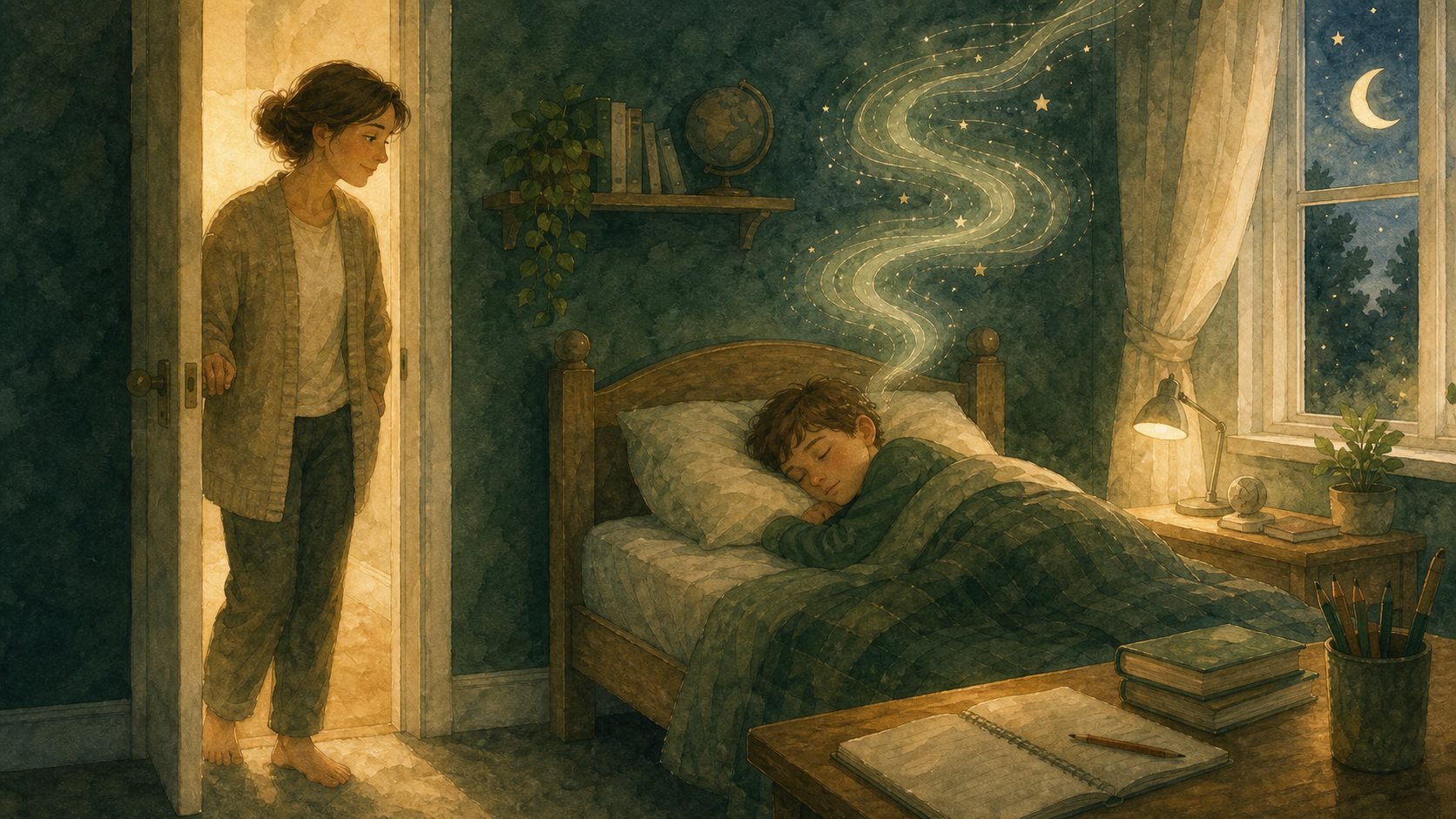
At 8, night terrors can feel more surprising.
Your child may seem too old for this. They can read, reason, remember, and explain their feelings better than they could a few years ago.
So when they scream in the night, sit up, sweat, or seem panicked but unreachable, it is natural to wonder whether something else is going on.
Night terrors in 8-year-olds are less common than in younger children, but they can still happen. The important thing is to look at the pattern: how often, how intense, how safe, and whether sleep is otherwise healthy.
What night terrors look like at 8
A night terror may include:
- sudden screaming
- sitting up in bed
- fast breathing
- sweating
- confusion
- staring
- pushing help away
- walking or moving around
- little or no memory afterward
Your child may look awake, but they are not fully awake.
That is the strange, unsettling part. They may not respond like the 8-year-old you know in the daytime. They may seem younger, more confused, or impossible to comfort.
That does not mean they are choosing it.
It means the episode is happening inside sleep.
Why night terrors can happen at 8
Night terrors happen during deep non-REM sleep, often in the first part of the night.
At 8, possible triggers include:
- overtiredness
- irregular sleep
- illness or fever
- stress
- travel
- school pressure
- big family changes
- sleep deprivation
- snoring or breathing trouble
- some medications
Sometimes there is no obvious trigger.
But because 8 is older than the most common age range, frequent night terrors deserve more careful tracking.
Night terror or nightmare?
The distinction still matters.
A nightmare usually wakes your child fully. They can tell you what happened, accept comfort, and remember at least part of the dream.
A night terror usually does not work that way. Your child may look terrified but cannot really talk with you. They may not remember it in the morning.
Ask:
Did my child wake up and connect, or did they seem trapped inside sleep?
Connection points toward nightmare. Unreachable points toward night terror.
What to do during the episode
Keep the response calm and boring.
Try:
- staying close
- speaking softly
- keeping lights dim
- moving objects away
- guiding them from danger if needed
- not shaking them awake
- not asking many questions
- not arguing with what they seem to see
You can say:
“You’re safe.”
“I’m right here.”
“This will pass.”
If your child walks, guide them gently. If they stay in bed, give space unless they are at risk of hurting themselves.
What to say afterward
An 8-year-old may feel embarrassed if they hear they screamed or moved around.
Protect their dignity.
You can say:
“Your body had a hard sleep moment. You did not do anything wrong.”
If they want more detail:
“It is different from a nightmare. You were not fully awake, and it passed.”
Then shift toward practical safety and sleep, not shame.
What to track for two weeks
At this age, tracking helps.
Write down:
- bedtime
- wake time
- episode time
- episode length
- illness
- stress
- screen or scary content
- school pressure
- snoring
- daytime tiredness
- whether your child left the bed
This gives your doctor better information if you need help. It also helps you see whether overtiredness or schedule changes are part of the pattern.
How to reduce night terrors
Try a steady reset:
- consistent bedtime and wake time
- earlier bedtime after intense days
- calm reading before sleep
- low light in the last hour
- no scary or intense media near bedtime
- regular physical activity earlier in the day
- a short check-in before bed
- a simple safety plan if your child moves around
If episodes happen at nearly the same time each night, ask your doctor about scheduled awakenings. Do not start a complicated plan alone if episodes are frequent or intense.
When to see a doctor
Because night terrors are less common at 8 than in younger children, talk to your doctor if they are frequent or disruptive.
Definitely ask for help if:
- your child could get injured
- they leave the room
- episodes happen often
- your child is very tired during the day
- there is loud snoring
- breathing pauses are possible
- movements look unusual
- you are worried about seizures
- the episodes started suddenly
- your child is anxious about sleep
Most cases are not emergencies. But a check-in can rule out sleep disruption, breathing issues, or other concerns.
A Soothly bedtime reset
An 8-year-old may not want a “baby story.”
That is okay.
The story can be more respectful, more symbolic, and still soothing.
For example:
“The young astronomer had spent the day mapping every question in the sky. At night, the Lantern Moon rolled out a soft green blanket and said, ‘You do not have to solve the stars tonight. Some things become clearer after rest.’”
That kind of story gives an older child dignity and comfort at the same time.
Create a story for your child’s exact bedtime worry.
Create a calming bedtime story for tonight
Sources
- American Academy of Pediatrics / HealthyChildren: Nightmares, Night Terrors & Sleepwalking
- Mayo Clinic: Sleep terrors symptoms and causes
- Mayo Clinic: Sleep terrors diagnosis and treatment
- Cleveland Clinic: Night Terrors
Frequently asked questions
Can 8-year-olds still have night terrors?
Yes. Night terrors are less common at 8 than in younger children, but they can still happen, especially with overtiredness, illness, stress, or disrupted sleep.
Are night terrors at 8 a sign of anxiety?
Not always. Stress and anxiety can contribute, but night terrors are sleep events. Track patterns and talk to a doctor if they are frequent or disruptive.
Should I wake my 8-year-old during a night terror?
Usually, no. Keep them safe, speak calmly, and let the episode pass unless they are in danger.
Why does my child remember nothing?
Night terrors happen during deep sleep, so your child may not form a normal memory even if they looked awake.
When should we see a doctor?
See a doctor if episodes happen often, create injury risk, involve leaving the room, disrupt sleep, cause daytime tiredness, include snoring or breathing trouble, or look seizure-like.