Night Terrors and ADHD: Why They Co-Occur
By Soothly Editorial · 7 min read
Last reviewed June 11, 2026
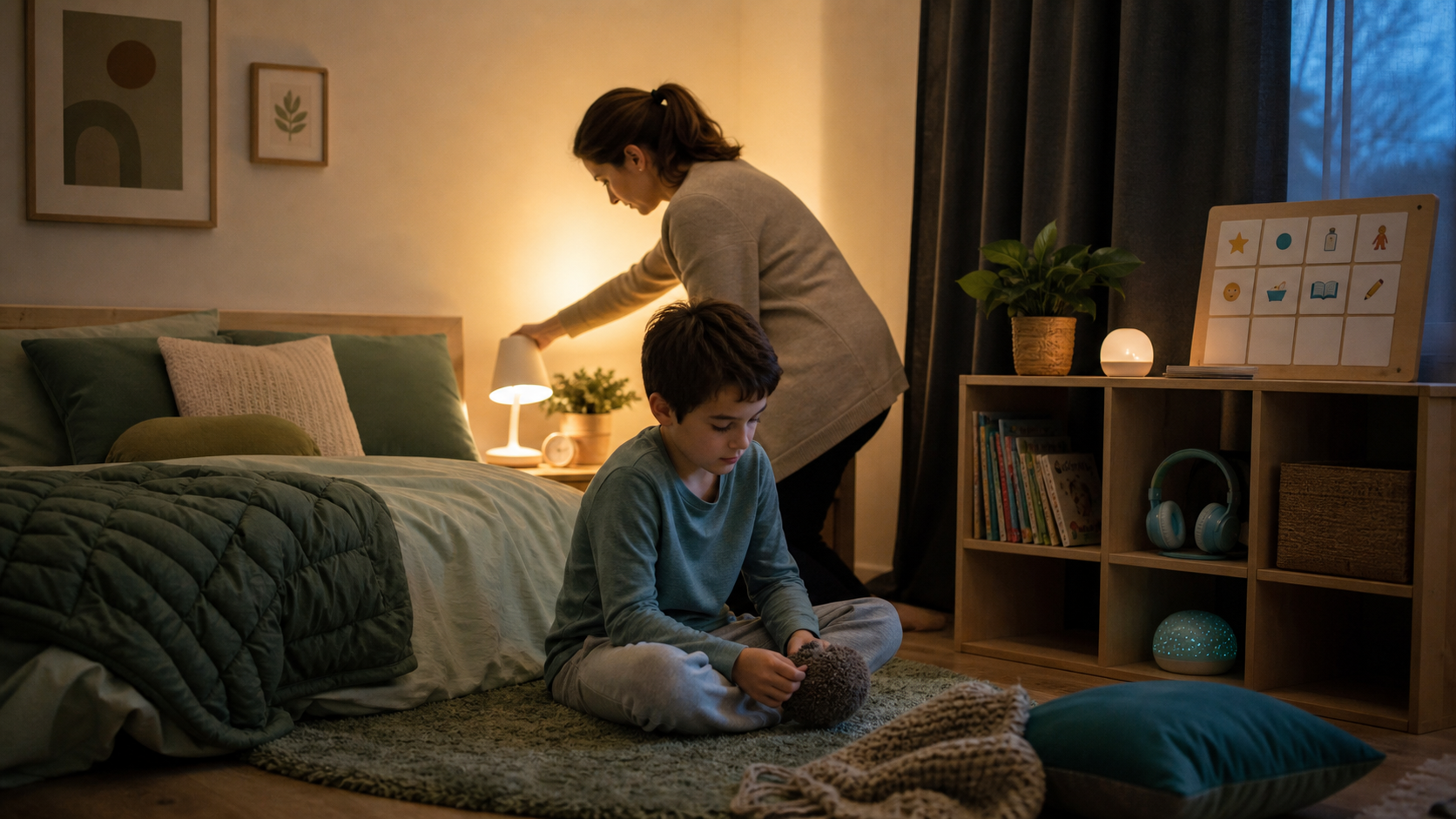
Night terrors and ADHD can feel like an unfair combination.
Your child may already struggle with transitions, body stillness, time awareness, or bedtime cooperation. Then sleep finally happens, and a night terror erupts out of nowhere.
ADHD does not mean your child is causing night terrors. It means the sleep system may need more support.
Why ADHD and sleep can be complicated
The CDC describes ADHD as a common neurodevelopmental disorder involving patterns of inattention, impulsivity, and/or hyperactivity that can affect home, school, and friendships.
Those same regulation differences can show up around sleep.
Some children with ADHD have:
- trouble shifting from active to calm
- bedtime resistance
- delayed sleep onset
- inconsistent routines
- restless sleep
- stronger screen pull
- morning tiredness
- emotional explosions when overtired
Night terrors are linked with partial arousals from deep sleep. If sleep is disrupted or your child becomes very overtired, episodes may be more likely.
What to track
For two weeks, track:
- bedtime start and lights-out time
- how long sleep takes
- activity level in the last hour
- screen timing
- medication timing, if relevant
- episode time
- duration
- snoring or breathing pauses
- daytime tiredness
- big emotional events
If sleep changed after a medication change, tell the prescribing clinician. Do not stop or adjust medication without medical guidance.
Make bedtime ADHD-friendly
A bedtime routine for ADHD should be visible, short, and body-aware.
Try:
- movement earlier, not right at lights out
- dim lights
- visual routine with simple icons
- one sensory-friendly calming activity
- bathroom and water
- short story
- same closing phrase
The goal is not to make your child suddenly still. The goal is to create a predictable landing.
What not to do
Avoid turning bedtime into a long verbal negotiation.
Many ADHD children hear too many words as more stimulation. Instead of explaining the whole plan repeatedly, point to the visual routine and use one phrase:
"Next step, pajamas. Then story."
After lights out:
"The plan is done. Sleep time now."
When to ask for help
Talk with your pediatrician or ADHD clinician if night terrors are frequent, dangerous, worsening, or paired with:
- significant daytime sleepiness
- snoring or breathing pauses
- medication timing concerns
- severe bedtime insomnia
- restless legs
- school impairment from poor sleep
Sleep is part of ADHD care. You are allowed to bring it into the treatment conversation.
A Soothly bedtime reset
For an ADHD child, the story should not be too exciting right before sleep. Choose slow, rhythmic, predictable language.
"Dash the little comet did not slam into sleep. First he circled once around the moon, then softer, then slower, until even his bright tail remembered how to rest."
Create a movement-aware bedtime story for your child.
Create a calming bedtime story for tonight
Frequently asked questions
Does ADHD cause night terrors?
ADHD does not directly mean a child will have night terrors, but sleep disruption and overtiredness can increase risk for parasomnias in some children.
What should I track for ADHD and night terrors?
Track bedtime, sleep onset, movement needs, screen use, medication timing, episode time, snoring, and daytime sleepiness.
Should I change ADHD medication because of night terrors?
Do not change medication on your own. Talk with the prescribing clinician if sleep changed after a medication start or dose change.
What bedtime routine helps ADHD kids?
Use a short visual routine, movement earlier in the evening, dim lights, predictable steps, and one closing phrase.
When should I call a doctor?
Call if episodes are frequent, dangerous, worsening, linked with medication changes, or paired with snoring, breathing pauses, or daytime exhaustion.