Stress and Night Terrors in Kids
By Dr. Tim Khuja · 6 min read
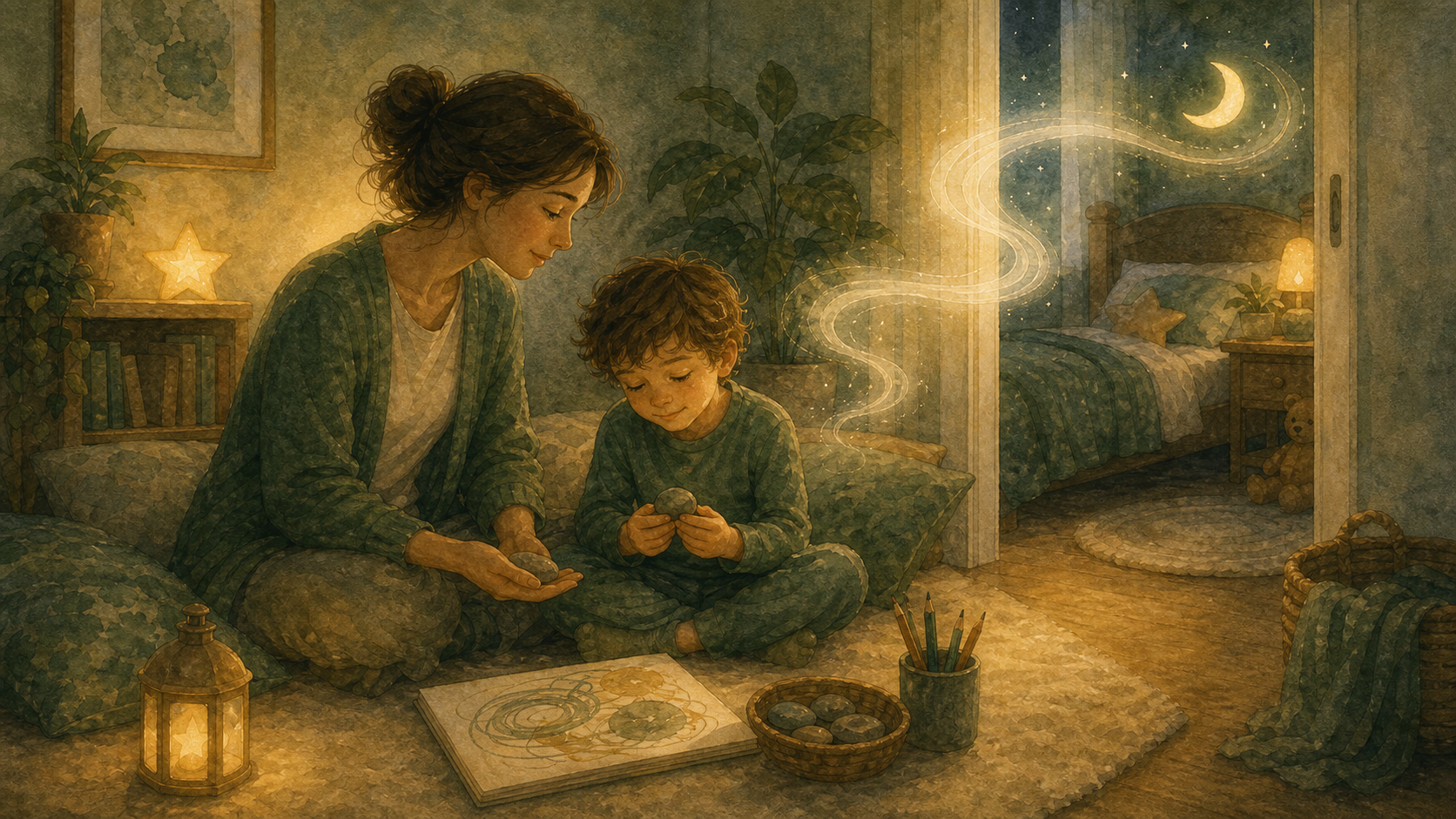
Some children carry stress quietly.
They go to school, follow rules, handle transitions, smile for relatives, manage friendship bumps, and seem mostly fine.
Then bedtime comes.
Or the first few hours of sleep come.
And suddenly their body sounds the alarm.
Stress and night terrors can be connected, though not always in a simple cause-and-effect way. Night terrors are sleep events, not bad behavior or a child “acting out.” But stress, sleep debt, and nervous-system overload can make sleep more fragile.
How stress affects sleep
Stress keeps the body alert.
Even after a child falls asleep, the nervous system may still be carrying the day. If the child is also overtired, sick, or sleeping irregularly, transitions between sleep stages may become bumpier.
Night terrors often happen during deep non-REM sleep, usually in the first part of the night.
Stress may not directly “cause” the night terror. But it can be one of the conditions that makes the episode more likely.
What stress looks like in kids
Stress does not always look like worry.
It can look like:
- clinginess
- irritability
- stomachaches
- headaches
- bedtime resistance
- perfectionism
- more meltdowns
- more silliness or wild energy
- trouble separating
- changes in appetite
- more night waking
Some children talk about stress. Many show it through their bodies.
Common stress triggers
Night terrors may increase around:
- starting school or daycare
- moving house
- family conflict
- new sibling
- illness in the family
- bullying or friendship problems
- tests or performance pressure
- big schedule changes
- grief or loss
- overstimulation
You do not need to interrogate your child at bedtime. But you can gently notice patterns.
What to do during a night terror
In the moment, keep it simple:
- stay nearby
- speak softly
- keep the room safe
- do not shake your child awake
- do not ask lots of questions
- guide them gently if they move toward danger
You can say:
“You’re safe. I’m here.”
“Your body is having a hard sleep moment.”
“I’ll stay close.”
The stress conversation, if needed, belongs in daylight, not during the episode.
How to talk about stress the next day
Do not begin with:
“Why are you so stressed?”
That can feel too big.
Try smaller openings:
“Your body had a hard sleep moment last night. I wonder if your days have been feeling extra full.”
Or:
“Was there any part of yesterday that felt too big?”
Some children answer while walking, drawing, building, or riding in the car. Face-to-face bedtime conversations can feel intense.
A calming routine for stress-linked night terrors
Try a 10-minute “put the day down” routine.
- Name one hard thing.
- Name one okay thing.
- Put worries on paper.
- Choose tomorrow’s first small step.
- End with the same bedtime phrase.
For example:
“The day is done. We can carry tomorrow tomorrow.”
This gives your child’s nervous system a closing ritual.
When to seek more support
Talk to your doctor or a child mental-health professional if:
- night terrors are frequent
- your child is afraid to sleep
- stress symptoms are affecting daily life
- your child has ongoing physical complaints
- there has been trauma, grief, or major change
- your child seems persistently anxious or withdrawn
- episodes are dangerous or unusual
Night terrors may be a sleep issue, a stress signal, or both. Support can help either way.
A Soothly bedtime reset
A story can help stress move from the body into language and image.
For example:
“The little hedgehog carried the whole day on his back: the loud bell, the tricky game, the words he wished he had said. At night, the Quiet Garden opened its gate and said, ‘You can leave the heavy leaves here. I will keep them until morning.’”
Create a story that helps your child put the day down.
Create a calming bedtime story for tonight
Sources
- American Academy of Pediatrics / HealthyChildren: Nightmares, Night Terrors & Sleepwalking
- Mayo Clinic: Sleep terrors symptoms and causes
- American Psychological Association: Stress in Children
- Cleveland Clinic: Night Terrors
Frequently asked questions
Can stress cause night terrors in kids?
Stress does not cause every night terror, but it can make sleep more disrupted and may increase night terrors in some children.
Should I talk about stress during the night terror?
No. During the episode, focus on safety and calm. Talk about stress during the day when your child is fully awake.
What does stress look like in children?
Stress can look like clinginess, irritability, stomachaches, headaches, bedtime resistance, meltdowns, perfectionism, or changes in sleep and appetite.
Can bedtime routines reduce stress-linked night terrors?
A predictable wind-down routine can help some children, especially if it includes a simple way to put worries down before sleep.
When should I seek help?
Seek help if night terrors are frequent, dangerous, unusual, or if stress or anxiety is affecting your child’s sleep, school, mood, or daily life.