Night Terrors After Travel or Time Zone Change
By Dr. Tim Khuja · 6 min read
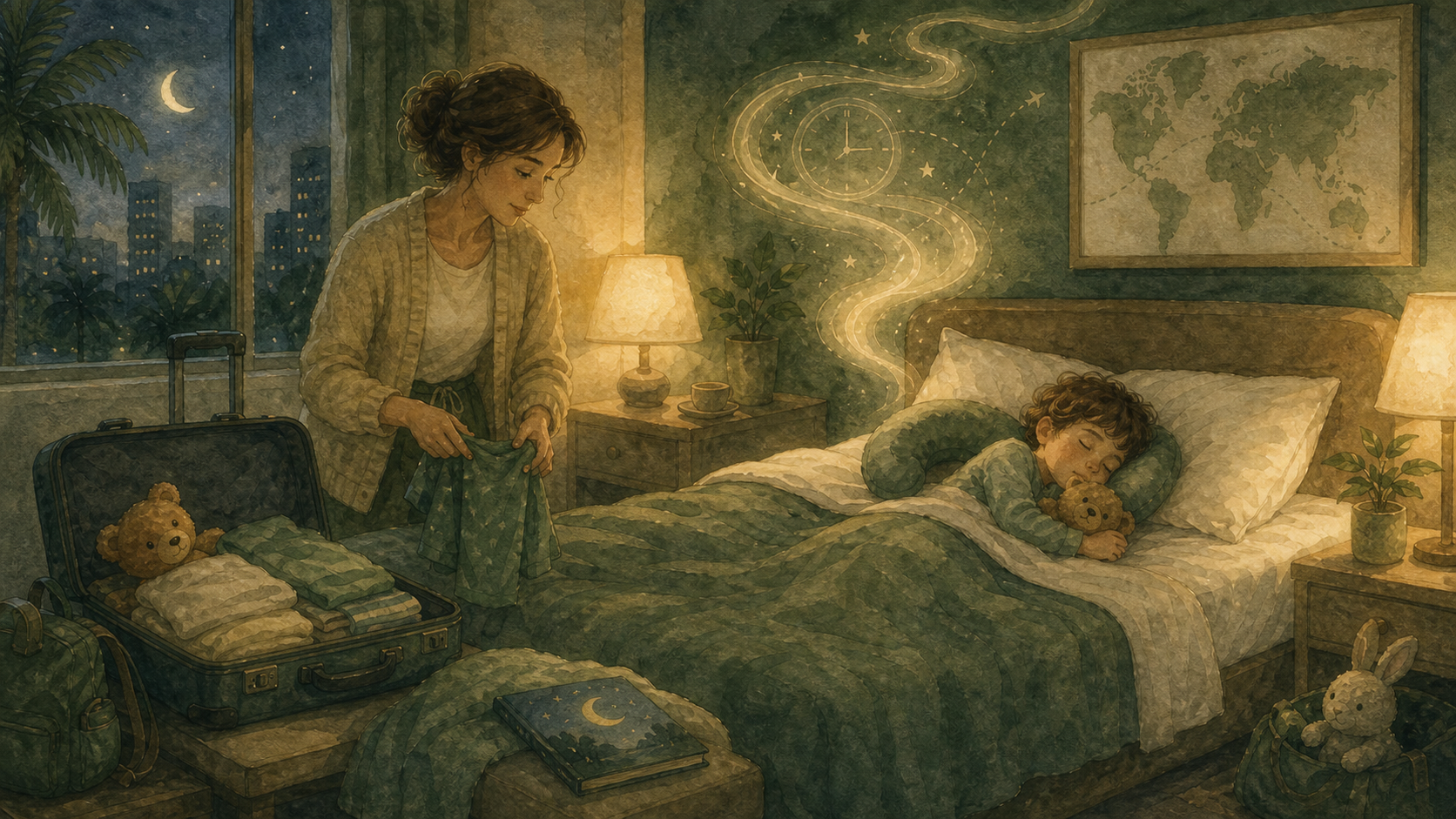
Travel can make bedtime strange.
The room is different. The bed smells different. The light comes from the wrong side. Your child ate dinner late, napped in a car, skipped quiet time, or crossed a time zone.
Then, just when everyone finally sleeps, your child screams.
Night terrors after travel are not unusual for children who are sensitive to disrupted sleep. Travel can create the perfect mix: overtiredness, unfamiliar surroundings, irregular timing, and a nervous system that has not quite caught up.
Why travel can trigger night terrors
Night terrors often happen during deep non-REM sleep, usually in the first part of the night.
Travel can disturb the rhythm that helps sleep stages move smoothly.
Common travel triggers include:
- late bedtime
- skipped naps
- car or plane naps
- new room
- shared sleeping space
- time zone changes
- overstimulation
- irregular meals
- less daylight at the usual time
- more excitement or stress
Your child may seem fine during the day, then unravel at night.
That does not mean the trip was a mistake. It means the body needs help finding rhythm again.
Hotel-room night terrors
Hotel rooms and guest rooms can be especially confusing.
Your child may fall asleep deeply from exhaustion, then partially wake into an unfamiliar space. During a night terror, they are not awake enough to understand where they are.
That can make the episode seem more intense.
Keep the room safe:
- move chairs and suitcase corners away
- block unsafe exits
- use a soft nightlight
- keep shoes and clutter off the floor
- know where your child is sleeping before you go to bed
Think of it as gentle preparation, not fear.
What to do during the episode
Respond the same way you would at home:
- stay nearby
- speak softly
- keep lights low
- do not shake your child awake
- do not ask many questions
- guide them away from danger
- wait for it to pass
You can say:
“You’re safe. I’m here.”
“We are in our sleep place. I’ll stay close.”
If they do not respond, that is normal for a night terror.
Resetting after a trip
When you get home, expect sleep to need a few nights.
Try:
- returning to normal bedtime quickly
- getting morning light
- keeping naps or quiet rest predictable
- moving bedtime earlier after travel days
- using the same bedtime sequence
- limiting intense evening activities
- keeping the room familiar and calm
The first night home may not fix everything. Think in terms of a three-night reset.
Time zone changes
Time zones can confuse the body clock.
Help your child reset with:
- morning daylight in the new time zone
- meals at local times
- short naps rather than very late long naps
- calm bedtime routine
- earlier bedtime if sleep debt is high
Avoid expecting a perfect first night. Children often need time.
When to worry
Travel-related night terrors usually settle as sleep becomes steady again.
Talk to your doctor if:
- episodes continue long after the trip
- your child could get hurt
- episodes happen many times a night
- your child is very tired during the day
- there is snoring or breathing trouble
- movements look unusual
- your instinct says something is wrong
A Soothly travel reset
A travel story can help a child feel anchored in an unfamiliar room.
For example:
“The little badger slept under a new roof, with new shadows and new sounds. So the Pocket Moon came along in his bag and whispered, ‘Wherever you sleep, I know the way to quiet.’”
Create a story that helps bedtime feel familiar anywhere.
Create a calming bedtime story for tonight
Sources
- American Academy of Pediatrics / HealthyChildren: Nightmares, Night Terrors & Sleepwalking
- Mayo Clinic: Sleep terrors symptoms and causes
- Sleep Foundation: Jet Lag and Sleep
- Cleveland Clinic: Night Terrors
Frequently asked questions
Can travel cause night terrors?
Travel can make night terrors more likely in some children by disrupting sleep timing, naps, bedtime routines, and the body clock.
Why does my child have night terrors in hotels?
Hotels add unfamiliar rooms, unusual sleep timing, excitement, and overtiredness. During a night terror, your child may not be awake enough to understand where they are.
How long do travel-related night terrors last?
They often settle after a few nights of normal sleep rhythm. If they continue or worsen, talk to your doctor.
Should I wake my child during a travel night terror?
Usually, no. Keep them safe, guide them away from danger, speak softly, and let the episode pass.
How can I prevent night terrors on trips?
Protect naps or quiet rest, avoid very late bedtime, use a familiar bedtime routine, keep the sleep area safe, and use morning light to reset after time zone changes.