The Anti-Night-Terror Bedtime Routine
By Soothly Editorial · 6 min read
Last reviewed June 10, 2026
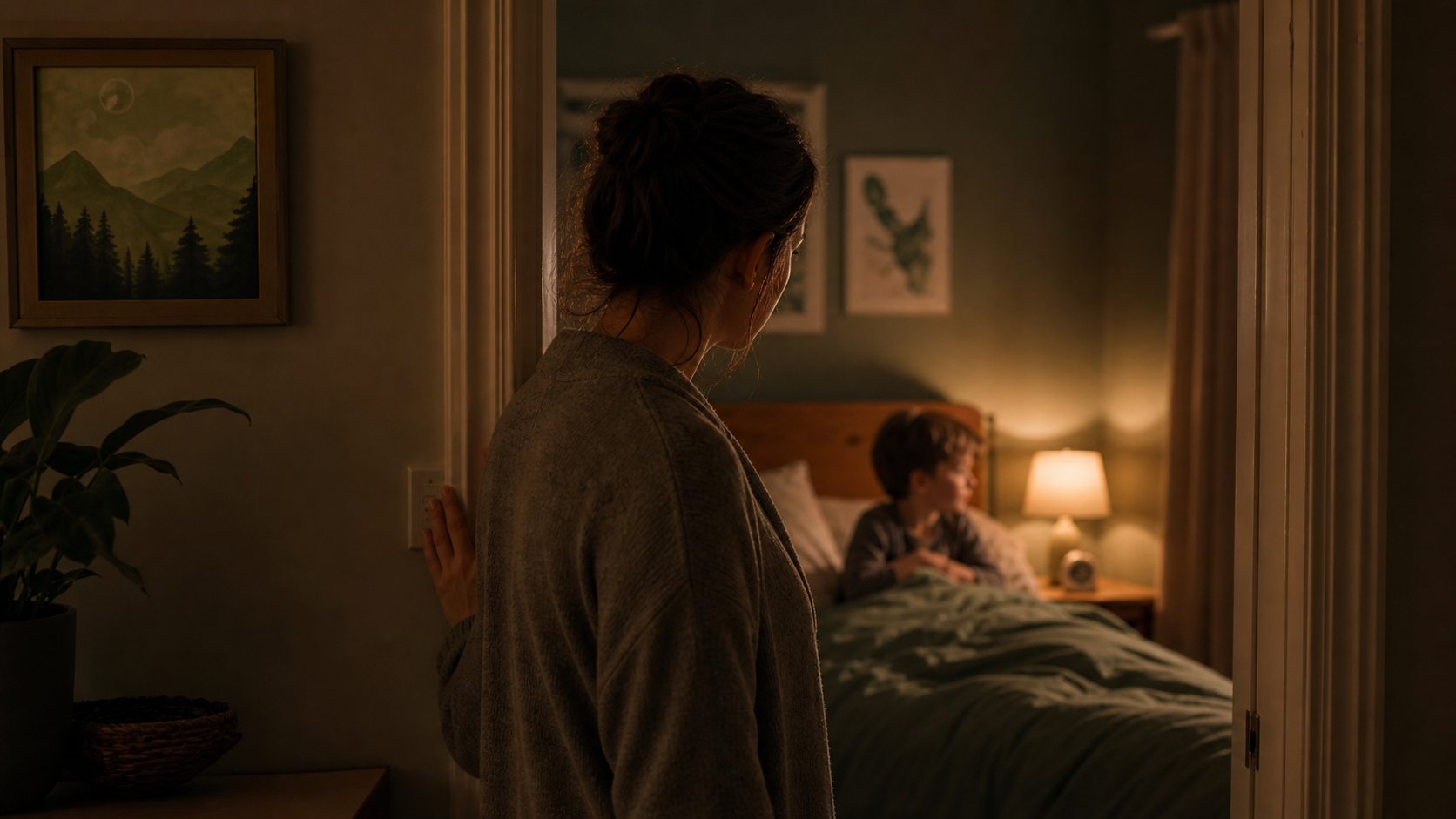
There is no perfect bedtime routine that guarantees night terrors stop.
But there is a kind of routine that makes them less likely for some children: early enough, predictable enough, and quiet enough that the nervous system does not have to slam into sleep.
Think of it as an anti-night-terror bedtime routine.
Not magic. Just rhythm.
Start before your child is overtired
Overtired children can look energetic.
They run, argue, laugh too loudly, collapse over pajamas, or suddenly need seventeen things.
If night terrors tend to happen after late nights, begin bedtime 15-30 minutes earlier for two weeks and track what changes.
Do not wait for the crash.
Make the last hour smaller
In the last hour, reduce:
- bright screens
- roughhousing
- intense stories or shows
- big negotiations
- hard conversations
- sugar-heavy snacks if they disrupt your child
- rushed transitions
The goal is not silence. The goal is a body that is not being asked to switch from high speed to deep sleep in one leap.
Use the same short sequence
Try this sequence:
- lights lower
- bathroom
- pajamas
- water
- one quiet connection moment
- short story
- same closing phrase
- lights out
Keep it visible if your child likes pictures. Keep it brief if your child turns routines into negotiations.
Move worry talk earlier
If your child is anxious, bedtime can become the worry office.
Move problem-solving earlier:
“We can talk about worries after dinner. At bedtime, we use our sleep words.”
Then after lights out:
“We already made the plan. Your body can rest.”
This is not cold. It is containment.
Choose a closing phrase
Use the same phrase every night.
Examples:
“You are safe. Your body knows sleep. I’ll check on you.”
“The day is done. Your room is safe. Goodnight.”
“Sleep time now. I love you. See you in the morning.”
A repeated phrase becomes part of the sleep cue.
What if a night terror still happens?
Do not treat it as routine failure.
During the episode, keep your child safe, avoid forcing them awake, and wait nearby. The routine supports sleep, but it does not control every arousal.
The next day, return to the rhythm.
When routine is not enough
Talk to your pediatrician if night terrors are frequent, dangerous, worsening, seizure-like, or paired with snoring, breathing pauses, unusual movements, or daytime sleepiness.
A bedtime routine is helpful. It is not a substitute for medical advice when the pattern is concerning.
A Soothly bedtime story idea
An anti-night-terror story should be slow and repetitive.
“The little lantern did the same gentle work every night. First it softened the room. Then it warmed the rug. Then it watched as one small breath became another, and another, until the whole house remembered how to rest.”
Create a slow bedtime story that matches your child's routine.
Create a calming bedtime story for tonight
Frequently asked questions
Can a bedtime routine stop night terrors?
It may reduce episodes for some children by lowering overtiredness and sleep disruption, but it cannot guarantee prevention.
What should the bedtime routine include?
Use dim lights, predictable steps, one calm connection moment, a short story, and the same closing phrase each night.
Should we talk about worries at bedtime?
Move worry talk earlier when possible. Long emotional conversations after lights out can make bedtime more activating.
What bedtime is best for night terrors?
The best bedtime is early enough that your child is not overtired and consistent enough that sleep timing becomes predictable.
When should I ask for medical help?
Ask if night terrors are frequent, dangerous, unusual, linked with snoring or breathing pauses, or causing major daytime or family disruption.