Night Terrors and Trauma: Is There a Link?
By Soothly Editorial · 7 min read
Last reviewed June 11, 2026
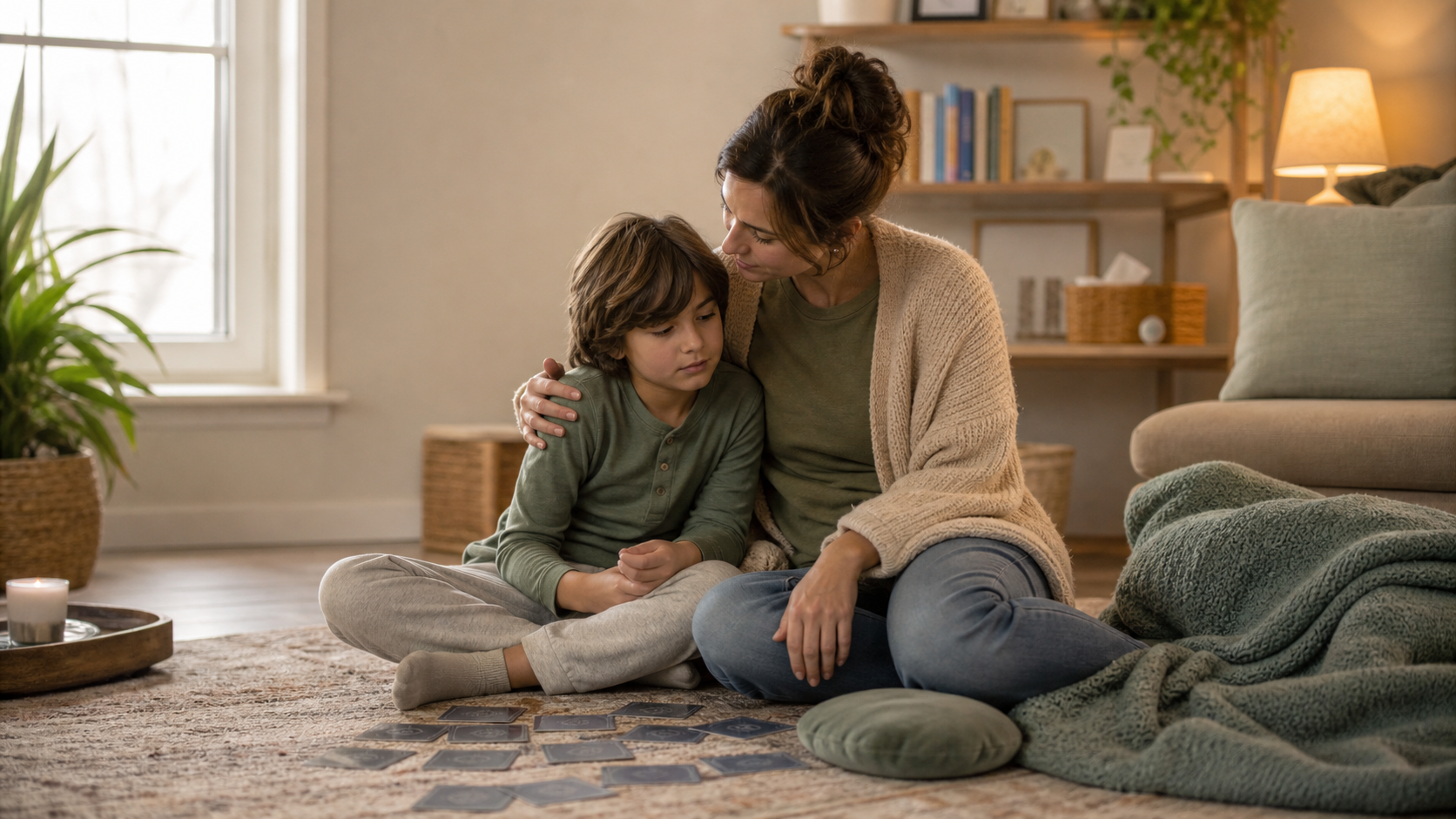
Parents often ask about night terrors and trauma because the episode looks so frightening.
A child may scream, sweat, thrash, or look terrified. It is natural to wonder: are they reliving something? Is this a trauma response? Did something happen that I missed?
Sometimes stress and trauma can disrupt sleep. But a night terror is not automatically a trauma memory.
The careful answer
Night terrors are a sleep arousal problem. They usually happen during deep non-REM sleep, often in the first part of the night. A child may look awake but not be fully aware, and they often remember little or nothing in the morning.
Trauma nightmares are different. A child may wake fully, seek comfort, and remember frightening content. PTSD can include intrusive memories, avoidance, changes in mood, hyperarousal, and sleep problems.
There can be overlap, but the labels are not interchangeable.
How stress can affect night terrors
Stress is one possible contributor to sleep terrors. Stress can make sleep lighter, more fragmented, or more irregular. A child under strain may also become overtired, and overtiredness is a common trigger for parasomnias.
Stressful changes can include:
- a family conflict
- a move
- bullying
- a medical scare
- a loss
- frightening news
- a sudden schedule change
- a traumatic event
The body may carry the stress into sleep even when the child cannot explain it.
Signs this may be more than night terrors
Consider trauma-informed support if your child has:
- repeated memories or play about a frightening event
- new avoidance of places, people, or reminders
- strong startle response
- ongoing fearfulness
- regression
- irritability or shutdown
- guilt or shame
- sleep problems plus daytime distress
- nightmares with remembered content
- new separation anxiety after a frightening event
These signs do not mean anything is your fault. They mean your child may need more support than a bedtime routine can provide.
What to say after a night terror
If your child does not remember, do not make the event sound terrifying.
Try:
"Your body had a hard sleep moment. I kept you safe."
If your child does remember a fear or brings up something scary, listen without interrogating.
Try:
"That sounds really scary. I am glad you told me. You are safe right now, and we can get help with this."
What helps bedtime while you seek support
Keep bedtime predictable and low-pressure:
- dim lights
- same short routine
- comfort object
- calm closing phrase
- no intense processing after lights out
- worry talk earlier in the evening
If trauma is part of the picture, bedtime should not become a nightly investigation. Save deeper conversations for daylight and, when needed, for a professional who knows child trauma.
When to get help
Seek professional support if symptoms persist, interfere with school or play, or follow a known traumatic event. Start with your pediatrician, a child therapist, or a trauma-informed mental health professional.
If your child is unsafe or you suspect abuse, contact local emergency or child protection resources immediately.
A Soothly bedtime reset
A story can offer safety without forcing disclosure.
"The little fox did not have to tell the whole storm at bedtime. Tonight, the den only needed one true thing: the door was closed, the lamp was warm, and safe grown-ups knew how to help."
Create a gentle safety story for a hard season.
Create a calming bedtime story for tonight
Frequently asked questions
Can trauma cause night terrors?
Trauma can disrupt sleep and stress can contribute to night terrors, but night terrors are not the same as trauma nightmares or PTSD.
How are night terrors different from trauma nightmares?
A child with a night terror is usually not fully awake and often remembers little. A trauma nightmare may wake the child and involve remembered frightening content.
When should I seek trauma support?
Seek support after a traumatic event if your child has ongoing distress, avoidance, regression, hypervigilance, sleep problems, intrusive memories, or major behavior changes.
Should I ask my child what the night terror was about?
Usually no. They may not remember. Keep the morning calm and focus on safety unless they bring up a memory or fear.
Can bedtime stories help after trauma?
Gentle stories can support safety and routine, but trauma symptoms need trauma-informed care when distress persists.