Night Terrors and Autism: Sleep Profile Differences
By Soothly Editorial · 7 min read
Last reviewed June 11, 2026
Night terrors and autism require a more careful lens.
Not because autistic children are fragile. Because sleep, sensory processing, communication, anxiety, and routine can all interact in ways that are easy to misunderstand from the outside.
A standard bedtime tip may not fit an autistic child. The goal is not a typical bedtime. The goal is a safer, more predictable sleep system.
Start with the difference between night terror and distress
A night terror usually happens during sleep, often in the first part of the night. Your child may scream, sit up, sweat, or seem terrified while not fully awake. Many children remember little or nothing.
Sensory distress or panic may happen while awake or during transitions. It may be linked to light, sound, fabric, temperature, hunger, pain, demand overload, or a sudden change.
Both deserve compassion. They need different responses.
Why autism and sleep can be different
The CDC describes autism spectrum disorder as a developmental disability that can involve differences in communication, social interaction, behavior, interests, and learning. Many autistic children also have sensory preferences and routines that matter deeply.
At bedtime, that can mean:
- difficulty shifting activities
- distress with certain pajamas or bedding
- sensitivity to light or sound
- anxiety around separation or uncertainty
- delayed sleep onset
- night waking
- communication differences around pain or fear
- strong need for sameness
If sleep becomes disrupted, night-terror-like episodes may be more likely.
What to track
Track more than the episode.
Write down:
- bedtime and wake time
- routine changes
- sensory triggers
- room temperature
- light and sound
- food, constipation, reflux, or pain signs
- snoring or breathing pauses
- episode time
- whether your child seemed awake
- recovery afterward
- daytime fatigue or regression
Autistic children may show discomfort through behavior before they can explain it in words.
Make the room sensory-safe
Consider:
- blackout curtains if light is hard
- dim warm lamp instead of bright overhead light
- preferred pajamas
- bedding texture your child accepts
- white noise or quiet, depending on preference
- comfort object
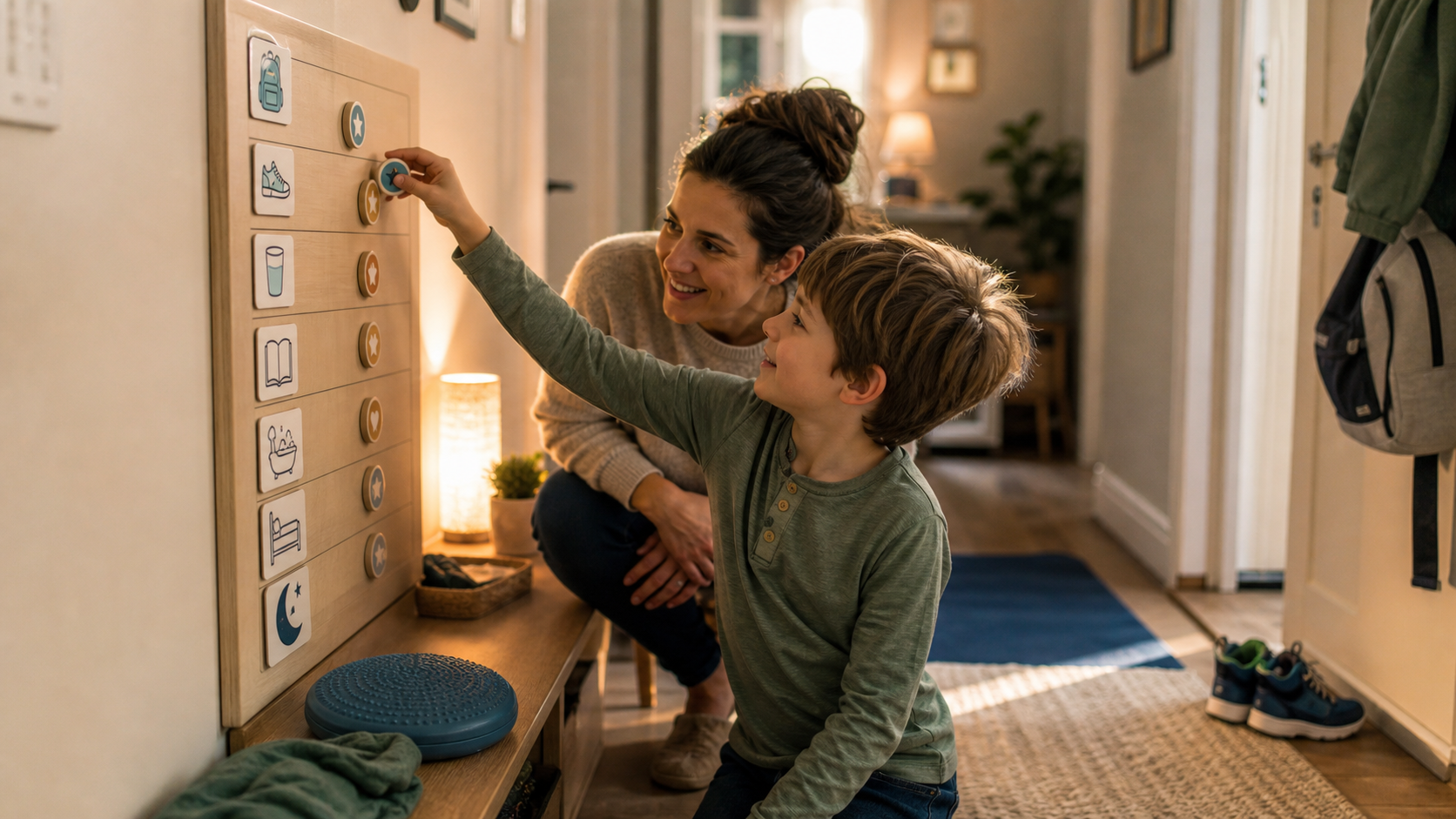
- visual routine
- fewer surprise changes
Do not add every tool at once. Change one variable at a time so you can tell what helps.
During a night terror
Use low-demand safety.
- keep your voice soft
- reduce light and noise
- avoid sudden touch unless needed for safety
- block danger calmly
- do not ask questions
- let the episode pass
If touch helps your child, use the agreed form of touch. If touch escalates distress, stay close without crowding.
When to seek help
Talk with your pediatrician if episodes are frequent, dangerous, worsening, or paired with:
- snoring or breathing pauses
- sudden sleep change
- daytime exhaustion
- pain behaviors
- regression
- self-injury risk
- seizure-like movements
- major family disruption
For autistic children, sleep support may need to involve a pediatrician, occupational therapist, developmental clinician, or sleep specialist.
A Soothly bedtime reset
A story for an autistic child should respect the child's actual sensory world.
"The little room did not need to be like every other room. It needed the right blanket, the soft lamp, the quiet corner, and the same moon sign that meant: no more surprises now."
Create a sensory-safe bedtime story for your child's exact routine.
Create a calming bedtime story for tonight
Frequently asked questions
Are night terrors more common in autistic children?
Autistic children often have more sleep challenges, and disrupted sleep can contribute to parasomnias. A clinician can help sort the pattern.
How can I tell if it is a night terror or sensory distress?
Night terrors usually happen during sleep with little memory. Sensory distress may happen while awake and be linked to light, sound, texture, temperature, or transitions.
What helps autistic children at bedtime?
A predictable visual routine, sensory-safe room, consistent timing, comfort objects, and fewer demands after lights out can help.
Should I wake my autistic child during a night terror?
Usually avoid forcing a child awake. Prioritize safety and use the least intrusive support unless your clinician advises otherwise.
When should I seek medical advice?
Seek advice for frequent, dangerous, worsening, or unusual episodes, especially with snoring, breathing pauses, daytime exhaustion, regression, or sudden change.