Night Terrors in 4-Year-Olds
By Tim Khuja · 8 min read
Last reviewed June 9, 2026
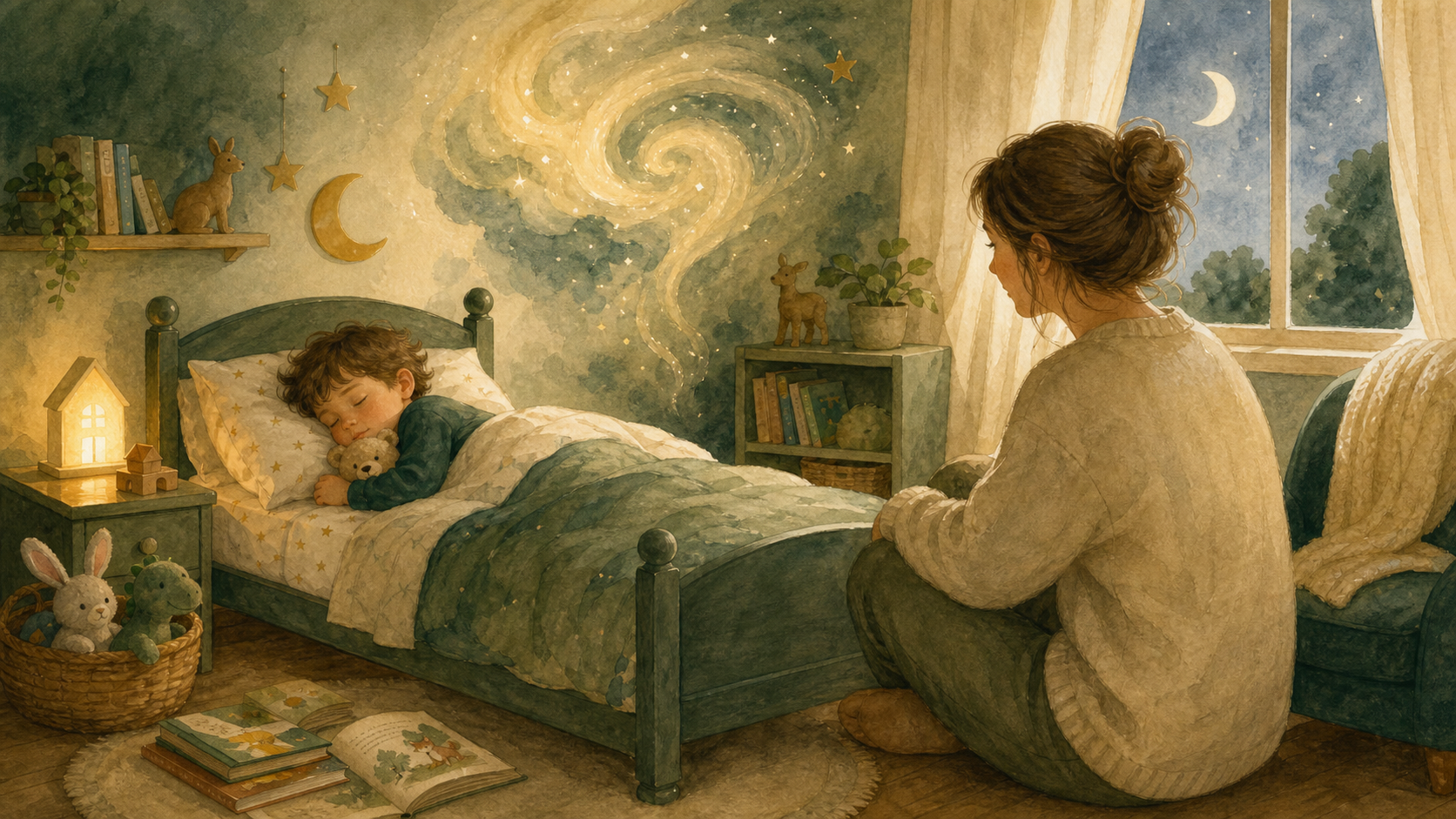
Your 4-year-old suddenly screams in bed. Their eyes may be open. Their body may be sweaty or stiff. They might sit up, cry, kick, or seem terrified.
You say their name.
They do not really answer.
You try to comfort them, but they seem somewhere else.
Then the episode passes, and later they remember nothing.
If this is happening in your home, you are not overreacting. Night terrors in 4-year-olds can be frightening to watch. But they are usually not nightmares, and they are usually not a sign that your child is emotionally broken, unsafe, or doing something wrong.
Most often, a night terror is a deep-sleep event. Your child looks awake, but their brain is not fully awake yet.
That changes how you respond.
Why night terrors can happen at age 4
Four is a big age.
A 4-year-old may look like a “big kid” in the daytime. They can tell stories, argue about pajamas, remember promises, ask enormous questions, and suddenly become very specific about which cup is acceptable.
But their sleep system is still young.
Night terrors often happen during deep non-REM sleep, especially in the first part of the night. Young children spend a lot of time in deep sleep, and their brains are still learning how to move smoothly from one sleep stage to another.
At 4, there is also a lot happening developmentally:
- richer imagination
- bigger feelings
- preschool or daycare demands
- new independence
- separation awareness
- changing nap needs
- more physical activity
- more language, but still limited self-regulation
That combination can make the nervous system busy, even when the house is finally quiet.
Is it a night terror or a nightmare?
The easiest clue is not how loud the episode is.
The better clue is whether your child can connect with you.
A nightmare usually looks like this:
- your child wakes up
- they recognize you
- they can often tell you what scared them
- they want comfort
- they may remember the dream in the morning
A night terror usually looks like this:
- your child seems awake but is not fully awake
- they may scream, cry, sweat, or thrash
- they may not recognize you
- they may push you away
- they are hard to comfort
- they usually remember nothing later
If your child says, “I had a bad dream,” and wants a cuddle, that is probably a nightmare.
If your child is screaming but unreachable, it may be a night terror.
Why it often happens early in the night
Night terrors often happen in the first few hours after bedtime, when deep sleep is strongest.
That is why many parents notice a pattern:
The episode happens around the same time. Maybe 60 to 120 minutes after falling asleep. Maybe just when the parent finally sits down.
This timing can help you understand what you are seeing. A 4-year-old who wakes scared near morning and remembers a story-like dream is more likely to have had a nightmare. A 4-year-old who screams early in the night and cannot really respond may be having a night terror.
Common triggers in 4-year-olds
Night terrors can happen without a clear trigger. But they are more likely when a child’s sleep is disrupted or overloaded.
Common triggers include:
- being overtired
- dropping naps too early
- inconsistent bedtime
- fever or illness
- travel or sleeping somewhere new
- big preschool days
- family stress
- bedtime battles
- waking often at night
- sleep apnea or breathing disruptions
Overtiredness is one of the most common patterns parents notice.
It can feel confusing. You would think an exhausted child would sleep more deeply and peacefully. But sometimes an overtired child crashes into deep sleep so hard that the transitions between sleep stages become bumpier.
That bump can show up as a night terror.
What to do during a night terror
During a night terror, your goal is not to explain.
Your goal is safety.
Try this:
- stay close
- keep your voice low
- move hard or sharp objects away
- do not shake your child awake
- do not ask lots of questions
- do not argue with what they seem to be reacting to
- gently guide them back if they try to climb or walk
You can say:
“You’re safe. I’m here.”
“Your body is having a hard sleep moment.”
“I’ll stay close while it passes.”
But you may not need to say much.
Sometimes the most helpful thing is to sit nearby, keep the room safe, and let your child’s body move through the episode.
Should you wake a 4-year-old from a night terror?
Usually, no.
Trying to force a child awake during a night terror can make the moment more confusing. Your child may become more upset, more disoriented, or harder to settle.
If they are safe, let the episode pass.
If they are at risk of falling, hitting something, or leaving the room, gently redirect them. Think of yourself as a quiet guardrail, not a problem-solver.
Most night terrors end on their own, and many children return to sleep without fully waking.
What to say the next morning
If your child does not remember the episode, you do not need to describe every detail.
A calm sentence is enough:
“You had a hard sleep moment last night, and your body settled again.”
If your child asks whether they did something wrong, reassure them:
“No. Your body was asleep. You were safe. I stayed close.”
Avoid making bedtime sound dangerous or dramatic. A 4-year-old’s imagination is powerful. Too much detail can accidentally create a new fear of sleep.
How to reduce night terrors
You cannot control every night terror. But you can reduce the conditions that make them more likely.
Start with rhythm:
- keep bedtime predictable
- protect rest after big preschool days
- move bedtime earlier after short naps or skipped naps
- use the same wind-down sequence each night
- keep the bedroom cool and dim
- avoid rough play right before bed
- limit scary shows or intense stories near bedtime
- track what time episodes happen
If night terrors happen at almost the same time every night, write it down for a week. A pediatrician may suggest scheduled awakenings, where you gently stir your child shortly before the usual episode time. Ask your doctor before trying this, especially if episodes are frequent or intense.
When to talk to a doctor
Occasional night terrors are usually not an emergency.
Still, talk to your child’s doctor if:
- episodes are frequent
- your child could get hurt
- they leave the bed or room
- sleep is disrupted most nights
- your child is very tired during the day
- there is loud snoring or breathing trouble
- the episodes look unusual to you
- you are worried they could be seizures
- your gut says something needs checking
You do not have to wait until things are “bad enough.” If you are worried, asking is enough.
A Soothly bedtime reset for 4-year-olds
A 4-year-old may not need a big explanation about night terrors. But they can benefit from a bedtime story that helps their body feel safe again.
Not a clinical explanation. Not a lecture. A story.
Something gentle, concrete, and imaginative:
“The little fox had a very busy day. His paws had run, his ears had listened, and his thoughts had jumped like crickets. So the Moon Keeper sat beside his den and whispered, ‘You do not have to chase any more thoughts tonight. I will keep the stars steady while you rest.’”
That kind of story gives a child a felt sense of safety.
And at 4, that often matters more than a perfect explanation.
Ready for a calmer bedtime tonight?
Create a calming bedtime story for tonight
Sources
- American Academy of Pediatrics / HealthyChildren: Nightmares, Night Terrors & Sleepwalking
- Mayo Clinic: Sleep terrors symptoms and causes
- Mayo Clinic: Sleep terrors diagnosis and treatment
- Cleveland Clinic: Night Terrors
Frequently asked questions
Are night terrors normal in 4-year-olds?
Occasional night terrors can happen in young children, including 4-year-olds. They are often linked to deep sleep, overtiredness, illness, irregular sleep, or developmental changes.
Why does my 4-year-old scream at night but not wake up?
During a night terror, your child may look awake but still be in deep sleep. Their body can seem panicked even though they are not fully conscious or able to respond normally.
Should I wake my 4-year-old during a night terror?
Usually, no. Stay nearby, keep them safe, speak softly, and let the episode pass. Forcing them awake can sometimes make them more confused or upset.
Do 4-year-olds remember night terrors?
Most children do not remember night terrors afterward. If your child remembers a clear scary dream, it may have been a nightmare instead.
When should I worry about night terrors in a 4-year-old?
Talk to a doctor if episodes are frequent, dangerous, unusual, disrupt sleep often, involve leaving the bed or room, or if you are worried they could be seizures or breathing-related sleep problems.