Are Those Night Terrors in My Baby? (Spoiler: Probably Not)
By Tim Khuja · 6 min read
Last reviewed June 9, 2026
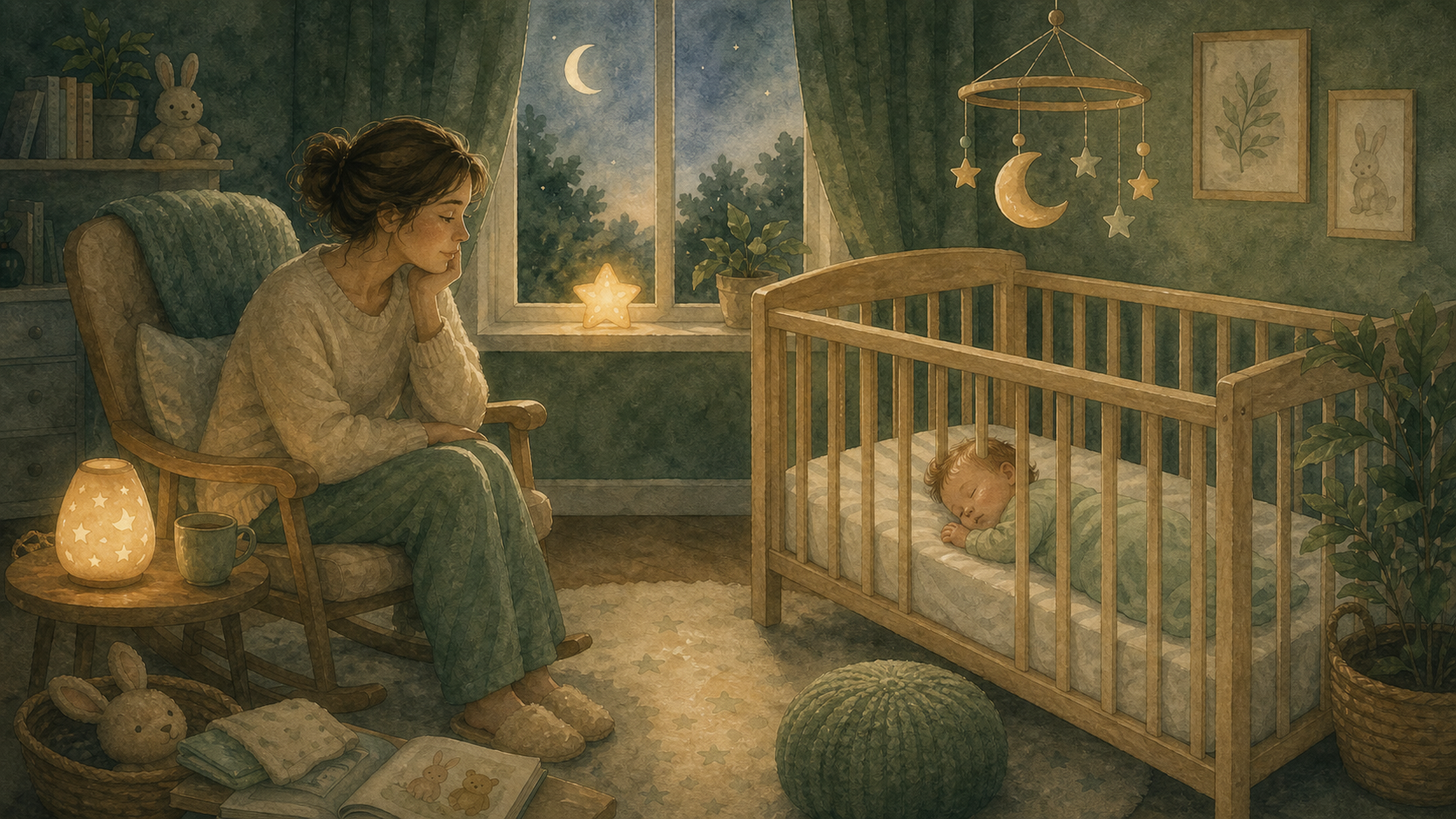
Your baby suddenly cries in the night.
Maybe their eyes are closed. Maybe they arch, fuss, grunt, or seem impossible to settle. You search the phrase night terrors in babies because it looks intense, and you want to understand what is happening.
Here is the gentle truth:
True night terrors are uncommon in babies.
Night terrors are usually discussed in toddlers and children, especially as sleep becomes more organized and deep-sleep parasomnias become more recognizable. In babies, sudden night crying is more often related to normal waking, hunger, discomfort, illness, reflux-like symptoms, overtiredness, separation, or developmental changes.
That does not mean you are imagining it.
It means the label may be wrong.
Why it probably is not a night terror
Night terrors usually happen during deep non-REM sleep. A child may scream, sit up, sweat, seem frightened, and not remember it later.
Babies have different sleep patterns from older children. Their sleep is still maturing, and frequent waking is common.
So when a baby cries at night, it is usually better to ask:
What need, discomfort, or sleep transition might be happening?
instead of assuming night terrors.
What may be happening instead
Night crying in babies can come from many ordinary causes:
- hunger
- gas
- wet diaper
- teething discomfort
- illness or fever
- overtiredness
- needing help resettling
- reflux-like discomfort
- developmental changes
- separation awareness in older babies
- changes in routine
Sometimes there is no obvious answer. Babies can cry in sleep or between sleep cycles, and that can look alarming when you are exhausted.
Could a baby have a nightmare?
Parents often wonder this too.
Babies do have active sleep, and they can make faces, cry, twitch, or fuss. But we cannot know exactly what a baby experiences as a dream in the way an older child can describe one.
If your baby wakes crying and needs help, respond to the need in front of you.
You do not have to solve whether it was a dream.
What to do in the moment
Start with the basics:
- check breathing and color
- check temperature if they seem ill
- check diaper
- offer feeding if appropriate
- hold or soothe if that helps
- burp or reposition while awake if needed
- keep lights low
- keep your voice calm
For sleep safety, always follow safe-sleep guidance for your baby’s age and situation. Babies should sleep in a safe sleep space, on their back, without loose blankets, pillows, or soft objects in the crib.
If something feels medically wrong, call your doctor or seek urgent care.
When to call the doctor
Call your baby’s doctor if:
- your baby has a fever and is very young
- crying is high-pitched, unusual, or inconsolable
- breathing looks difficult
- color changes worry you
- feeding is poor
- vomiting is persistent
- your baby seems unusually sleepy or floppy
- episodes look seizure-like
- your instinct says something is wrong
For babies, it is always okay to ask sooner.
What if my older baby seems panicked but not awake?
Older babies can cry hard while not fully settled or while moving between sleep states. That can look strange and intense.
Keep the response simple:
- pause for a moment if they are just stirring
- respond if crying escalates
- keep the room dim
- soothe without turning night into playtime
- look for patterns across several nights
If you keep seeing the same intense episode and it worries you, record details and ask your pediatrician.
How to support sleep gently
You do not need a perfect baby sleep system.
You need a rhythm that is safe and repeatable.
Try:
- a simple bedtime sequence
- dim light before sleep
- predictable feeding and settling rhythm
- age-appropriate wake windows
- avoiding overtiredness when possible
- calm response at night
- medical support for feeding, reflux-like symptoms, or illness concerns
The goal is not to train away every wake-up. Babies wake. The goal is to reduce distress and support safety.
A Soothly note for babies
For babies, the story is mostly for the parent.
Your voice, rhythm, and calm body become part of the sleep environment. A gentle story can slow you down, soften the room, and make the next few minutes feel less desperate.
Create a soft bedtime story for your baby’s wind-down rhythm.
Create a calming bedtime story for tonight
Sources
- American Academy of Pediatrics / HealthyChildren: Nightmares, Night Terrors & Sleepwalking
- American Academy of Pediatrics: Safe Sleep
- Mayo Clinic: Sleep terrors symptoms and causes
- Cleveland Clinic: Night Terrors
Frequently asked questions
Can babies have night terrors?
True night terrors are uncommon in babies. Night crying in infancy is more often related to waking, hunger, discomfort, illness, overtiredness, or normal sleep development.
Why does my baby cry with eyes closed?
Babies can cry, fuss, or move between sleep states without being fully awake. If crying escalates or something seems wrong, respond and check for basic needs or illness.
Are baby nightmares real?
Babies have active sleep, but they cannot describe dreams. If your baby wakes distressed, focus on comfort, safety, and possible needs rather than the exact label.
When should I call the doctor?
Call if your baby has fever, breathing trouble, color change, poor feeding, persistent vomiting, unusual crying, seizure-like movements, extreme sleepiness, or if your instinct says something is wrong.
How can I reduce scary night waking?
Use a safe sleep setup, predictable wind-down routine, age-appropriate sleep timing, calm nighttime response, and medical support if discomfort or illness may be involved.