Terrors in Toddlers: Why They Happen
By Tim Khuja · 9 min read
Last reviewed June 9, 2026
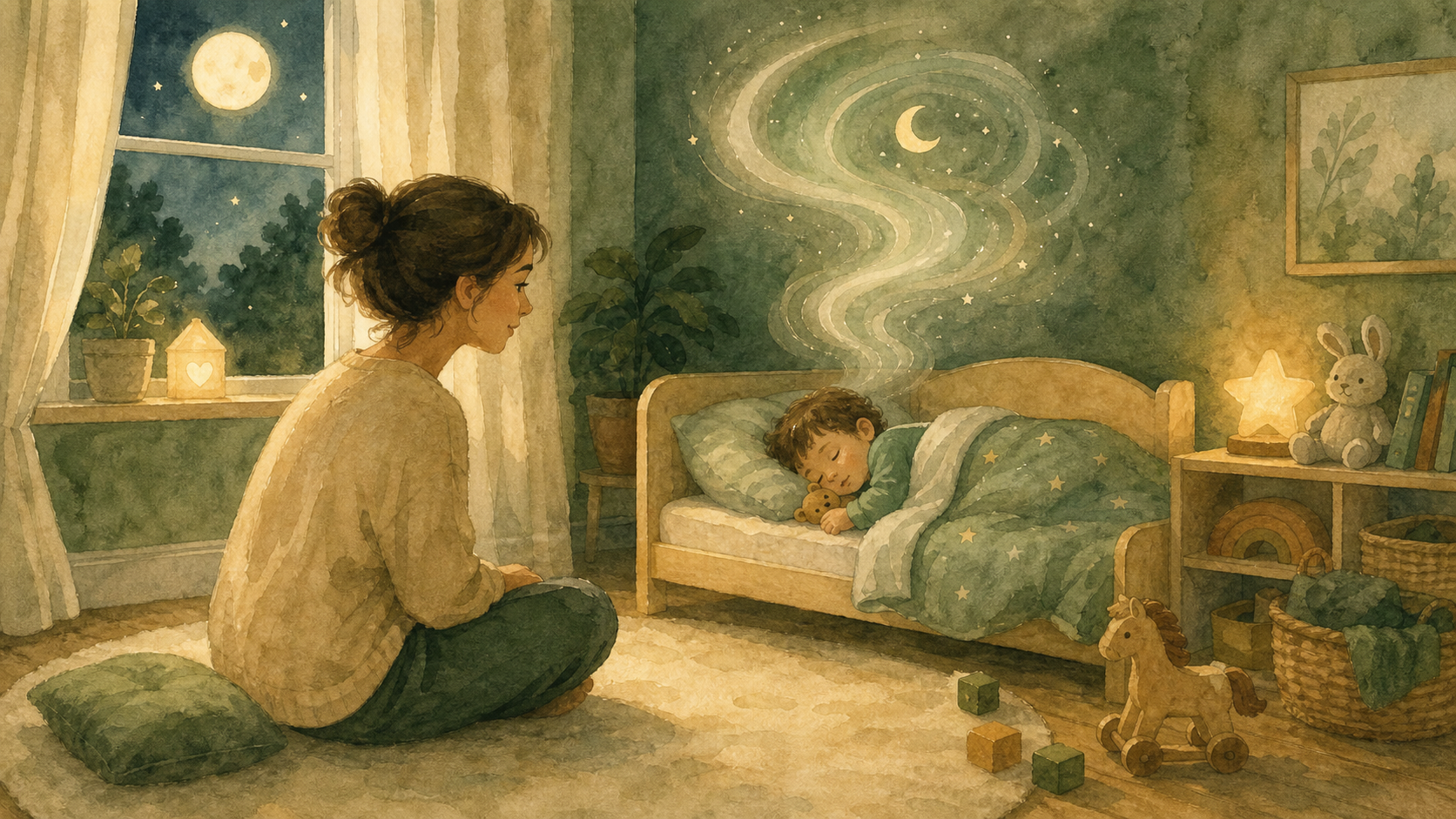
Your toddler is suddenly screaming in bed. Their eyes may be open. Their body may be stiff or sweaty. They might push you away, even though you are only trying to help.
And then, just as suddenly, they settle.
In the morning, they remember nothing.
If this has happened in your house, it can leave you shaken long after your child has gone back to sleep. Night terrors in toddlers can look intense, but they are usually not nightmares. They are a deep-sleep event, and most toddlers are not fully awake while they are happening.
That distinction matters, because a toddler having a night terror does not need a lecture, a long conversation, or a forced wake-up. They need safety, calm, and a sleep rhythm that gives their nervous system fewer reasons to trip the alarm.
What are night terrors in toddlers?
Night terrors are episodes of sudden fear-like behavior that happen during deep non-REM sleep. A toddler may scream, cry, sit up, breathe fast, sweat, kick, or seem panicked.
But even if their eyes are open, they are usually not fully awake.
That is why your toddler may not answer you. They may not recognize you. They may seem frightened but unreachable. This can feel deeply upsetting as a parent, because all your instincts say, “I need to comfort my child right now.”
With night terrors, comfort often looks different. Your presence still matters. But your job is mostly to keep them safe and let the episode pass.
Why toddlers are prone to night terrors
Night terrors are more common in young children because their sleep systems are still developing. Toddlers spend a lot of time in deep sleep, and their brains are still learning how to move smoothly between sleep stages.
That is one reason night terrors often show up around toddlerhood and the preschool years.
Many parents notice them somewhere between about 18 months and 3 years, though they can happen earlier or later. This is also an age full of developmental pressure: language leaps, separation awareness, new independence, dropped naps, daycare transitions, potty training, and bedtime boundary testing.
Your toddler’s brain is doing a lot.
Sometimes the sleep system simply gets overloaded.
Common triggers
Night terrors can happen without an obvious reason, but they are often more likely when a toddler is:
- overtired
- sleeping irregularly
- fighting a fever or illness
- going through a developmental leap
- adjusting to daycare or preschool
- dropping or shortening a nap
- sleeping in a new place
- under extra stress
- waking often at night
Overtiredness is a big one.
It sounds backwards, but a very tired toddler does not always sleep more peacefully. Sometimes they crash into deep sleep so hard that the transition between sleep stages becomes bumpier.
That bumpiness is where night terrors can appear.
How to tell it is a night terror, not a nightmare
A toddler nightmare usually looks like this:
- your child wakes up
- they recognize you
- they may want to be held
- they can often be comforted
- they may remember something scary
A toddler night terror usually looks like this:
- your child seems awake but is not fully awake
- they may scream or thrash
- they may not want to be touched
- they may not respond to your voice
- they settle without really talking
- they usually remember nothing in the morning
The question is not only, “How scared do they look?”
The better question is:
Can they connect with me right now?
If the answer is yes, you may be dealing with a nightmare. If the answer is no, it may be a night terror.
What to do during a toddler night terror
First, remind yourself:
My child is not fully awake. My job is safety and calm.
Then keep the response simple.
- Stay nearby.
- Speak softly.
- Move hard or sharp objects away.
- Do not shake them awake.
- Do not argue with what they seem to be seeing.
- Do not ask lots of questions.
- Gently guide them back if they try to climb or walk.
You can say:
“You’re safe. I’m here.”
“Your body is having a hard sleep moment.”
“I’ll stay close while it passes.”
You may need to say almost nothing. Sometimes the calmest support is a quiet parent sitting nearby, keeping the room safe, and waiting.
Should you wake a toddler from a night terror?
Usually, no.
Trying to force a toddler awake during a night terror can make them more confused, more upset, or harder to settle. They are not having a normal awake fear that can be reasoned with.
Instead, keep them safe and let the episode run its course.
If they are in danger of falling, bumping into furniture, or leaving the room, gently redirect their body. But try not to turn the moment into a battle.
Most night terrors end on their own.
What to do the next morning
This part is surprisingly important.
If your toddler does not remember the night terror, you do not need to describe it in dramatic detail. Too much morning explanation can accidentally make bedtime feel scary.
Keep it simple:
“You had a hard sleep moment last night, and your body settled again.”
Then return to normal.
If your toddler seems worried about sleep, you can add:
“Your bed is safe. I check on you. Your body knows how to rest.”
The goal is not to hide what happened. The goal is to avoid turning a sleep event they do not remember into a new bedtime fear.
How to reduce night terrors
You cannot always prevent night terrors, but you can reduce some of the conditions that make them more likely.
Start with rhythm:
- keep bedtime predictable
- protect naps when your toddler still needs them
- move bedtime earlier after short naps or big days
- use the same calm wind-down sequence each night
- keep the bedroom cool, dim, and boring
- avoid rough play right before bed
- track the time episodes usually happen
If night terrors happen at almost the same time every night, write the time down for a week. A pediatrician may suggest a plan such as scheduled awakenings, where the child is gently stirred shortly before the usual episode time. Do this with medical guidance, especially for a toddler.
When to talk to a doctor
Occasional night terrors are usually not an emergency.
Still, talk to your child’s doctor if:
- episodes are frequent
- your toddler could get hurt
- they leave the bed or room
- sleep is disrupted most nights
- your child is very tired during the day
- the episodes look unusual to you
- you are not sure whether they are seizures or night terrors
- your gut says something needs checking
You are allowed to ask for help even if the answer is reassurance.
A Soothly bedtime reset for toddlers
A toddler may not need to talk through a night terror in the morning. But they can benefit from a bedtime rhythm that makes sleep feel safe again.
That is where a gentle story can help.
Not a story that explains night terrors. Not a lesson. Just a soft narrative where a little character’s body learns to rest, the room stays safe, and a caring grown-up remains nearby.
For example:
“The little moon bear had a busy day. His paws were tired, his ears were tired, even his thoughts were tired. So the Night Lantern sat beside his bed and whispered, ‘You do not have to do anything now. I will glow while you rest.’”
That kind of story gives your toddler a feeling more than an explanation.
Create a calming bedtime story for tonight
Sources
- American Academy of Pediatrics / HealthyChildren: Nightmares, Night Terrors & Sleepwalking
- Mayo Clinic: Sleep terrors symptoms and causes
- Mayo Clinic: Sleep terrors diagnosis and treatment
- Cleveland Clinic: Night Terrors
Frequently asked questions
Are night terrors common in toddlers?
Yes. Night terrors are relatively common in young children and often fade as the child gets older. They can still be very upsetting for parents to watch.
Why does my toddler scream but not wake up?
During a night terror, your toddler is usually in deep sleep and not fully awake. Their body can look panicked even though they are not having a normal awake fear.
Should I pick up my toddler during a night terror?
Only if you need to keep them safe. If touching or holding makes them more upset, stay close, speak softly, and protect them from bumping into things.
Do toddlers remember night terrors?
Most toddlers do not remember night terrors in the morning. If they remember a scary dream, it may have been a nightmare instead.
When should I call the doctor about toddler night terrors?
Call or message your doctor if episodes are frequent, dangerous, unusual, disrupting sleep, or if you are worried they may be seizures or another medical issue.