Preschool Drop-Off Anxiety: A 14-Day Plan
By Soothly Editorial · 6 min read
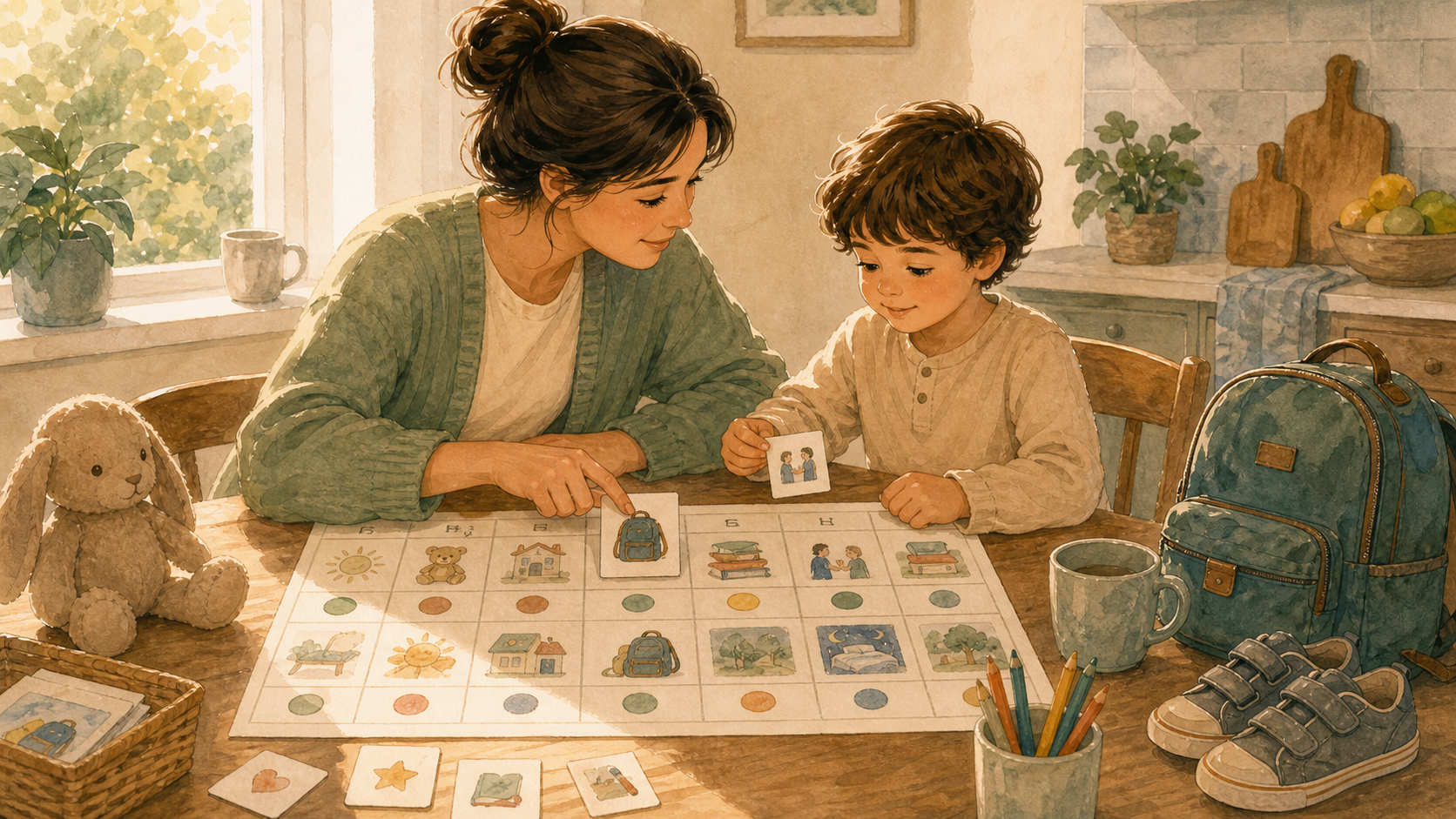
Preschool drop-off anxiety can appear even when your child likes preschool.
They may talk happily about friends, songs, and snack time. Then the doorway arrives and everything collapses.
That mismatch is common. The drop-off moment asks a young child to do several hard things at once: separate from you, enter a group, manage noise, find their place, and trust that return will happen later.
A 14-day plan can make the transition feel less like a daily emergency.
Days 1-3: make the goodbye predictable
Choose one short goodbye script and use it every day.
For example:
"I love you. Your teacher will help you. I come back after playground. Hug, kiss, wave."
Keep the words the same. Predictability is soothing.
Ask the teacher for a simple handoff: maybe your child gets a job, holds a favorite book, or walks with the teacher to the window.
Days 4-6: add a return marker
Preschoolers understand events better than clock time.
Use:
- after snack
- after nap
- after playground
- after story time
Draw a tiny picture routine at home: goodbye, play, snack, parent returns. Keep it simple.
Days 7-10: practice bravery outside the hard moment
Do not teach the skill only during tears.
At home, practice:
- a stuffed-animal drop-off
- walking away and coming back
- the goodbye phrase
- a brave breathing cue
- a tiny hand wave ritual
Make it playful, not clinical.
Days 11-14: reduce extra reassurance
By now, your child may still protest. That does not mean the plan is failing.
Answer once, then return to the script:
"Yes, I come back after playground. That is the plan."
Avoid adding new promises every morning. Too many words can make the worry feel bigger.
Signs the plan is working
Look for progress, not perfection:
- crying is shorter
- your child accepts the caregiver sooner
- they talk about preschool afterward
- they join one activity faster
- mornings feel more predictable
A child can still cry and still be adapting.
When to change course
If distress is intense, lasts a long time after you leave, or gets worse across several weeks, speak with the teacher and pediatrician. If your child mentions fear of a specific person, unsafe behavior, or repeated distress in the classroom, take that seriously and investigate.
A Soothly bedtime reset
"The little bear practiced goodbye with three acorns: one for the hug, one for the wave, and one for coming back. By the fourteenth sunrise, the acorns felt like a tiny map."
Create a gentle goodbye-and-return story for tonight.
Create a calming bedtime story for tonight
Sources
- American Academy of Pediatrics / HealthyChildren: How to ease your child’s separation anxiety
- American Academy of Pediatrics / HealthyChildren: Making baby drop-off at child care easier
- NAEYC: Difficult goodbyes and separation anxiety
- CDC: Anxiety and depression in children
- NHS: Anxiety disorders in children
Frequently asked questions
How long does preschool drop-off anxiety last?
Many children improve over days or weeks with consistency. If distress stays intense or worsens, ask the teacher and pediatrician for support.
What should I say at preschool drop-off?
Use a short repeated script: I love you, your teacher will help, I come back after a concrete part of the day, then leave calmly.
Should I stay until my child stops crying?
Usually not. Long goodbyes can stretch the alarm. A warm brief handoff is often better.
What if my child was fine and suddenly struggles?
Look for sleep disruption, illness, school changes, family stress, or a classroom issue. Sudden changes are information.
How can teachers help?
Teachers can provide a predictable handoff, a settling activity, a helper job, and brief updates about how your child recovers.