School Anxiety in Children: Causes of Morning Meltdowns
By Tim Khuja · 7 min read
Last reviewed June 9, 2026
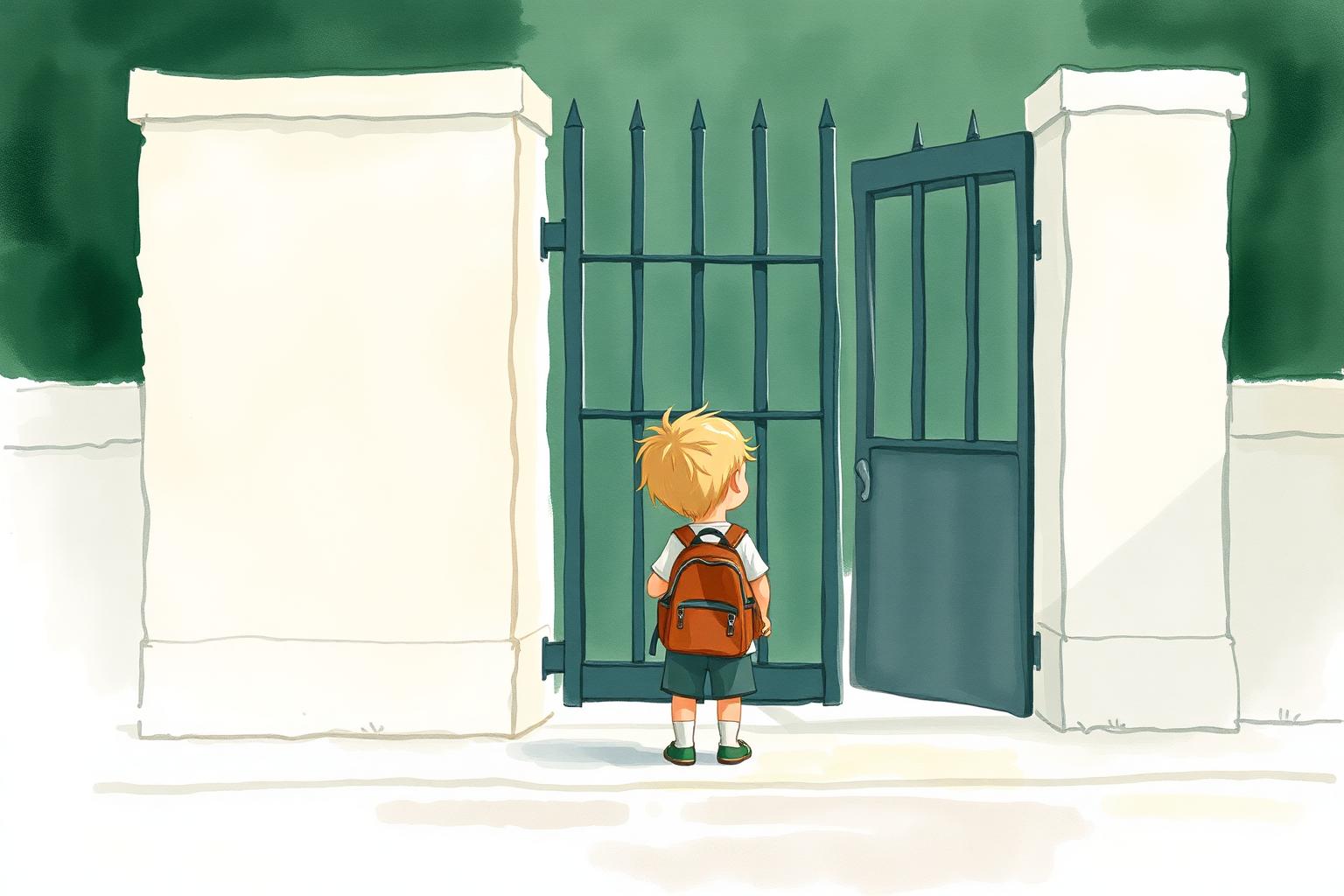
The morning starts fine. Breakfast, shoes, bag by the door. And then — somewhere between the hallway and the car — it collapses. My tummy hurts. I can't go. Please don't make me.
For most parents, the first instinct is to negotiate. You'll have fun once you're there. Remember last week? It almost never helps. Because school anxiety is rarely a logic problem. It's a nervous system that has decided, somewhere below words, that the next few hours are unsafe.
The job isn't to argue with that conclusion. It's to understand what the nervous system is reading.
What "school anxiety" actually covers
The phrase is broad and a little misleading. Underneath it sit at least four different children:
The child who can't separate. For them, school isn't the problem. You not being there is the problem. Drop-off is the spike; once the parent is gone and the day begins, they usually settle.
The child who can't predict. Transitions, supply teachers, fire drills, a friend who is sometimes kind and sometimes not. They are not afraid of school — they are afraid of not knowing what's coming.
The sensory child. Fluorescent lights, the smell of the dining hall, the noise of the corridor at change-over. By 10am their system is already over budget.
The socially bruised child. Something small happened — a look, a swap of friendship groups, a comment in PE. To you it's a Tuesday. To them it's the whole reason their stomach hurts.
Most anxious children are some combination. The mistake is treating them all the same way.
Why mornings are the worst
Anxiety follows a predictable shape. It peaks in anticipation, not in the moment. The thirty minutes before the thing is almost always worse than the thing itself.
This is why a child can be inconsolable at 8:15 and chatting happily at 8:45. It isn't manipulation, and it isn't proof that you should have pushed harder. It's the basic physiology of threat: the body braces hardest just before contact.
Knowing this changes what mornings are for. They are not for persuasion. They are for co-regulation — a steady adult body next to a destabilised child one, until the wave passes.
What to say at the gate
Avoid:
- There's nothing to be scared of. (There is, to them.)
- You're being silly.
- Big kids don't cry.
- If you don't go, no screens.
Try:
- Your body is telling you it doesn't feel safe. That makes sense — mornings are hard.
- I know the first ten minutes are the worst. I'm going to walk you to the door and Miss J will take it from there.
- You don't have to feel brave. You just have to do the next small thing.
The goal isn't to make them feel happy about going. It's to communicate: I see what's happening in you, and I still believe you can do this. That sentence, repeated calmly across weeks, is what builds the capacity.
When refusal becomes a pattern
A bad week is a bad week. The threshold to take more seriously is roughly:
- More than two weeks of consistent morning distress that doesn't resolve once they're in.
- Physical symptoms (stomach aches, headaches, sleep disruption) on Sunday evenings and weekday mornings, with no medical cause.
- Withdrawal from things they used to enjoy at school — clubs, friendships, a favourite subject.
- A child who actively asks to talk to someone, or who says things like I don't want to be me anymore.
At that point, loop in the class teacher and your GP. Look up emotionally-based school avoidance (the modern term schools and clinicians use). It is a recognised pattern with a recognised response — graded return, sensory accommodations, sometimes therapy. Not a discipline problem.
The story layer
Stories help here in a way that reasoning doesn't, because they let the child rehearse the difficult thing from the safety of someone else's body. A character who is also nervous about Monday. A character who finds a small steady thing — a stone in their pocket, a teacher who notices. The child watches their own situation worked through symbolically, and something settles.
This is the core of bibliotherapy: the brain takes in narrative differently than instruction. A story about a small bear who doesn't want to go to the den doesn't lecture. It just sits beside the feeling. By the end, the child has been somewhere — and they bring something quiet back.
What helps in the long run
- A predictable morning sequence with as few decisions as possible.
- A short, firm, loving handover ritual at the gate. Same words every day.
- A named adult at school the child can find when things wobble. (This matters more than almost anything else.)
- Genuine listening after school — not interrogation in the car, but a quiet window later when they may say more.
- Stories at bedtime that touch the theme gently, without solving it.
School anxiety in children isn't a flaw to fix. It's a nervous system asking for the right kind of support. When that support shows up, day after day, the morning starts to lengthen — and one ordinary Tuesday, the wave doesn't come.
Frequently asked questions
Is school anxiety in children a real condition?
Yes. Persistent distress around attending school is recognised clinically — often called emotionally-based school avoidance. It isn't defiance and isn't usually about academics.
Should I force my child to go to school when they're anxious?
For one-off mornings, gentle expectation usually helps. For a sustained pattern, forcing tends to deepen the avoidance. Speak to the school and your GP about a graded plan.
Why is my child fine at school but melts down before and after?
Anxiety peaks in anticipation and releases on the way home. The behaviour you see at the edges is your child's whole day's effort coming out where it's safe.
At what age is school anxiety most common?
It clusters around two transitions — starting school (4–6) and the move to secondary (10–12) — but can appear any time, especially after illness, a friendship rupture, or a family change.