The Slow Voice: A Read-Aloud Technique That Helps Kids Sleep
By Soothly Editorial · 6 min read
Last reviewed June 12, 2026
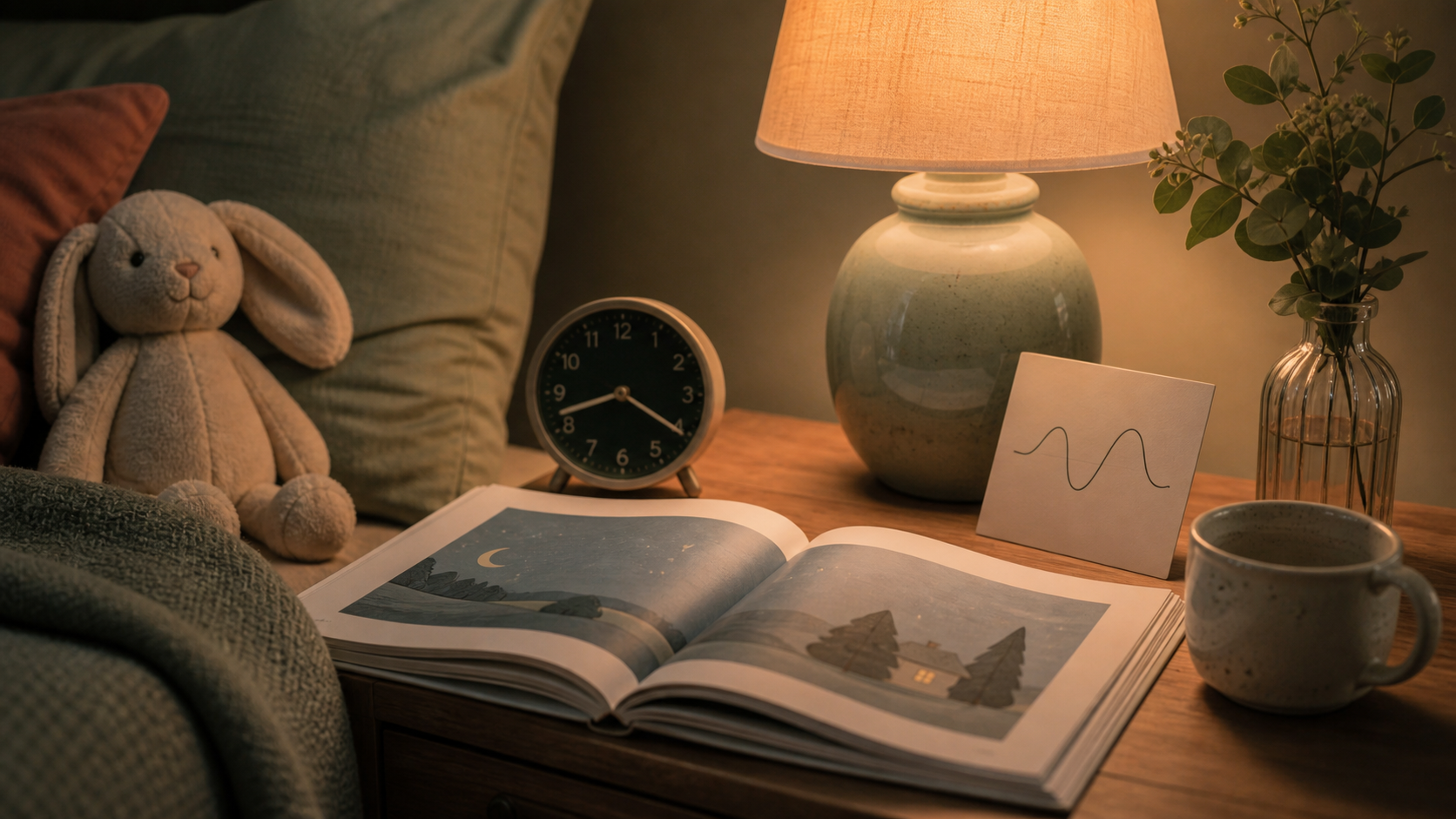
A slow bedtime voice gives a child's body something steady to follow.
Many parents think the bedtime story is about the book.
It is partly about the book. But it is also about pace, voice, closeness, predictability, and the moment your child borrows calm from you.
What children listen to at bedtime
At bedtime, children are not only listening to plot.
They are listening for:
- whether you are rushed
- whether the room feels safe
- whether your voice is steady
- whether the story is winding up or winding down
- whether the ending feels complete
That is why the same simple story can work beautifully when read slowly and fail completely when rushed.
The read-aloud method
Try this:
- start normal, then slow gradually
- make sentences shorter
- leave tiny silences
- end with the same final line
Do not worry about doing character voices. A gentle, predictable voice is more useful than a dramatic one.
Make the story smaller as it goes
Bedtime stories should narrow, not expand.
Early in the story, you can have movement: a walk, a search, a little problem, a question.
Near the end, reduce stimulation:
- fewer new characters
- fewer surprises
- softer verbs
- shorter sentences
- repeated safe images
The child should feel the story landing.
What to avoid
Avoid stories that end with:
- a cliffhanger
- a scary reveal
- a big chase
- a moral lecture
- a problem that is still unresolved
- a joke that gets everyone excited again
Funny is fine earlier in the evening. At lights-out, the story has a job.
What to do when your child interrupts
Some interruptions are connection bids.
Answer briefly, then return:
"Yes, the owl is worried. Let's see how she helps her body."
If your child uses questions to keep bedtime going, use a boundary:
"One more story question, then my voice is going quiet."
You are not being cold. You are protecting the shape of bedtime.
A tiny practice script
Read this slowly:
"The little boat rocked once. Then twice. Then it noticed the moon making a path on the water. The boat did not have to hurry. The path was already there."
Pause between sentences. Let your breathing slow. The words matter, but the pace carries them.
When audio helps
Audio stories can be useful when:
- a parent is unavailable for part of bedtime
- a child needs the same story every night
- travel disrupts the normal routine
- a child calms with predictable sound
- siblings need different wind-down rhythms
Keep audio gentle and finite. A playlist that keeps going can train the child to need constant sound rather than a closing ritual.
A Soothly bedtime reset
If you are too tired to invent or choose, use a story that is short, slow, and emotionally matched.
Create a calming bedtime story for tonight
Sources
- Reading Rockets: Reading aloud
- American Academy of Pediatrics / HealthyChildren: Healthy sleep habits
- CDC: Child Development
Frequently asked questions
What is the slow voice?
It is a gradually slower, softer bedtime reading voice.
Does slow reading help kids sleep?
It can support calming when paired with a predictable bedtime routine.
Should I whisper?
Not necessarily. Quiet and steady is better than strained whispering.
When should I slow down?
Start normal, then slow gradually in the second half of the story.
What if my child gets bored?
Boredom at bedtime is not always bad; it can mean the body is settling.