Stories about fear of failure for perfectionist children
By Tim Khuja · 8 min read
Last reviewed June 9, 2026
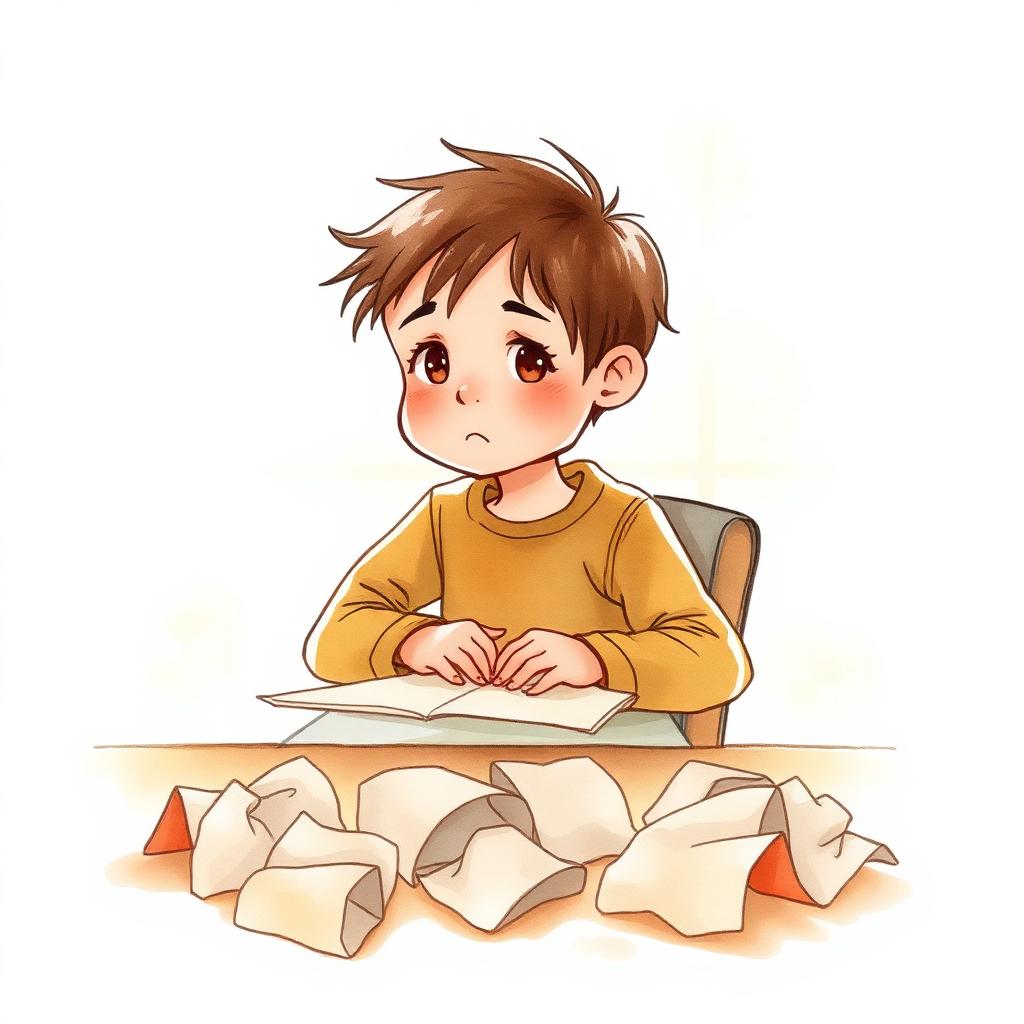
The drawing is almost finished. Then a line goes the wrong way, and your child rips the paper in half, eyes filling with tears.
You've said it a hundred times: It's okay to make mistakes. Nobody's perfect. Mistakes are how we learn.
It hasn't worked.
This is the painful loop of parenting a perfectionist child. The reassurance you offer slides off them like rain off glass — because perfectionism isn't a logic problem. It's a feeling problem. And feeling problems are best reached through stories.
Why perfectionist children can't hear reassurance
A perfectionist child is not afraid of mistakes in the abstract. They are afraid of what mistakes mean about them. In their inner world, a wrong line on the page doesn't say I made a small error. It says I am the kind of person who fails. I am not enough.
When you respond with "it's okay to make mistakes," you are speaking to the logical brain. But the part of them that's distressed isn't the logical brain — it's the part that's protecting their sense of self. Reassurance bounces off because it doesn't reach the right address.
Stories reach the right address. Always have.
The mechanism: identification, not instruction
When a child hears a story about a small bear who tries hard, gets it wrong, and is loved anyway — something different happens in their brain than when they are told the same thing.
In a story, the child is the bear. They watch themselves fail, watch themselves be loved, and rehearse — emotionally — what it would feel like to survive their own imperfection. This is called narrative identification, and it bypasses the defences that reassurance walks straight into.
The bear can fail safely. The child cannot. So the bear goes first.
What a good fear-of-failure story does
A story that helps a perfectionist child needs four things, in this order:
1. The character cares deeply. The protagonist must want to do well. A character who doesn't care about getting it right is not a mirror your child can see themselves in. Make them try hard. Make them practise.
2. They fail visibly. Not a small stumble — a real, public, embarrassing failure. The kind your child fears. The cake collapses at the party. The painting gets ruined. The line is forgotten on stage.
3. The world does not end. This is the load-bearing part of the story. Someone — a parent, a friend, a kindly stranger — responds with warmth, not disappointment. The character's worth is not revoked. The hug still comes.
4. Something small and real is learned. Not "I learned mistakes are wonderful!" — perfectionists don't believe that. Something quieter. I learned my friends still wanted me. I learned my mother still smiled. I learned I am the same person before and after the failure.
What a bad fear-of-failure story does
A bad story tries to teach the lesson directly. A character says "mistakes are good!" and learns to love them by page eight. Your child closes the book unchanged, because they correctly noticed they were being lectured.
Stories work when the lesson is under the surface, felt rather than stated. Trust your child to find what they need. They will.
Beyond stories: the small things that loosen perfectionism
Stories are powerful, but they live inside a bigger emotional environment. A few things to weave into ordinary life:
- Praise the process, not the product. "You worked on that for a long time" lands differently than "What a beautiful drawing." The first one is sustainable. The second one becomes a tightrope.
- Let them see you fail. Burn the toast on purpose if you have to. Spill the water. Laugh, shrug, fix it. They're watching how a beloved adult metabolises imperfection.
- Don't rescue too fast. When the tower falls and they spiral, resist the urge to rebuild it. Sit with them in the falling. "That was so frustrating. The tower fell. You worked so hard on it." Then let them choose whether to try again.
- Avoid the word 'perfect' as praise. "That's perfect!" sets a ceiling. Try "I love how you did this part" instead.
What perfectionism is really protecting
Underneath fear of failure is almost always a fear of love being conditional. If I'm not good, will they still want me?
Your job isn't to argue with that fear. Your job is to make the answer so obvious, in a thousand small moments, that the question slowly stops mattering.
Stories help. So does watching you fail. So does the way you sit beside them when the drawing is ruined and you don't try to fix it.
The grip loosens. Slowly. It does loosen.
Frequently asked questions
What ages does this apply to?
Perfectionism often appears between ages 4 and 8, peaks around 7–9, and can persist into adolescence. The story approach works across this whole range — adjust the complexity, not the structure.
Should I avoid praising my child entirely?
No. Praise warmly and specifically — but praise the effort, the choice, the kindness, the process. "You kept going even when it was hard" builds a child who can fail and try again.
What if my child tears up the story when the character fails?
That's a sign the story landed close to home. Don't push. Put it down and try again in a week. Sometimes the most powerful stories are read in three sittings instead of one.
Is perfectionism linked to anxiety?
Often, yes. Perfectionism is a common feature of childhood anxiety, particularly in academically able children. If it's interfering with sleep, friendships, or willingness to try new things, it's worth speaking to a child psychologist.