A Story for Kids About Loneliness
By Soothly Editorial · 7 min read
Last reviewed June 12, 2026
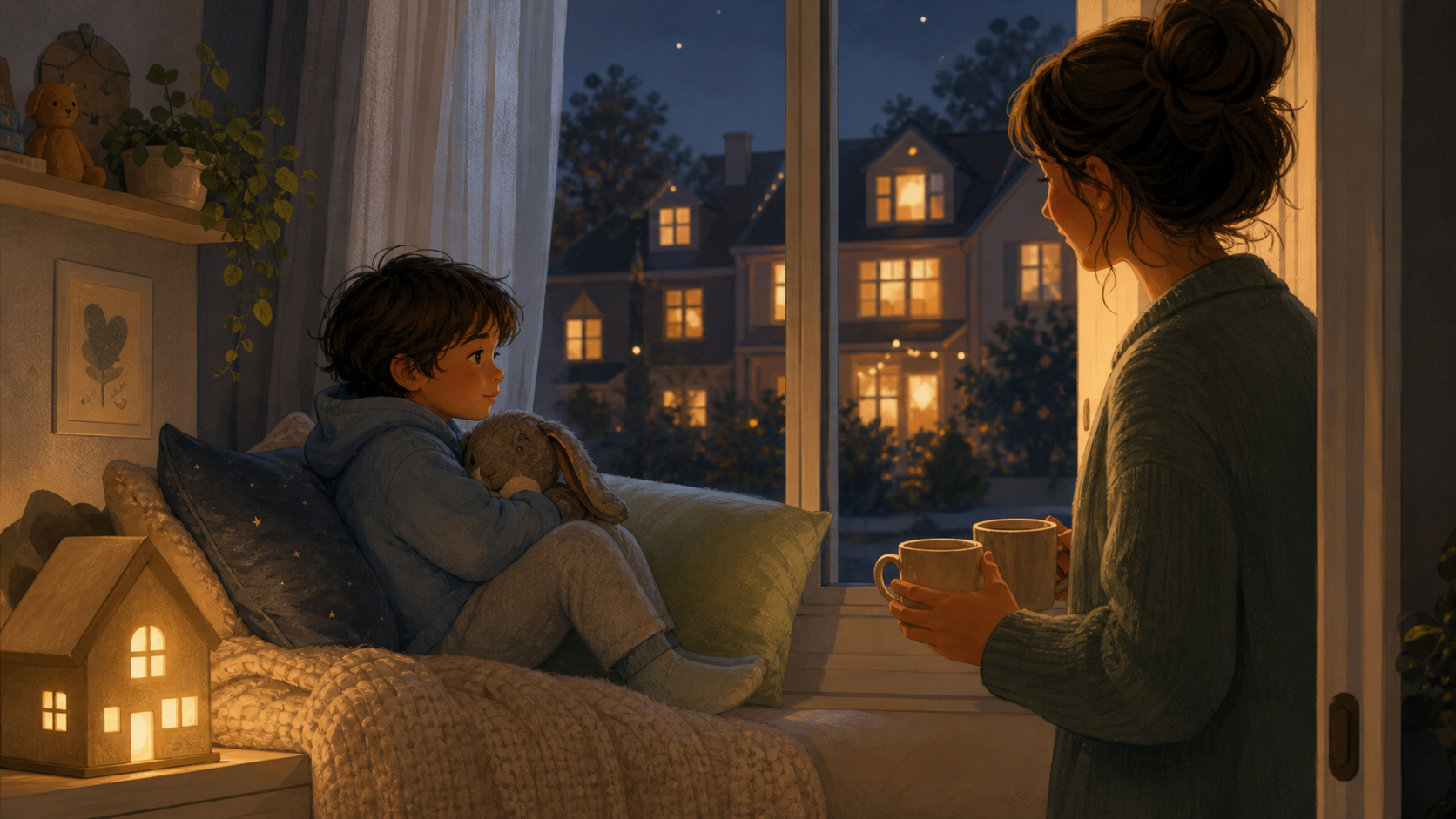
Some feelings get bigger when children think they have to hide them.
A Story for Kids About Loneliness is a gentle read-aloud you can use at bedtime, after a hard moment, or on a quiet afternoon when your child is more open to story than advice.
The point is not to explain loneliness away. The point is to make it safe enough to name.
The story
Once there was a window mouse who carried a indigo feeling in a small pocket.
Most days the pocket stayed soft and quiet.
But one evening, the feeling grew.
It grew while everyone else seemed busy. It grew while the room felt too loud. It grew while the window mouse tried very hard to be fine.
At bedtime, the window mouse tucked the feeling under the blanket.
"Stay there," the window mouse whispered.
But feelings do not become smaller just because they are hidden.
The blanket bumped.
The pillow puffed.
The indigo feeling rolled across the bed like a little weather cloud.
Then the Night Gardener came to the window with a lantern that was not too bright.
"I am not here to take your feeling away," said the Night Gardener.
"Then why are you here?" asked the window mouse.
"To help you listen without getting swallowed."
The window mouse looked at the indigo feeling.
"It says I need connection without pressure to perform happiness," the window mouse whispered.
The Night Gardener nodded.
"That is an important thing to need."
Together they made the feeling a little place beside the bed. Not under the blanket. Not in charge of the whole room. Just beside the bed, where it could be seen.
The window mouse practiced one quiet sentence:
"You do not have to be cheerful to be close to me."
The feeling did not vanish.
But it changed shape.
It became small enough to hold.
And when the room became quiet, the window mouse learned something gentle:
Feeling alone is a signal that connection matters.
That was enough for one night.
How to read this story
Read it slowly. Let the pauses do some of the work.
If your child interrupts, do not correct the interruption. Sometimes a child will say, "That is like me," and sometimes they will talk about the character as if it has nothing to do with them. Both are useful.
You can swap the window mouse for your child's favorite animal or toy. Keep the feeling visible but not scary. The best therapeutic stories make a feeling understandable without making it the whole identity of the child.
What this story teaches
This story quietly teaches five regulation steps:
- notice the feeling
- name what it might need
- give it a safe place
- use one short sentence
- return to connection
For loneliness, that matters because children often feel the body first and the words later. A story gives them words without putting them on the spot.
Parent script after the story
You do not need to turn the story into a lesson.
Try one sentence:
"That story had a indigo feeling. I liked how it got a place beside the bed."
Then pause.
If your child wants to talk, follow gently. If they do not, let the story keep working in the background.
For a direct moment, you can say:
"You do not have to be cheerful to be close to me."
Short scripts help because tired parents and dysregulated children both need language that can survive real life.
When to use it
Use this story when your child:
- seems flooded but cannot explain why
- says "I'm fine" while clearly not fine
- gets stuck after a hard moment
- needs bedtime reassurance
- responds better to characters than questions
Do not use it to force a confession or make your child analyze themselves at bedtime. Stories are doors, not interrogations.
When to get more support
Stories can help, but they are not a substitute for professional care.
Ask for more support if big feelings are frequent, unsafe, connected to bullying or trauma, disrupting sleep or school, or if your child seems persistently overwhelmed.
Create a story for tonight's feeling
Choose a character, a feeling color, and one sentence your child can keep.
Create a calming bedtime story for tonight
Sources
Frequently asked questions
How do stories help with loneliness?
They give the feeling a safe shape and model one small next step without putting the child on the spot.
Can I read this at bedtime?
Yes. Keep your voice slow, avoid turning it into a lecture, and end with reassurance.
Should I ask my child if the story is about them?
Usually no. Let the child connect indirectly if they want to.
Can I change the character?
Yes. Using your child's favorite animal or toy can make the story feel safer and more personal.
When should I seek more support?
Seek support if feelings are frequent, unsafe, persistent, or disrupting sleep, school, or family life.