Transitional Objects: From Lovey to Pocket Heart
By Soothly Editorial · 6 min read
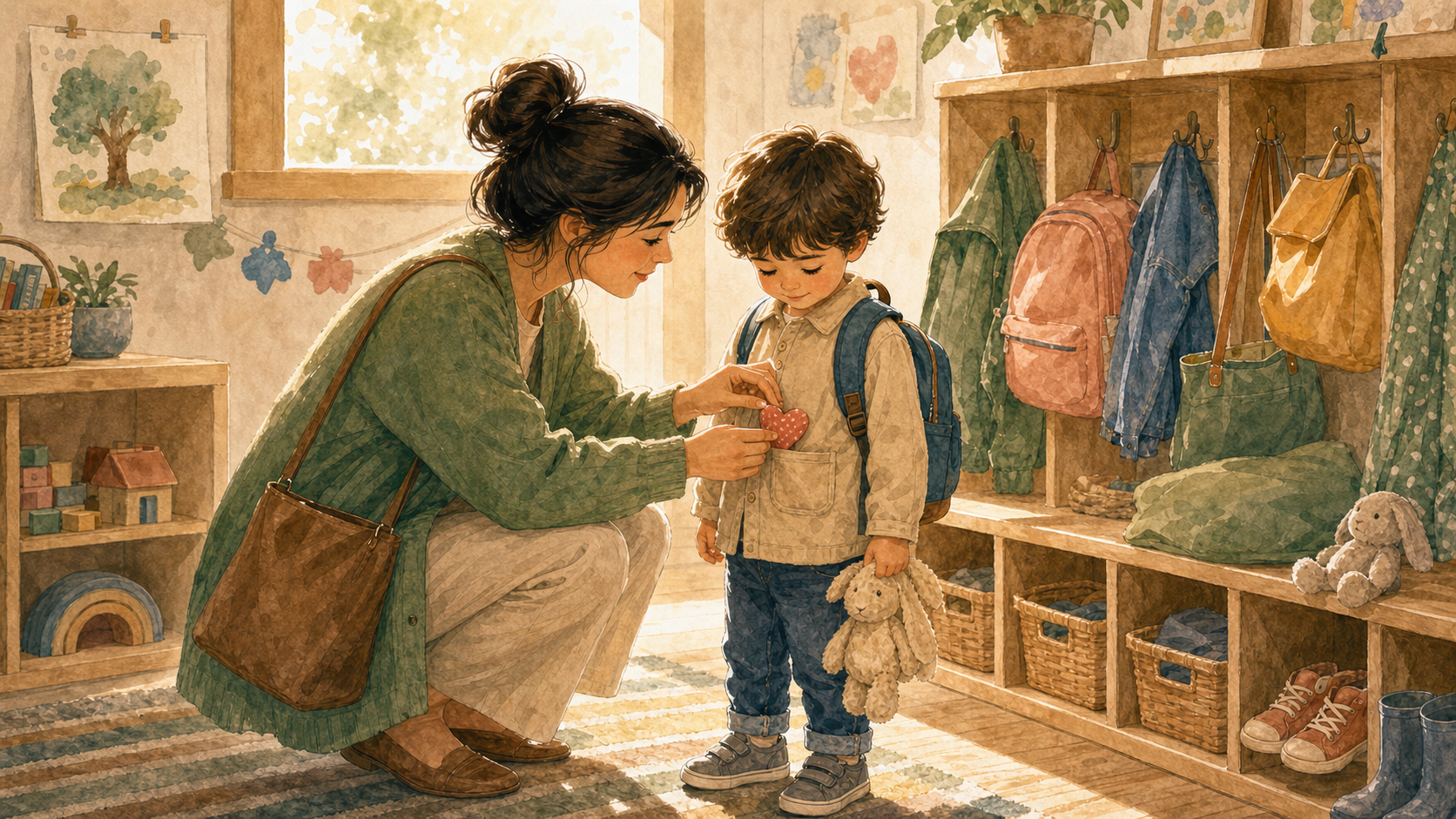
A transitional object is a small bridge between home and the wider world.
It might be a stuffed animal, soft cloth, tiny photo, bracelet, pocket heart, keychain, or note. For some children, that small object helps the body remember: my safe person is not here, but connection still exists.
The goal is not dependence. Used well, a transitional object can support independence.
What makes a good transitional object
Choose something that is:
- small
- safe
- allowed by the daycare or preschool
- replaceable if lost
- connected to home
- not too distracting
Ask the teacher what works in the classroom. A huge beloved toy may be harder to manage than a pocket-sized comfort item.
Lovey, pocket heart, or photo?
Different children need different bridges.
A toddler may want a soft lovey.
A preschooler may like a small heart in their pocket.
A school-age child may prefer something private, like a bracelet or keychain.
Respect the child's dignity. Older children may not want anything that feels babyish.
How to introduce it
Practice at home first.
You might say:
"This heart does not make the worry disappear. It reminds your body that I come back."
Then pair it with a short goodbye ritual.
The object should support the plan, not replace it.
Set simple rules
Agree with the caregiver on where the object lives:
- in the cubby
- in a pocket
- on the nap mat
- in a small comfort basket
If the object becomes a source of conflict, adjust. The point is steadiness, not a new battle.
When it may not help
A transitional object may not be enough if your child is intensely distressed, cannot settle, or is afraid of the setting itself. In that case, use it as one part of a larger support plan with caregivers and, if needed, a pediatrician or child therapist.
A Soothly bedtime reset
"The little fox carried a soft blue button in his pocket. It did not talk. It did not solve the whole day. It simply whispered, home is real, even when you are away."
Create a gentle goodbye-and-return story for tonight.
Create a calming bedtime story for tonight
Sources
- American Academy of Pediatrics / HealthyChildren: How to ease your child’s separation anxiety
- American Academy of Pediatrics / HealthyChildren: Making baby drop-off at child care easier
- NAEYC: Difficult goodbyes and separation anxiety
- CDC: Anxiety and depression in children
- NHS: Anxiety disorders in children
Frequently asked questions
What is a transitional object?
It is a small comfort item that helps a child feel connected to home during separation.
What makes a good comfort object?
Choose something small, safe, allowed, replaceable, and not too distracting.
Can a transitional object make my child dependent?
Used well, it can support independence by helping your child tolerate separation.
What if the daycare does not allow toys?
Ask about alternatives such as a pocket note, small fabric heart, bracelet, or cubby item.
When is a comfort object not enough?
If distress is intense or persistent, use it as one part of a larger plan with caregivers and possibly a pediatrician or therapist.