Why your toddler melts down at 5pm (the witching hour)
By Tim Khuja · 7 min read
Last reviewed June 9, 2026
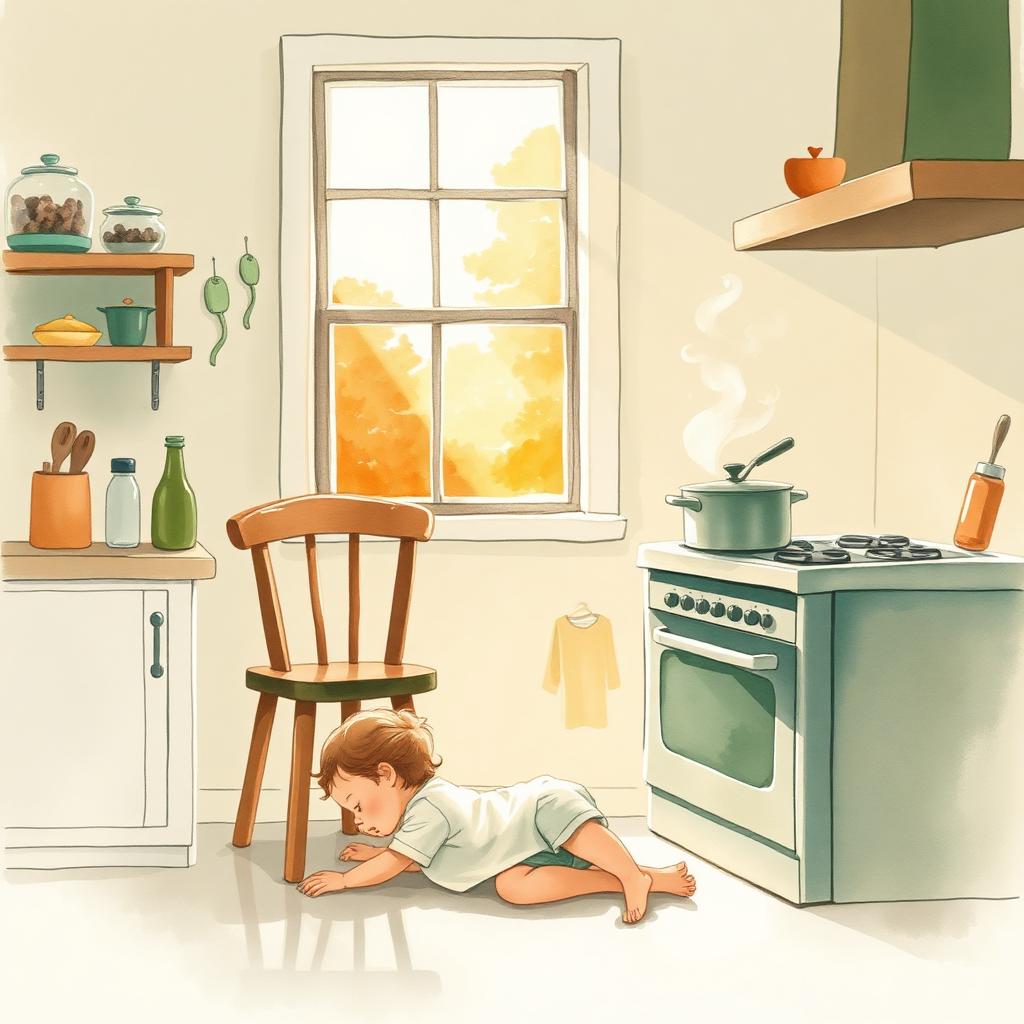
Almost every parent of a small child knows the hour. It starts somewhere around 4:30 in the afternoon. The morning child — the one who built towers, narrated her snack, gave the cat a kiss — is gone. In her place is a smaller, hotter, more breakable version, who cannot decide what cup she wants and is furious about both options.
It is so universal that for centuries it has had a name: the witching hour. The grandmothers called it that long before anyone wrote a parenting book. They were right about it being predictable. They were wrong about it being mysterious.
What is happening in the late afternoon is not bad behaviour. It is biology. Once you can see it as biology, the hour does not become easy — but it stops feeling like a personal failure, which is most of what makes it bearable.
What is actually happening at 5pm
Three things are converging in a small body at once:
- Cortisol is rising again. Cortisol — the body's main stress and alertness hormone — follows a daily curve. It peaks in the morning, drops through midday, and rises again in the late afternoon and early evening before falling for sleep. In adults this is mostly invisible. In toddlers, whose regulation is still under construction, that second cortisol bump is felt as restlessness, irritability, and a lower threshold for tears.
- Blood sugar is dropping. Lunch was hours ago. The snack was small or skipped. A toddler's metabolism does not have the reserves an adult's does — hangry is not a metaphor for them, it is the literal physiology.
- The regulation tank is empty. A toddler spends the whole day doing developmentally hard things: managing impulses, sharing, waiting, learning. By 5pm, the part of the brain that does that work — the prefrontal cortex, which is years from being finished — has nothing left. Even tiny demands tip the system.
Add in tired parents, a chaotic kitchen, an older sibling home from school, the smell of cooking, the noise of the extractor fan, and the fact that the daily wind-down has not yet begun, and you have a perfect storm. It is not a parenting problem. It is an arrival of evening.
What helps (a little)
Nothing fixes the witching hour. There is no magic technique that turns 5pm into 11am. But several small things make it survivable, and they tend to compound over weeks.
- Move dinner earlier, or move a real snack into 4pm. This is the single biggest lever. A proper snack — protein and complex carbs, not just fruit — steadies the blood sugar dip before the meltdown begins. Cheese and crackers, hummus and toast, a small bowl of pasta. The goal is to land a calorie buffer in their system before they crash, not after.
- Lower the sensory volume. Turn off the extractor fan, the music, the TV. Put on one warm lamp instead of the overhead. Their nervous system is already at the ceiling — every input you remove buys them a small margin.
- Stop asking questions. "What do you want for dinner? Do you want a bath? Can you put your shoes away?" — a tired toddler cannot make decisions. Switch to simple narration: "I am making your pasta. The water is hot. We are going to eat soon." They do not need choices. They need a story.
- Get outside, if you possibly can. Twenty minutes in the garden, on the doorstep, on a walk around the block — outdoor light and movement reset the system more reliably than any indoor strategy. Many families find that the afternoon park trip is not a luxury; it is the single thing that prevents the 5pm meltdown.
- Plan for low-effort connection. A toddler at 5pm cannot do imaginative play, art projects, or anything requiring focus. They can sit on your lap. They can dump out one bin of blocks while you cook. They can listen to the same song three times. The simpler the activity, the less it will combust.
- Lower your bar. Dinner does not have to be balanced. Bath can be skipped. Pyjamas can go on at 5:15. The witching hour is not the moment to enforce family standards. It is the moment to survive an hour with their dignity, and yours, mostly intact.
What to skip
- Skip new rules. The witching hour is the worst possible time to introduce a boundary, a new expectation, or a we do not do that anymore. Their system has no capacity for new information. Anything new will become a meltdown.
- Skip the long explanation. "Darling, the reason we cannot have biscuits is because…" — they cannot follow this at 5pm. They could at 10am. Save it.
- Skip the screen as a default. A short calm video occasionally is fine; a daily 5pm screen is a sleep problem in waiting and tends to make the post-screen comedown harder. If you use one, use it deliberately, not by accident.
- Skip blaming yourself. Most parents quietly carry a sense that the 5pm chaos is evidence they are doing something wrong. They are not. The witching hour is happening in the home of every toddler in your timezone right now. You are not a worse parent than the ones whose Instagram looks calmer. They just took the photo at 10am.
The longer view
Toddlers grow out of the witching hour around four or five, when their prefrontal cortex catches up enough to stretch through a whole day. It does not go away because you parented it better. It goes away because they grew.
In the meantime, what your child is learning, every single 5pm — even the ones with tears, with too many nos, with cereal for dinner — is that the hard part of the day ends, that their grown-up stays present even when they fall apart, and that being loved is not contingent on being calm.
That is a lot to teach in an hour you barely survive. But you are teaching it, every day, just by getting them to the other side.
Frequently asked questions
Is the witching hour the same as the bedtime resistance an hour later?
Related but not the same. The witching hour is the late-afternoon dysregulation peak driven by cortisol, low blood sugar, and an empty regulation tank. Bedtime resistance is a separate, more deliberate phenomenon. Easing the witching hour with food, light, and connection usually makes bedtime smoother, but the two have different mechanics.
My toddler does not eat dinner if I give them a 4pm snack. What do I do?
This is almost always a question of snack size and content. A small protein-and-carb snack — half a slice of cheese on toast, not a full meal — bridges the blood sugar gap without filling them up. If they consistently skip dinner, try moving dinner itself earlier (closer to 5pm) and treating the 4pm food as the first course.
Why is the witching hour worse on some days than others?
Three usual suspects: a poor or short nap, a long or stimulating morning (nursery, soft play, big outing), or a parent who is also depleted. The cortisol curve is steeper when the rest of the day was harder. Plan a lower-key afternoon after a big morning, not the other way around.
At what age does the witching hour stop?
Most children grow through it between four and five, as their prefrontal cortex develops enough capacity to last a whole day. Some sensitive or neurodivergent children continue to have a late-afternoon dip into the early school years; for them, the same strategies (snack, sensory lowering, low-demand connection) keep working, just with bigger time blocks.