Worry monster: externalisation techniques that work
By Tim Khuja · 9 min read
Last reviewed June 9, 2026
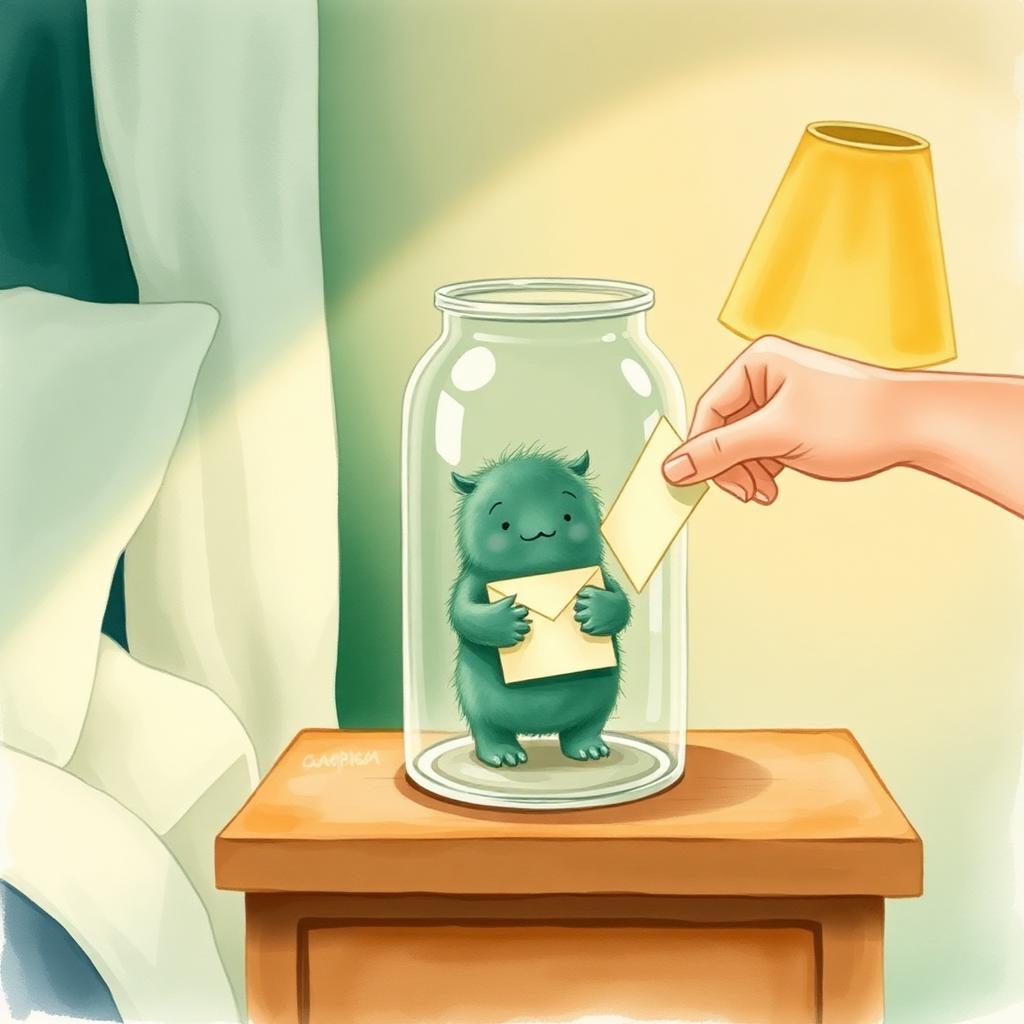
When a child says "I am scared" or "I am a worrier," something quiet and important happens inside them: the worry stops being a feeling they are having and starts becoming a person they are. That shift is what therapists call fusion — when a child can no longer see the gap between themselves and the emotion moving through them.
Externalisation is the gentle undoing of that. It is the practice of giving worry a shape, a name, sometimes a voice — so your child can stand next to you and look at it together, instead of feeling like they are the thing to be fixed.
It is one of the oldest tools in narrative therapy, and one of the kindest things you can offer a child who is anxious.
Why externalisation works
Young children think in pictures and characters long before they think in concepts. Telling a four-year-old "that is just your anxiety talking" is abstract. Telling them "that sounds like Worry knocking on the door again — what is he saying tonight?" is a story they can hold.
When worry becomes a character instead of a character trait, three things change:
- The child is no longer the problem. They are the person dealing with the problem.
- You become an ally, not a fixer. You and your child are on the same side of the table, looking at Worry together.
- The worry shrinks. Naming something almost always makes it smaller. Things without names take up the whole room.
Meet the Worry Monster
The classic version is simple: worry is a small, fuzzy creature who lives somewhere in the house — under the bed, in a jar on the windowsill, inside a special box. He is not scary. He is a little nervous himself, actually. He just gets very loud when he has nothing to do.
You might introduce him like this, gently, at a calm moment:
"You know how sometimes your tummy gets that wobbly feeling, and your brain keeps thinking about the same scary thing? I think that is a little Worry Monster, and he lives in your tummy. His job is to warn us about things. But sometimes he gets confused and warns us about things that are actually safe. When he does that, we can take him out of your tummy and put him somewhere else for a while."
That is it. That is the whole technique. The rest is just letting your child make him their own.
Three ways to use him
1. The worry jar. Find a jar with a lid. Decorate it together. When a worry shows up — at bedtime, before school, in the middle of a meltdown — your child can whisper it into the jar, or draw it on a tiny piece of paper and drop it in. The lid goes on. The jar lives on a shelf, holding the worry for them while they sleep.
Children find this enormously relieving. The worry is not gone — but it is outside of them, contained, and someone else (the jar) is keeping watch.
2. The drawing. Ask your child what their worry looks like. Not how it feels — what it looks like. Most children, given a piece of paper, will draw something surprisingly specific. A blob with teeth. A small grey cloud. A spiky ball. Once it has a shape, you can ask: "What is his name? What does he like to eat? Is he scared of anything?"
You are not making the worry into a joke. You are making it into a character your child has authority over.
3. The conversation. When a worry comes up, you can ask: "What is Worry saying right now?" instead of "What are you worried about?" The first question lets your child report on someone else. The second asks them to confess something about themselves. The first is almost always easier.
What to skip
A few gentle warnings, from parents who have tried this:
- Do not make the monster scary. This is not the monster under the bed — this is more like a small, anxious friend who needs to be calmed down. If your child draws something terrifying, that is information, but follow their lead toward something they can hold.
- Do not use it to dismiss. "Oh that is just your Worry Monster being silly" lands as "your feelings are silly." The monster is real. His warnings are sometimes wrong, but his existence is taken seriously.
- Do not force the metaphor. Some children take to it immediately. Others want nothing to do with a monster. For those kids, a worry cloud or worry whisper or simply "that anxious feeling" works just as well. The technique is the externalisation, not the character.
When it stops working
Externalisation works beautifully for the kind of everyday worry that visits most children — fear of the dark, school nerves, what-ifs at bedtime. If your child is having intrusive thoughts they cannot stop, panic attacks, or anxiety that is interfering with eating, sleeping, or play for more than a few weeks, externalisation is not enough. That is the moment to talk to a paediatrician or a child therapist. The Worry Monster is a wonderful companion. He is not a treatment plan.
But for the ordinary, real, daily weight of being a small person in a big world — he is a quiet kind of magic. And the moment your child says, "Mum, I think Worry is in my tummy again," you will know the magic has worked. They are no longer the worry. They are the one standing next to it, telling you what it is doing.
And you can stand next to it with them.
Frequently asked questions
At what age can children understand externalisation?
Most children grasp the worry monster idea from around age three, when imaginative play becomes rich. Younger toddlers benefit from a gentler version (a worry pillow they can squeeze) while older children (eight plus) often prefer naming worry without a character, just calling it 'my anxious brain' or 'the what-if voice.'
What if my child gets more scared because the monster feels real?
This sometimes happens with very imaginative or sensitive children. Switch to a non-scary form: a worry cloud, a worry whisper, or simply a colour. The technique works because it creates distance, not because it uses a monster specifically.
Should I put the worries in the jar with my child?
Yes, at first. Sit beside them, help them whisper or draw, and put the lid on together. After a few weeks most children take it over themselves. Some keep it as a private nightly ritual, which is also fine.
What do we do with the worries inside the jar?
Many families never open it — the containment is the whole point. Others have a monthly 'jar emptying' where they read the papers and notice which worries already came and went. Both work. Follow your child's instinct.