How to Build Your Child's Emotional Vocabulary
By Tim Khuja · 8 min read
Last reviewed June 9, 2026
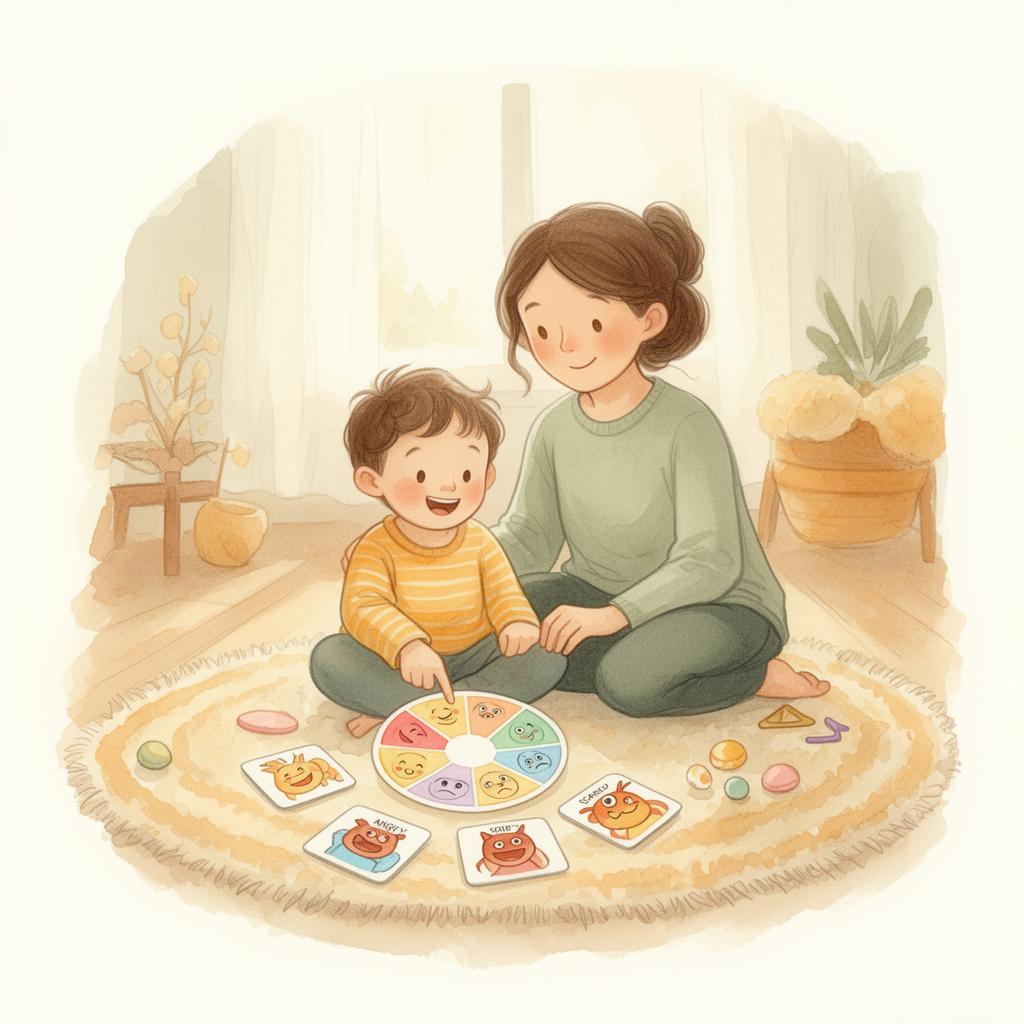
How to help a child build emotional vocabulary (and why it matters more than you think)
There is a moment most parents recognize: your child is clearly upset, but when you ask what is wrong, they say "I don't know" — or they say nothing at all, collapsing into tears or lashing out instead.
It is not that they do not want to tell you. It is that they do not yet have the words.
Children are born feeling everything. What they are not born with is a map of those feelings. A child who can name their emotions — who can say "I am frustrated" instead of hitting, "I am disappointed" instead of screaming — has been given one of the most powerful tools for self-regulation. Emotional vocabulary is not a nice-to-have. It is the foundation of emotional intelligence.
Why naming feelings changes everything
Research by psychologist Lisa Feldman Barrett and others has shown that the ability to distinguish between emotional states — what researchers call "emotional granularity" — is associated with better regulation, lower anxiety, and healthier relationships throughout life.
When a child says "I am angry," they are doing something remarkable. They are creating a small gap between the feeling and the reaction. In that gap lives choice: to take a breath, to use words, to ask for help. A child who only knows "I feel bad" has no such gap. The feeling and the action are the same thing.
This is why building emotional vocabulary is one of the highest-leverage activities a parent can do. It does not require special training. It requires curiosity, repetition, and a willingness to name your own feelings out loud.
Start broad, then go deeper
Young children often know the big categories: happy, sad, mad, scared. The work is to help them expand beyond those four.
For happiness: excited, content, proud, grateful, playful, calm, curious, loving For sadness: disappointed, lonely, hurt, grieving, discouraged, left out For anger: frustrated, annoyed, jealous, betrayed, indignant, overwhelmed For fear: worried, nervous, startled, uncertain, embarrassed, insecure
You do not teach these words in a lesson. You introduce them in context. "You look frustrated that the tower fell." "I think you feel disappointed that we are not going to the park." "I feel proud watching you try that."
Practical ways to build vocabulary every day
1. Narrate feelings out loud
The most powerful teaching tool is modeling. When you name your own emotions — "I am feeling overwhelmed by all this noise" or "I feel grateful for this quiet moment" — you give your child a living dictionary.
Do not hide your feelings to protect them. Show them what it looks like to notice a feeling, name it, and respond to it with care.
2. Use the body as a guide
Children are more connected to their bodies than to abstract concepts. Instead of asking "How do you feel?" ask "How does your body feel right now?"
- Tight hands might mean anger or anxiety
- A heavy chest might mean sadness
- Butterflies in the stomach might mean worry or excitement
- A wobbly feeling might mean uncertainty
Over time, children learn to read their own internal signals — a skill called interoception that is deeply linked to self-regulation.
3. Create a feelings vocabulary routine
Some families use a "feelings check-in" at dinner: "What was one feeling you had today?" Others keep a "feelings journal" where the child draws or writes one feeling each night. Others use a feelings chart on the wall.
The specific tool does not matter. What matters is consistency. Emotional vocabulary grows through repeated use, not one-time teaching.
4. Read stories about feelings
Stories are perhaps the safest place to explore emotion. A child can feel sadness with a character in a book without having to own that sadness themselves. They can watch a character feel jealous, make a mistake, feel afraid — and survive.
After reading, wonder together: "How do you think the character felt when that happened? Have you ever felt something like that?" Stories create emotional rehearsal. They let children practice naming feelings at a safe distance.
5. Validate before you educate
When a child is emotional, resist the urge to teach in the moment. "You are not actually angry, you are just tired" is invalidating, even if it is true. First, meet the feeling where it is: "You are really angry. I see that." Only later, when calm, might you wonder together about what was underneath.
6. Play with emotions
Play is a child's natural language. Use stuffed animals or dolls to act out feelings. "Bear is feeling left out because Rabbit went to play with Fox. How do you think Bear feels?" This externalizes the emotion, making it safer to explore.
Board games and card games that involve emotion cards can also be fun, low-pressure ways to build vocabulary.
7. Avoid toxic positivity
A rich emotional vocabulary includes difficult feelings. If a child learns that only "good" feelings are acceptable, they will hide the rest. Make space for anger, jealousy, disappointment, and fear. These feelings are not problems to solve. They are information to understand.
What to expect at different ages
Toddlers (2–3): Begin with basic feelings: happy, sad, mad, scared. Use simple phrases and lots of repetition. Focus on body sensations: "Your fists are tight. You feel mad."
Preschoolers (4–5): Introduce a wider range: excited, disappointed, worried, proud, lonely. Use stories, play, and daily narration. They can start to connect feelings to events: "You felt sad when she took your toy."
School-age (6–10): This is when granularity expands dramatically. Children can understand blended emotions: excited and nervous, happy and sad. They can reflect on their own patterns: "I get frustrated when things are unfair." They benefit from explicit teaching about emotional complexity.
Pre-teens (10+): Continue expanding vocabulary and begin connecting feelings to values and identity. "You felt betrayed because trust matters to you." Help them see emotions as meaningful data about what they care about.
When emotional vocabulary is not enough
Building vocabulary is powerful, but it is not a cure-all. Some children know exactly what they feel and still cannot regulate. Vocabulary is the foundation; co-regulation, sensory support, and sometimes professional help build the rest of the house.
If your child can name their feelings but still seems stuck in distress — if naming does not lead to even small moments of relief — consider consulting a child psychologist. There may be underlying anxiety, trauma, or neurodivergence that needs additional support.
The long game
A child with a rich emotional vocabulary will not become someone who never struggles. They will become someone who knows what is happening inside them when they do. They will have the language to ask for help, to repair relationships, to understand themselves.
That is not everything. But it is a powerful beginning.
Related reading
- How to help a child name their big feelings
- Emotion coaching: the 5 steps Gottman taught a generation of parents
- Validating feelings without giving in: the parenting line that confuses everyone
- Stories about anger for kids 3–7: how they help
Soothly Editorial. All content is for informational purposes and does not replace professional mental health advice.
Frequently asked questions
At what age can children start learning emotional vocabulary?
Children as young as 18 months can begin learning basic feeling words like happy, sad, and mad. By age 3, most can name a few emotions in themselves. The key is starting early and keeping it simple, matching the vocabulary to the child's developmental stage.
What if my child refuses to talk about feelings?
Do not force it. Some children process feelings through play, movement, or art rather than conversation. Offer multiple pathways: drawing, stuffed animal play, or body-based check-ins. Meet them where they are.
Can teaching emotional vocabulary reduce meltdowns?
Over time, yes. When children can name what they feel, they gain a moment of pause between feeling and reacting. That gap is where regulation lives. It does not eliminate meltdowns, but it reduces their frequency and intensity.
What is emotional granularity?
Emotional granularity is the ability to distinguish between similar emotional states — for example, knowing the difference between disappointed and devastated, or between anxious and excited. Higher granularity is linked to better emotional regulation and lower anxiety.
Should I correct my child if they name a feeling 'wrong'?
Generally, no. If a child says they are sad when they seem angry, simply reflect what you observe: 'It looks like your body is really tense. I wonder if there's some frustration in there too.' Curiosity is more helpful than correction.