School Refusal: Why It Happens and How to Help
By Tim Khuja · 8 min read
Last reviewed June 9, 2026
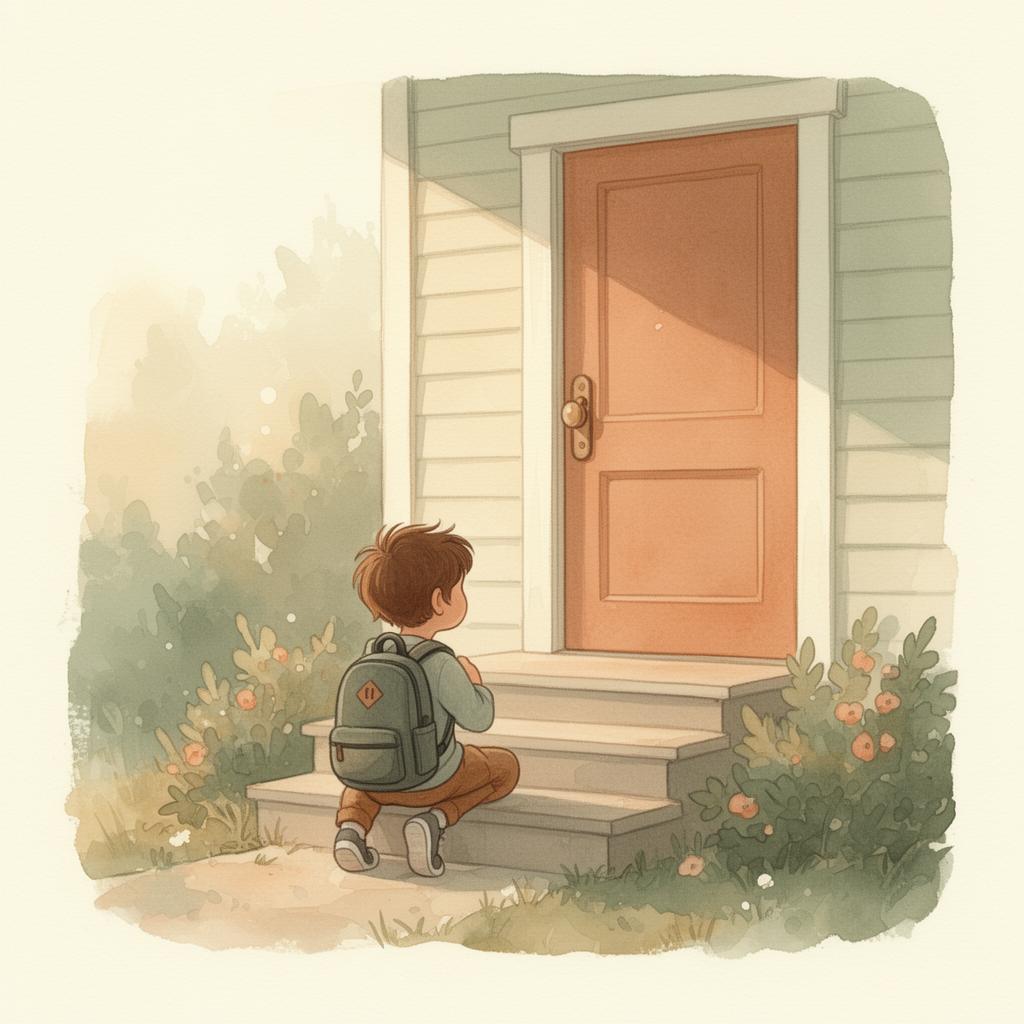
School refusal: when a child won't go to school — and what actually helps
Every parent knows the morning battle: the child who clings to the bedpost, the one who says their stomach hurts again, the one who begs to stay home with a desperation that feels bigger than a single day. If this happens once, it is a bad morning. If it happens again and again, it may be school refusal — and it is not about laziness, defiance, or a child "getting their way."
School refusal is a sign that something in a child's environment feels unsafe to their nervous system. The work of a parent is not to push harder. It is to become curious about what the body is trying to say.
What school refusal actually looks like
School refusal does not always look dramatic. It can be:
- A pattern of physical complaints (stomachaches, headaches, nausea) that ease once school is no longer an option
- Tears, begging, or bargaining every morning
- Missing the bus "accidentally" again and again
- Frequent visits to the school nurse with vague symptoms
- A sharp drop in academic engagement that coincides with social stress
These behaviors are not manipulative. They are protective. A child's body has learned that school is associated with threat — and it is trying to keep them away from that threat.
What is underneath the refusal
School refusal is almost always anxiety-driven, though the source of that anxiety varies. Common roots include:
Separation anxiety. Some children experience the school day as an unbearable separation from the person who regulates them best. The thought of being apart for hours floods their system with distress that feels life-threatening.
Social anxiety or bullying. A child may not have the language to say, "Someone is being unkind to me." They may only know that school feels bad and home feels safe.
Academic pressure. Perfectionist children can develop an intense fear of failure that makes the school environment feel exposing and humiliating.
Transitions and uncertainty. New teachers, new buildings, or disruptions to routine can destabilize a child who relies on predictability to feel safe — especially neurodivergent children.
Underlying neurodivergence. Undiagnosed autism, ADHD, or sensory processing differences can make the school environment overwhelming in ways adults do not immediately see.
Understanding the root is not a prerequisite for helping. But it can shape what comes next.
What not to do
There are responses that, while understandable, tend to deepen the cycle:
- Forcing attendance through punishment. This teaches a child that their distress is irrelevant and that adults cannot be trusted to keep them safe.
- Giving in completely without a plan. This reinforces escape as the only viable strategy, making re-entry harder over time.
- Minimizing the fear. Phrases like "everyone has to go to school" or "it's not that bad" tell a child that their internal experience is wrong — which only increases shame and secrecy.
What to do instead: a gentle, structured approach
1. Start with validation, not direction
Before any plan, the child needs to feel understood. Try: "I can see that going to school feels really hard right now. I believe you. I am going to help figure this out." Validation does not mean agreement. It means the child's nervous system registers that they are not alone with the fear.
2. Make the invisible visible
Children often lack the vocabulary to explain what is wrong. Help them externalize the feeling: "If worry had a color today, what would it be?" or "Does your body feel tight, wobbly, or hot?" Naming the experience reduces its power and gives you information.
3. Collaborate with the school
A successful return usually requires the school's partnership. Request a meeting with the teacher or counselor. Explain the situation without blame. Ask for temporary accommodations: a shorter school day, a calm-down space, a trusted adult the child can check in with, or a modified workload while emotions stabilize.
4. Use gradual exposure, not sudden immersion
The goal is a gentle reintroduction. This might look like:
- Visiting the school building on a weekend when it is empty
- Attending for just the morning, then building up
- Starting with a preferred activity or a trusted friend's class
- Having a parent walk them to the classroom door, then the hallway, then the school gate
Each small success builds the child's confidence that they can tolerate the discomfort — and that it does not last forever.
5. Create a predictable morning ritual
Mornings set the tone. A calm, predictable routine reduces the anticipatory anxiety that fuels refusal. Keep the routine visual (a simple checklist), unhurried, and connected: five minutes of snuggle time, a shared breakfast, a special handshake at the door.
6. Address the body first
Anxiety lives in the body. Before logic can reach a child, their nervous system needs to feel regulated. Deep pressure (a firm hug, a weighted blanket), slow breathing, or movement (a quick walk, jumping jacks) can bring a child back to a state where problem-solving is possible.
7. When to seek professional support
If school refusal persists for more than two weeks, or if it is accompanied by significant changes in sleep, eating, mood, or social withdrawal, consult a child psychologist or school counselor. Early intervention prevents the pattern from hardening into a longer-term avoidance cycle.
Therapies like Cognitive Behavioral Therapy (CBT) and exposure-based treatments have strong evidence for treating school refusal, particularly when they involve parents in the process.
A note for the parent reading this
If your child is refusing school, you may feel exhausted, judged, or like you are failing. You are not. School refusal is one of the most stressful parenting challenges — and one of the least understood. The fact that you are reading this, that you are trying to understand rather than force, is already the right direction.
Your child does not need a perfect solution. They need a calm, regulated adult who can hold the boundary gently while helping them find their way back.
Related reading
- School anxiety in children: what's underneath the morning meltdown
- Separation anxiety strategies that actually work for parents
- How to help a child calm down at bedtime
- The 5-4-3-2-1 grounding technique for kids
Soothly Editorial. All content is for informational purposes and does not replace professional mental health advice.
Frequently asked questions
Is school refusal the same as truancy?
No. Truancy is often associated with a lack of interest in school or engagement in external activities, and the child typically does not experience significant distress. School refusal is driven by anxiety and emotional distress, and the child usually wants to attend but feels unable to.
How long does school refusal last?
It varies. With early intervention and a structured plan, some children return within days or weeks. Without support, it can persist for months. The key is addressing the underlying anxiety rather than just the behavior.
Should I let my child stay home if they are anxious?
Occasional mental health days are reasonable, but a pattern of staying home reinforces avoidance. The goal is to validate the feeling while still holding the expectation of attendance, with accommodations and gradual exposure.
Can school refusal be a sign of a learning difficulty?
Yes. Undiagnosed learning difficulties, ADHD, autism, or sensory processing differences can make the school environment overwhelming. A psychoeducational assessment may be helpful if school refusal is persistent.
What should I say to my child in the morning?
Keep it brief, warm, and confident: 'I know this feels hard. I believe you can do hard things. I will see you at pickup.' Long negotiations or repeated reassurance can accidentally reinforce the anxiety.